
La chapelle Saint-Jean et l’entrée du cimetière Saint-Eustache. — History & Facts
In this stillness, it captures the weight of absence, drawing us into the void where memory lingers. Look to the center of the composition, where the chapel stands resolute against a dusky sky, its somber facade echoing the quiet solemnity of the cemetery entrance flanking it. Notice how the muted palette of grays and browns envelops the scene, creating a sense of melancholy that envelops the viewer. The horizon is low, allowing the towering architecture to dominate, while delicate strokes breathe life into the surroundings, suggesting the ethereal presence of lives long gone. Bénard invites us to contemplate the delicate balance between life and death, encapsulated in the quiet space between the chapel and the entrance to the cemetery.
The interplay of light and shadow conveys not only physical forms but also the intangible emotions of loss and remembrance. While the structure stands firm, a subtle shift in the color gradients hints at the fleeting nature of existence, revealing the artist's understanding of the human experience amid the void. Painted in 1810, this piece reflects a period when Bénard sought to personalize landscapes with emotional depth. Living in France during the Napoleonic era, he was influenced by the Romantic movement, which valued individual experience and emotion.
This work emerged as artists turned from mere representation to exploring the psychological landscapes of their subjects, marking a pivotal point in the evolution of French painting.
More Artworks by Auguste-Sébastien Bénard
Browse all →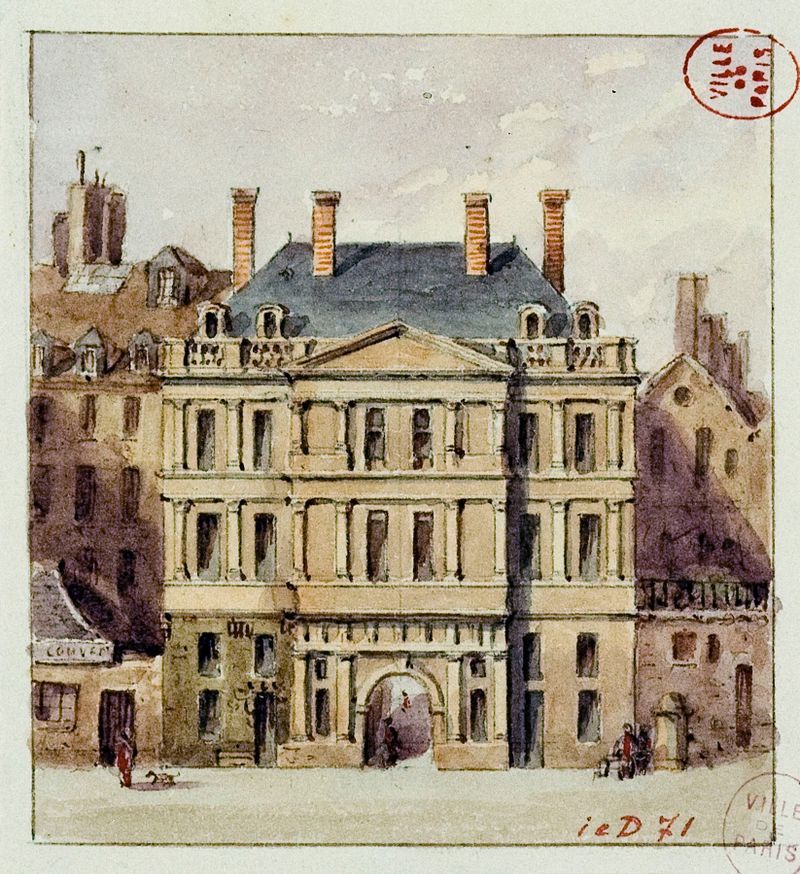
Cour de la Sainte Chapelle.
Auguste-Sébastien Bénard
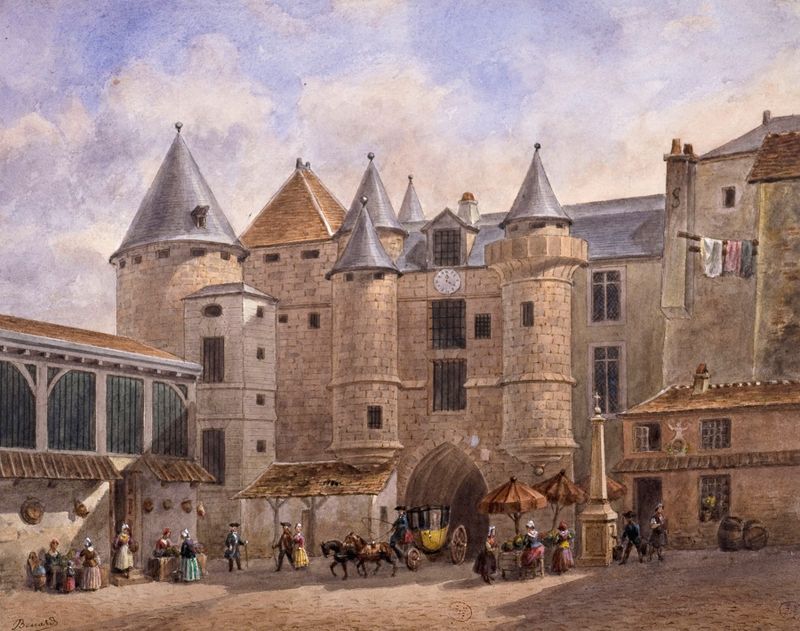
Le Grand Châtelet du XVIIIème siècle.
Auguste-Sébastien Bénard

Place de l’Hôtel de Ville.
Auguste-Sébastien Bénard

Salle souterraine du Palais de Justice.
Auguste-Sébastien Bénard

Voûtes du quai de Gesvres
Auguste-Sébastien Bénard

Monument expiatoire élevé à la mémoire du duc de Berry, à l’emplacement de l’ancien Opéra
Auguste-Sébastien Bénard
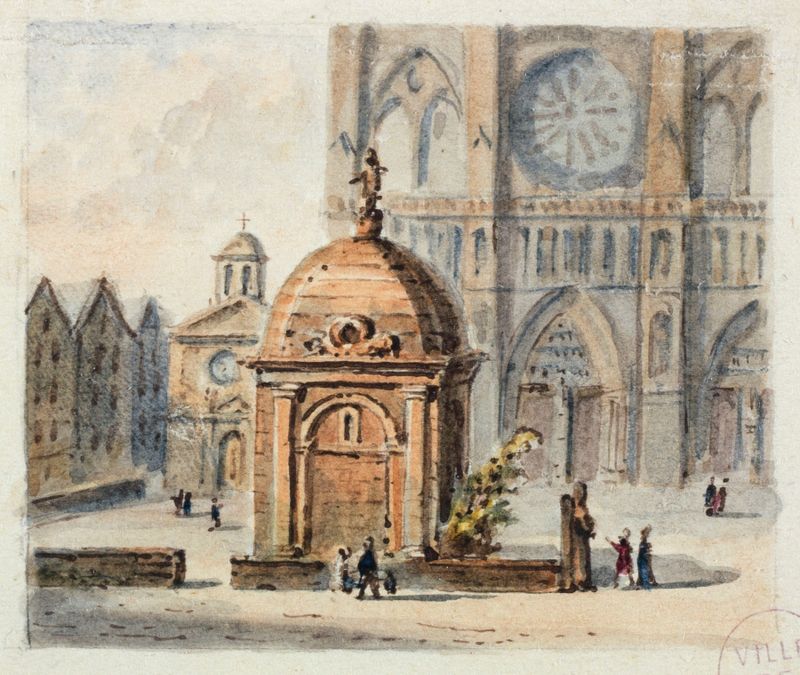
Le parvis de Notre-Dame de Paris
Auguste-Sébastien Bénard

Rue des chantres (entre le quai aux fleurs et la rue Chanoinesse).
Auguste-Sébastien Bénard

L’entrée de l’ancienne forteresse du Grand Châtelet, un jour de Carnaval
Auguste-Sébastien Bénard
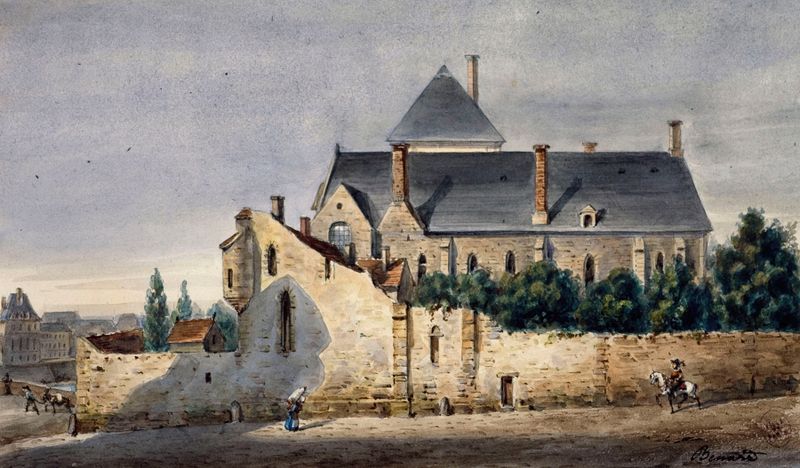
Les restes des bâtiments de l’hôtel du Petit Bourbon.
Auguste-Sébastien Bénard
More Architecture Art
Browse all →
The statue of Liberty
Frédéric Auguste Bartholdi

View of Houses in Delft, Known as ‘The Little Street’
Johannes Vermeer

View of Houses in Delft, Known as ‘The Little Street’
Johannes Vermeer

The Cathedral in Rouen. The portal, Grey Weather
Claude Monet

The yellow house
Vincent van Gogh

The Church in Auvers-sur-Oise, View from the Chevet
Vincent van Gogh