
La Clairière — History & Facts
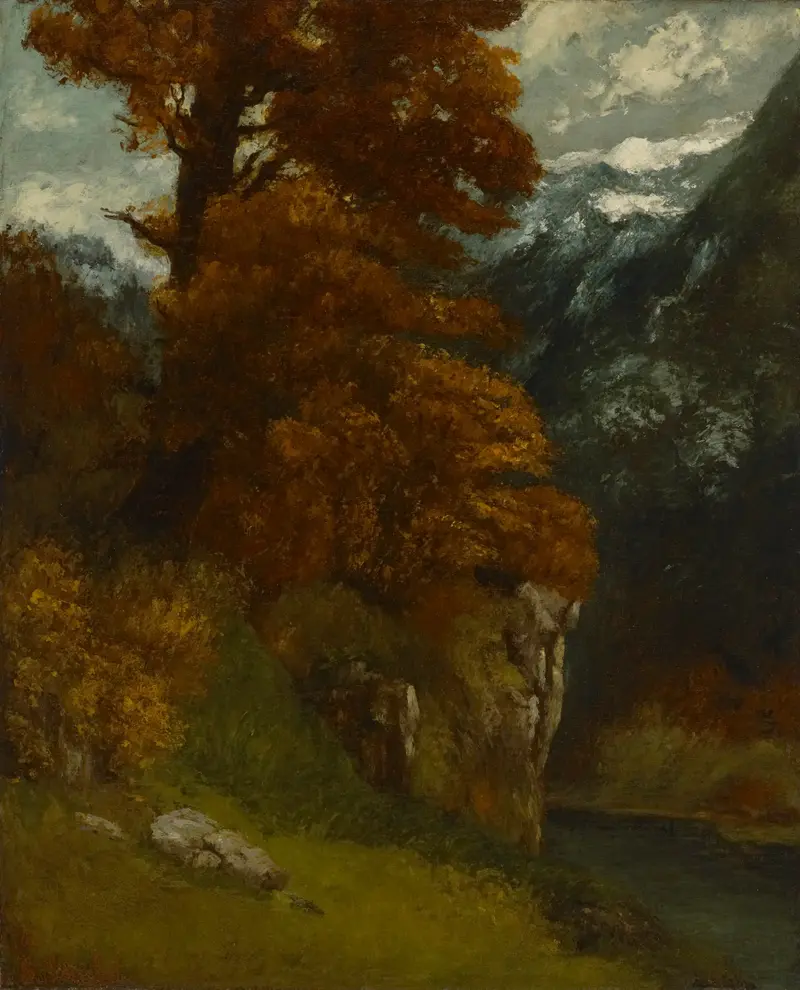
In La Clairière, we see a tranquil landscape filled with lush greenery and soft light filtering through the trees. The colors are rich and vibrant, with deep greens and warm earth tones dominating the scene. A small clearing in the forest invites the viewer into the serene setting, suggesting a moment of peace in nature.
The composition draws the eye towards the interplay of light and shadow among the foliage. The painting is executed in oil on canvas, a medium that allows for rich textures and depth of color. Courbet's technique emphasizes realism, capturing the natural beauty of the landscape with meticulous detail. The brushwork is both expressive and precise, creating a sense of movement in the leaves and grass.
Viewers can appreciate the careful layering of paint that brings the scene to life. Gustave Courbet was a leading figure in the Realism movement, known for his focus on everyday subjects and natural landscapes. La Clairière reflects his commitment to portraying the beauty of nature without idealization. Interestingly, this work exemplifies Courbet's belief in the importance of painting from direct observation, a principle that influenced many artists after him.
His dedication to realism helped pave the way for future movements in art.
More Artworks by Gustave Courbet
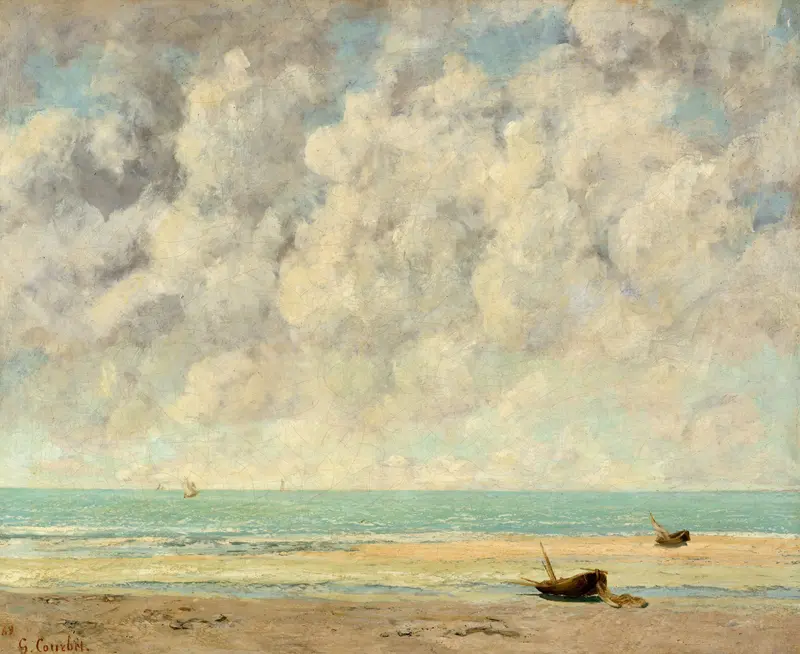
The Calm Sea
Gustave Courbet

A Burial at Ornans
Gustave Courbet
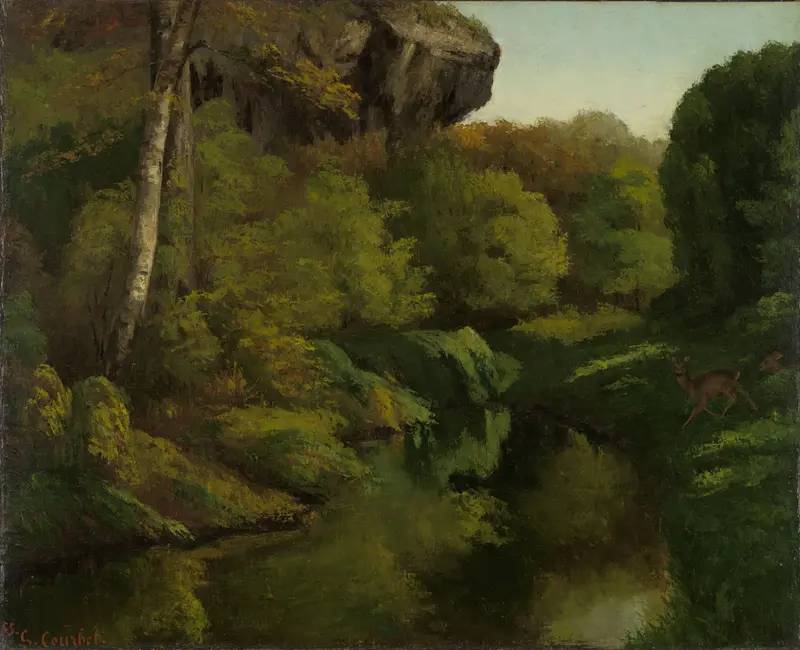
View in the Forest of Fontainebleau
Gustave Courbet
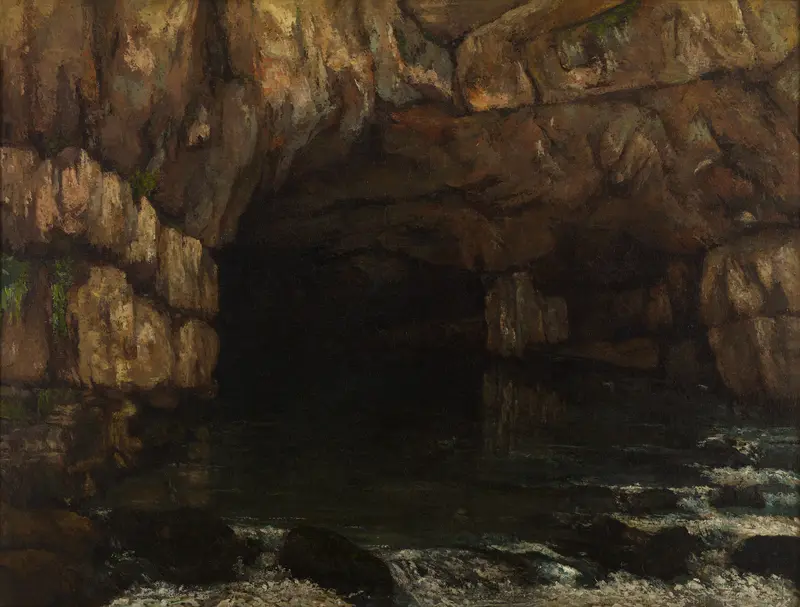
La source de la Loue (The Source of the Loue)
Gustave Courbet
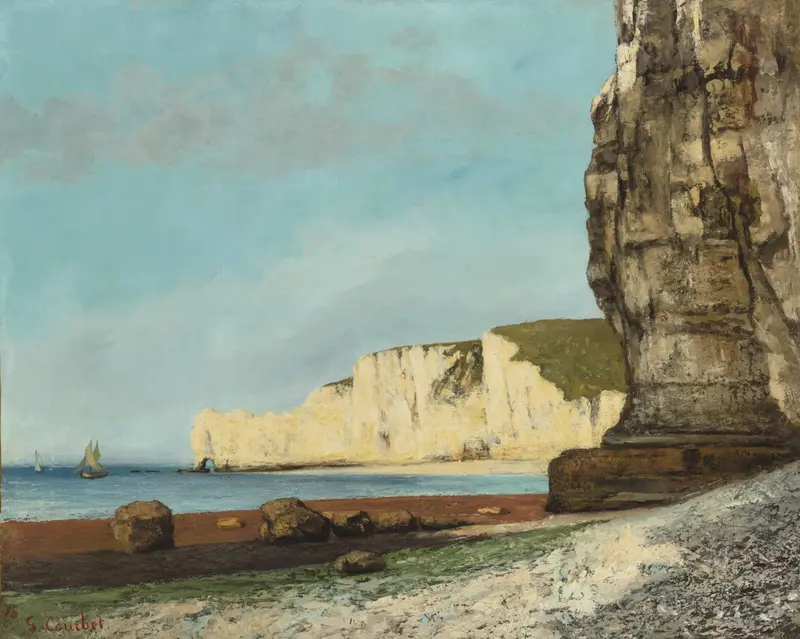
Étretat; Les Falaises
Gustave Courbet
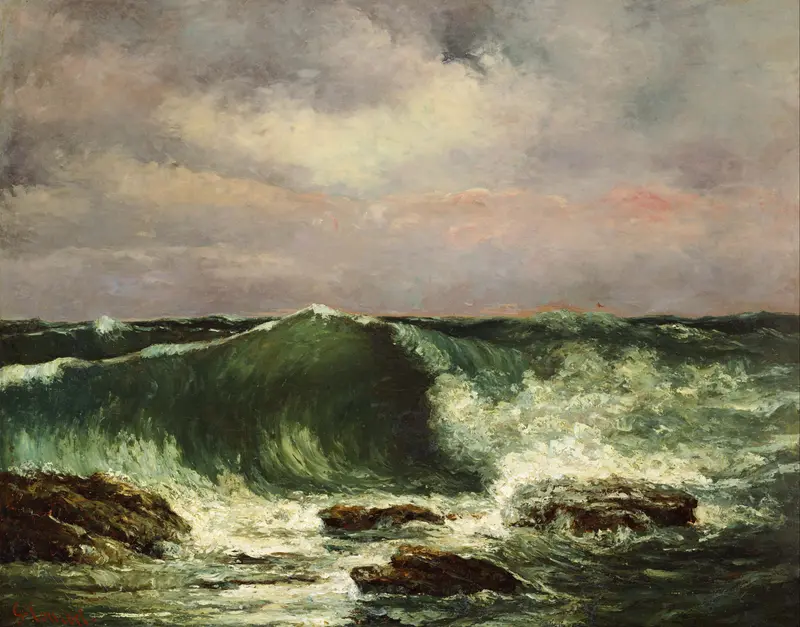
Waves
Gustave Courbet
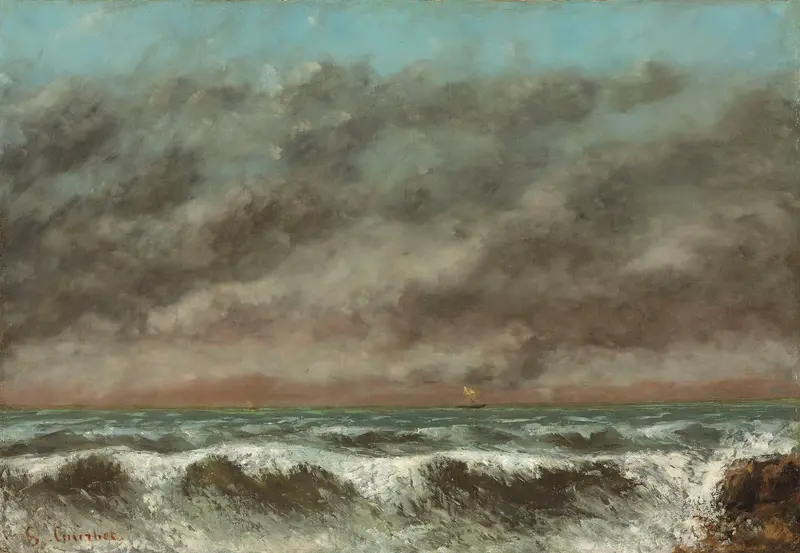
Marine
Gustave Courbet
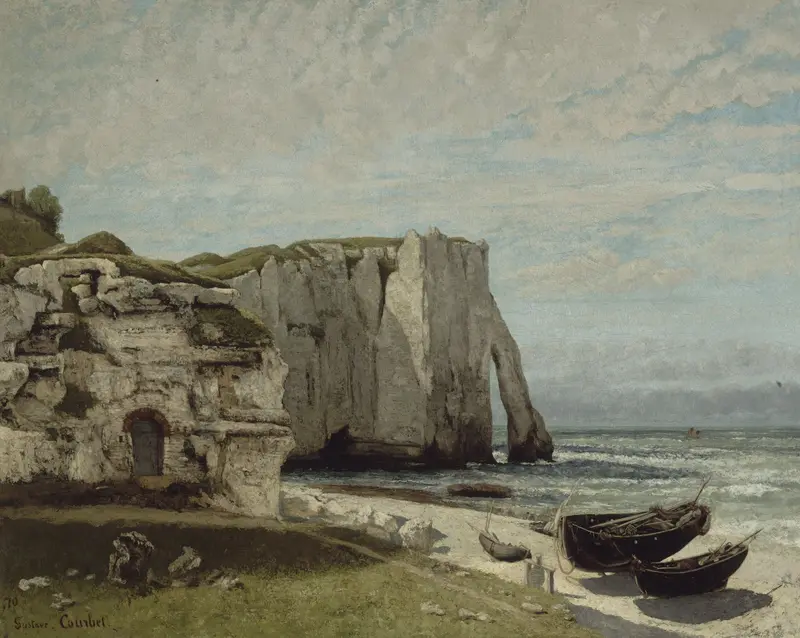
The Etretat Cliffs after the Storm
Gustave Courbet
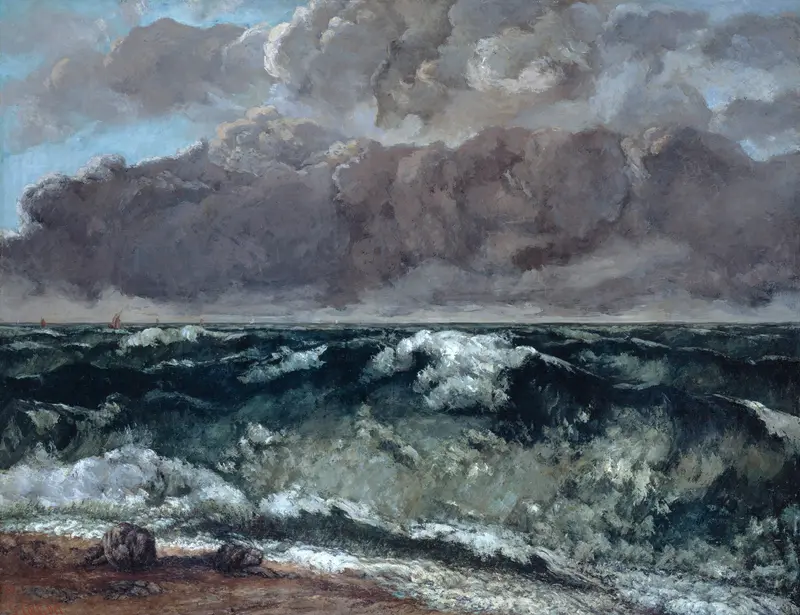
The Wave
Gustave Courbet
The Glen at Ornans (Bords du Doubs; Effet d’Automne)
Gustave Courbet
More Landscape Art

Starry Night
Vincent van Gogh

View of Delft
Johannes Vermeer

Water Lilies
Claude Monet

The Grand Canal, Venice, looking north-west from the Ca' Corner to the Ca' Contarini degli Scrigni, with the campanile of Santa Maria della Carità
Canaletto

Windsor Castle
Canaletto

The Grand Canal looking North-East from the Palazzo Dolfin-Manin to the Rialto Bridge
Canaletto