La mer à Saint Palais, (Dep. 0749 FC) — History & Facts
The first thing that seizes the viewer in La mer à Saint Palais by Armand Guillaumin is the restless energy of the sea itself—a living surface, never still, never silent. The eye is drawn immediately to the thick, swirling brushstrokes that animate the water, each stroke a small surge of motion. The rocks jutting into the surf anchor the composition, their dark, rough masses resisting the pale green and blue waves that curl and break against them.
Far off on the horizon, a plume of smoke from a distant steamer hints at human presence, but it is dwarfed by the vastness of the ocean and sky. The low horizon line grants the sea and sky equal weight, letting the viewer feel both the openness and the ceaseless movement of the Atlantic coast. Painted in 1892, this work belongs to the world of late nineteenth-century France, when artists of the Impressionist movement sought to capture fleeting effects of light and atmosphere rather than polished, static scenes. Guillaumin, a contemporary of Monet and Pissarro, was known for his bold color and direct engagement with nature.
Seascapes like this were rarely grand commissions; they were often painted for the artist’s own exploration or for collectors eager to possess a fragment of the new, modern vision. History has kept few traces of the specific journey of this canvas, now documented by forschungsprojekt-impressionismus.de, but its brushwork and palette speak directly to the radical spirit of its time. Let your gaze follow the restless tide, and imagine the artist’s hand moving as quickly as the waves themselves.
More Artworks by Armand Guillaumin

La Seine À Charenton
Armand Guillaumin
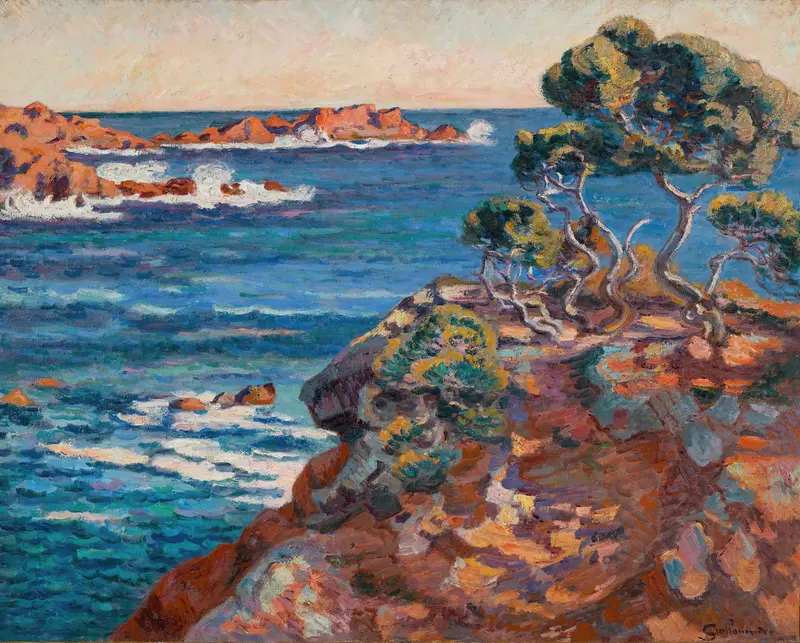
Bord De Mer À Agay
Armand Guillaumin
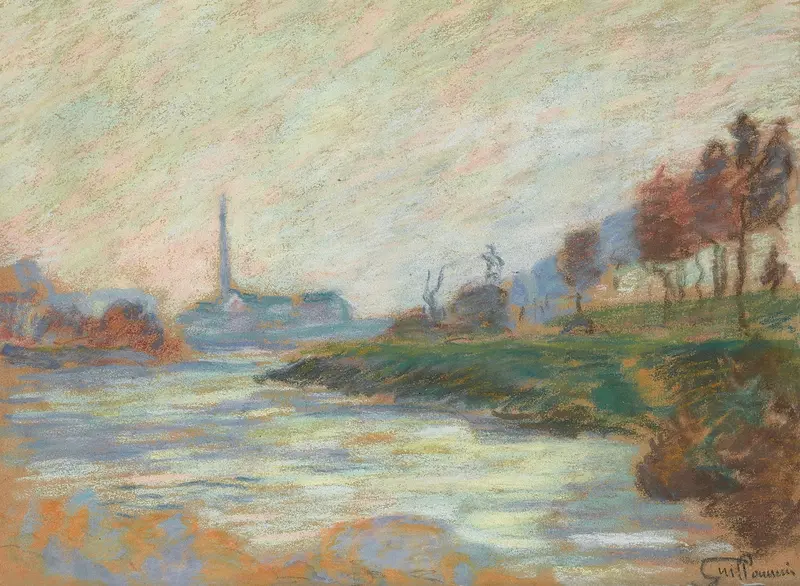
Confluent De La Marne Et De La Seine, Île De La France
Armand Guillaumin
Le Pont d’Austerlitz
Armand Guillaumin
Le Ravin de la folie, vue de Chateau Crozant
Armand Guillaumin
Crozant, Le Ravin De La Sedelle À La Folie
Armand Guillaumin
Paysage de Printemps
Armand Guillaumin
Paysage
Armand Guillaumin
La vallée de la creuse
Armand Guillaumin
Le chemin de halage à Charenton, Ile de France
Armand Guillaumin