
La Noria (España) — History & Facts
What secret hides in the quiet of the canvas? In La Noria (España), the interplay of illusion and reality invites viewers into a contemplative stillness, reminiscent of a dreamscape where time seems suspended. Look to the center of the canvas where a towering waterwheel dominates the scene, its spokes and arms extending outward, drawing the viewer's gaze with a rhythmic motion captured in oil. The muted earth tones create a sense of harmony, while soft greens and browns contrast against the vibrant blue sky, evoking the tranquility of the rural landscape. Notice how light cascades over the wheel, illuminating its wooden structure, creating intricate shadows that dance across the ground, suggesting movement even in stillness. Within this artwork, a tension arises from the juxtaposition of nature and machinery, hinting at the transition from pastoral life to industrialization.
The waterwheel, a traditional tool, not only symbolizes agricultural labor but also represents the ceaseless passage of time and the inevitable march toward progress. Small details, such as the distant figures in the background, evoke a sense of solitude and introspection, inviting the viewer to ponder the lives entwined with this very wheel, caught between the past and an uncertain future. Prilidiano Pueyrredòn painted this piece in Argentina between 1840 and 1870, a time marked by the struggle for national identity and modernization. As the country faced political upheaval and embraced European influences in the arts, Pueyrredòn sought to capture the essence of his homeland while navigating the complexities of modern life.
This work reflects his deep appreciation for landscapes and the subtle tensions within them, making it a significant contribution to the narrative of 19th-century Argentine art.
More Artworks by Prilidiano Pueyrredòn
Browse all →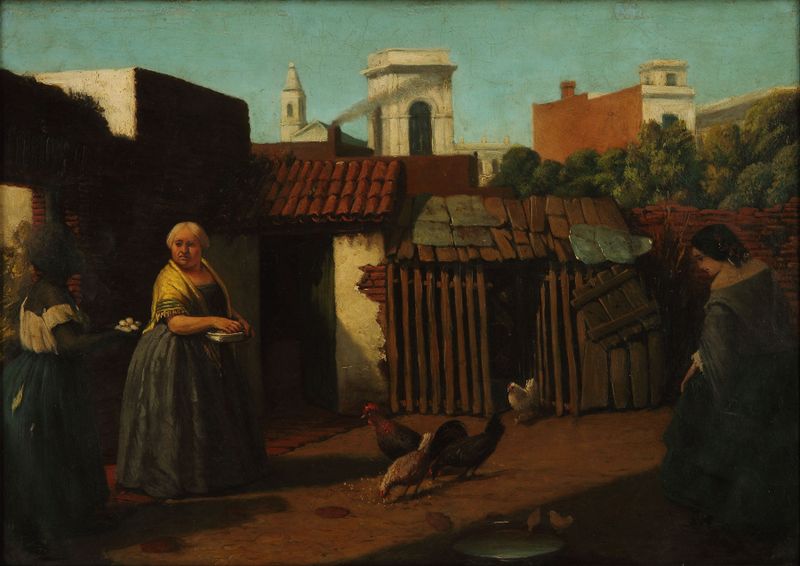
Patio porteño en 1850
Prilidiano Pueyrredòn

El rodeo
Prilidiano Pueyrredòn
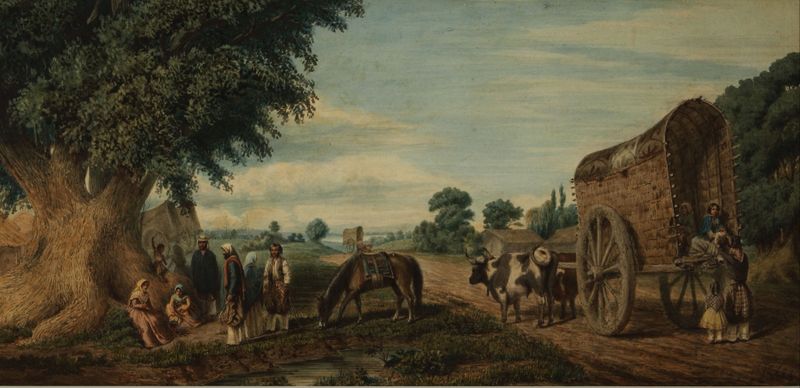
Un domingo en los suburbios de San Isidro
Prilidiano Pueyrredòn
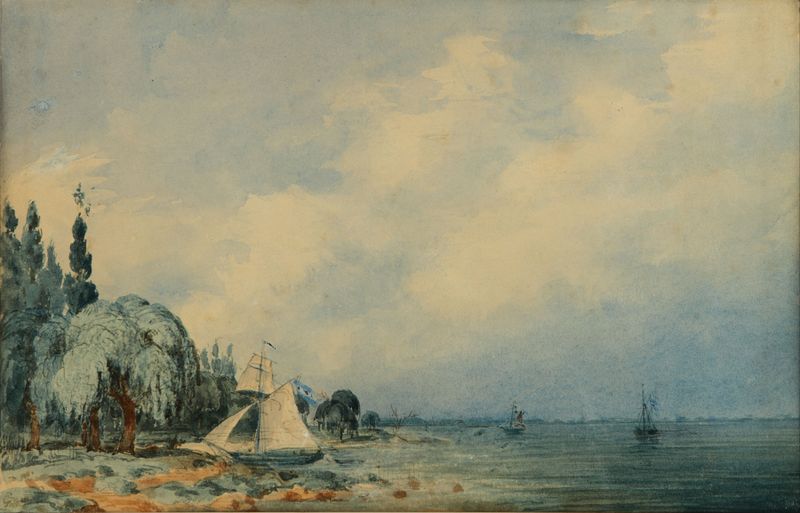
Paisaje de la costa (San Isidro)
Prilidiano Pueyrredòn

Paisaje (Tres Bocas Tigre)
Prilidiano Pueyrredòn

Costa del Rio de la Plata
Prilidiano Pueyrredòn

Sacada de la red, Bs.As.
Prilidiano Pueyrredòn

Paisaje (Granja europea)
Prilidiano Pueyrredòn

Bosque de Palermo
Prilidiano Pueyrredòn

Paisaje con barcos
Prilidiano Pueyrredòn





