
La Rue des Barres — History & Facts
This sentiment encapsulates the moment when the urban landscape transforms into a living tapestry, where every stroke reveals a hidden revelation waiting to be uncovered. Look to the left at the lively figures navigating the cobblestone street, their forms rendered with swift, delicate brushwork. Notice how the muted tones of the buildings create a backdrop that contrasts sharply with the vitality of the passersby, highlighting their hurried movements. The play of light across the foreground not only guides the eye but also evokes a sense of fleeting time, as if each moment captured is both vibrant and ephemeral. Within the frame, the juxtaposition of bustling life against the stillness of the architecture speaks to the tension between progress and nostalgia.
The scattered details—an open window, a streetlamp—invite contemplation on the stories that linger in the shadows. Each element holds significance, revealing the artist's keen observation of urban existence and its intimate connection with solitude amidst the crowd. In 1886, the artist painted this scene while living in Paris, a city teeming with modernity and artistic exploration. It was a period marked by shifts toward Impressionism, as artists sought to capture everyday life with authenticity.
Lepère was deeply involved in the printmaking movement, using his meticulous techniques to bridge the worlds of drawing and painting, reflecting his dedication to the beauty of urban experiences, even amidst their disarray.
More Artworks by Auguste Louis Lepère
Browse all →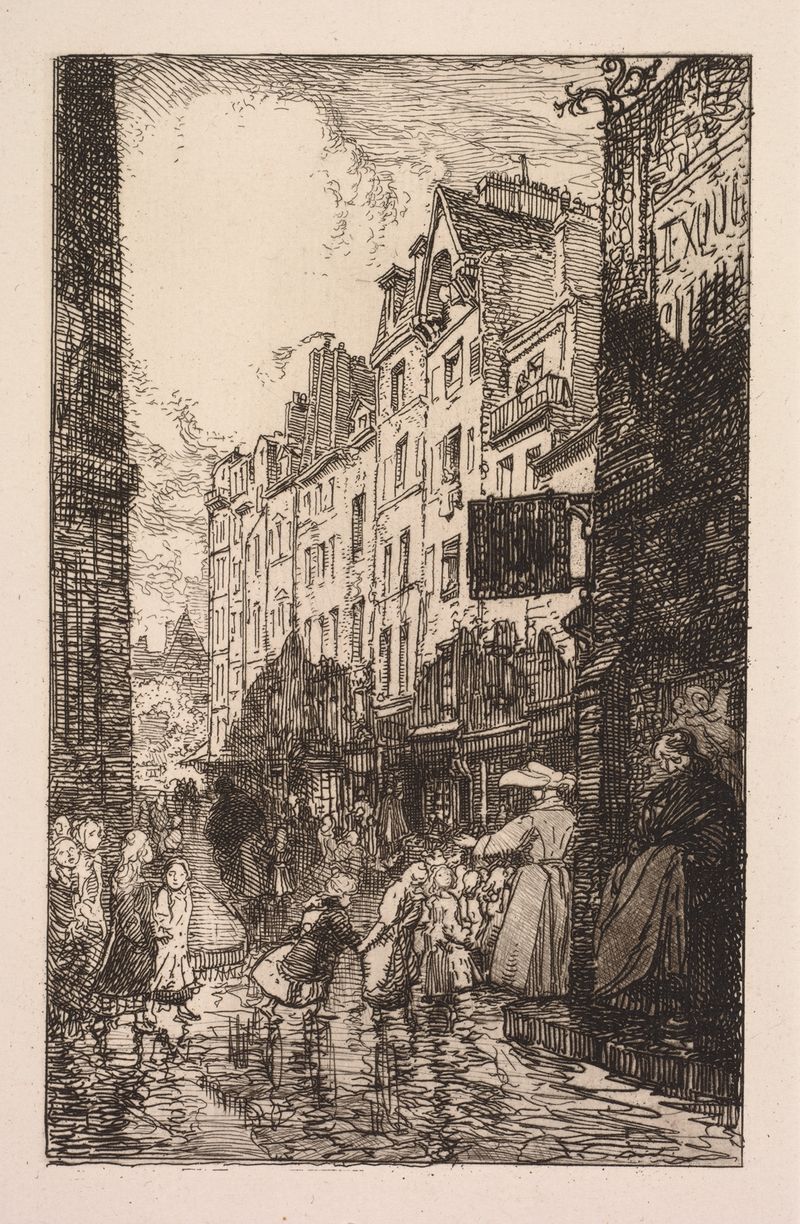
La Rue des Prêtres Saint-Séverin
Auguste Louis Lepère
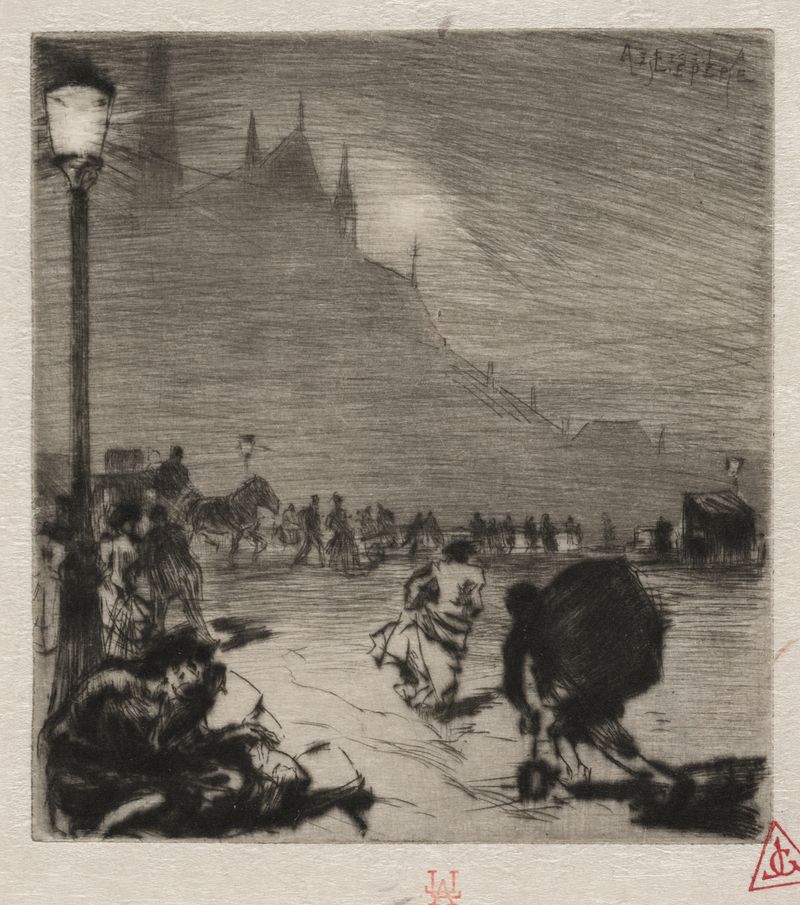
Au Coin du Pont-aux-Doubles
Auguste Louis Lepère
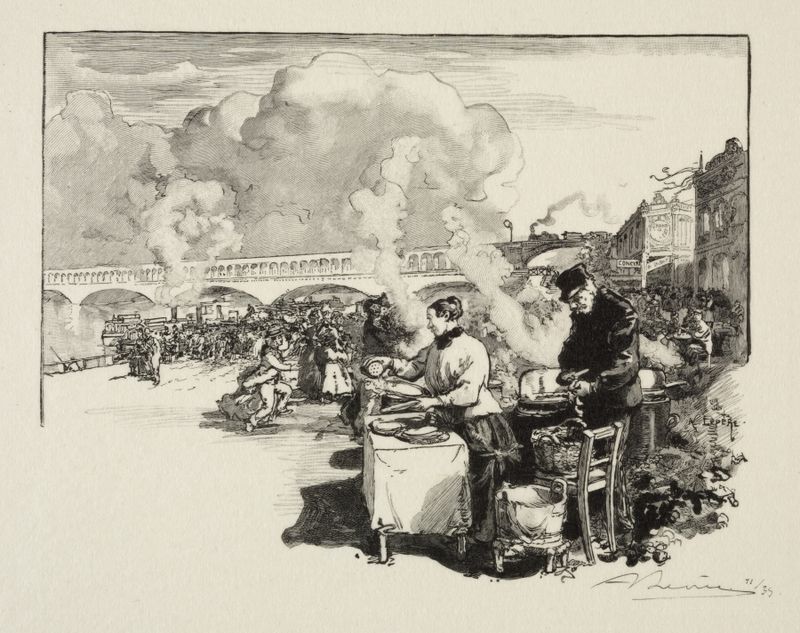
Debarcadère des bateaux-omnibus
Auguste Louis Lepère

La Seine, au quai de la Rapée
Auguste Louis Lepère
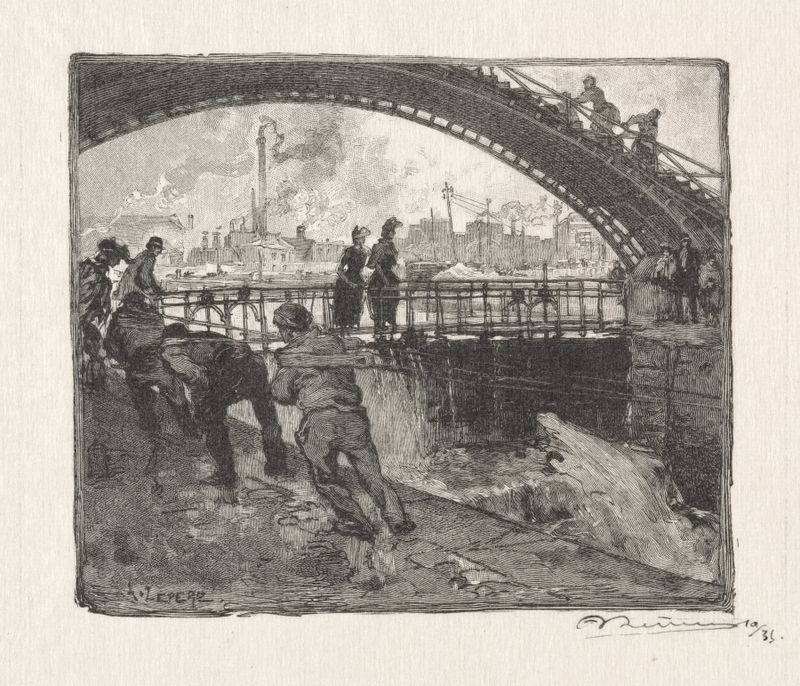
L’Ecluse du Canal St. Martin
Auguste Louis Lepère

Le Boulevard Montmartre, le Soir
Auguste Louis Lepère

Une Chasse au Mont Gérard
Auguste Louis Lepère
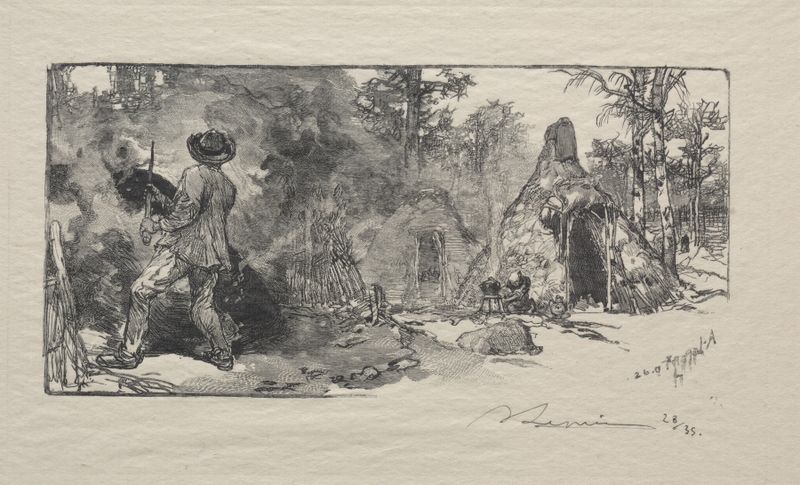
Les Charbonniere
Auguste Louis Lepère
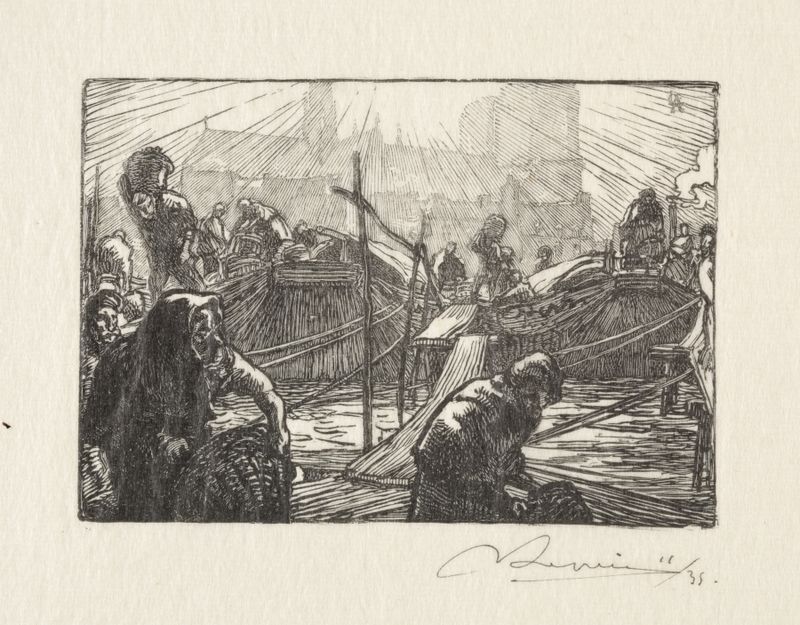
Notre Dame vue du Marché aux pommes
Auguste Louis Lepère

Le Palais des Arts Liberaux, Intèrieur
Auguste Louis Lepère





