
La Rue Saint-Jacques, Paris — History & Facts
In La Rue Saint-Jacques, Paris, the fragility of a moment pulsates through the canvas, capturing a fleeting glimpse of life in a city that never sleeps. Focus first on the harmonious blend of cool blues and warm ochres that envelop the scene, drawing your eye to the figures walking along the cobbled street. Notice how the light dances upon the buildings, casting soft shadows that hint at the passage of time. Jongkind’s loose brushwork evokes the immediacy of a snapshot, creating a sense of movement that makes you feel as if you could step right into the moment. As the viewer, you are invited to explore the interplay of light and shadow, reflecting the contrast between the vibrancy of life and the inevitable march of time.
The pedestrians, caught in their own worlds, embody the fragile connections of humanity—each one lost in thought, yet together in this shared experience. The delicate balance between the architectural solidity of the Parisian street and the ethereal quality of the light speaks to the transient nature of existence itself. In 1872, Jongkind painted this piece while living in Paris, a city bustling with artistic innovation. This period marked the rise of Impressionism, and the artist, often considered a precursor to this movement, sought to capture the essence of everyday life with spontaneity and emotion.
As he wandered the streets, he was deeply influenced by the changing light and the vibrant atmosphere, elements that would come to define his style and legacy.
More Artworks by Johan Barthold Jongkind
Browse all →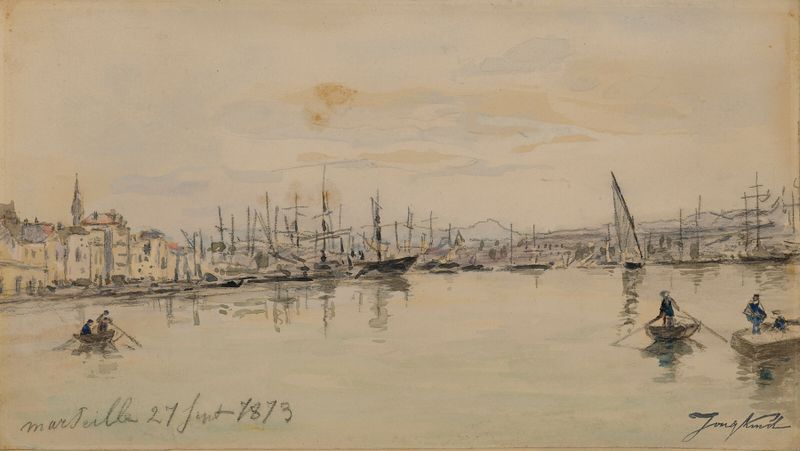
Le Port de Marseille
Johan Barthold Jongkind

Canal Saint-Martin
Johan Barthold Jongkind

Countryside near Brezins, between Grenoble and Vienne
Johan Barthold Jongkind

Notre-Dame vue du quai de la Tournelle
Johan Barthold Jongkind

Environs de Grenoble
Johan Barthold Jongkind

Clair de lune à Overschie (environs de Rotterdam)
Johan Barthold Jongkind

Port de Honfleur
Johan Barthold Jongkind
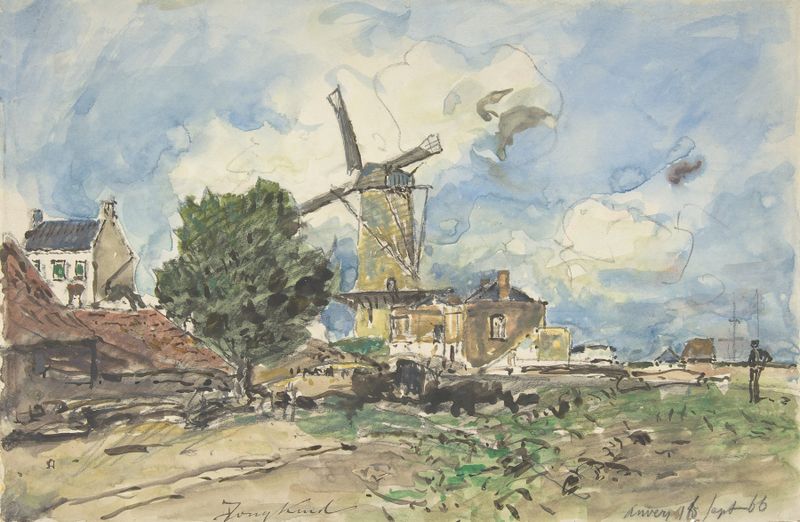
Wind Mill at Antwerp
Johan Barthold Jongkind

Le Havre
Johan Barthold Jongkind

The Church of Overschie
Johan Barthold Jongkind





