
La Rue Victor Cousin — History & Facts
In the delicate balance of light and shadow, transformation unfolds, revealing the untold stories of a city street. Look to the left at the sun-drenched buildings, their muted tones capturing a moment suspended in time. The artist masterfully blends soft pastels with deeper earth hues, creating a harmonious rhythm that draws the eye along the cobblestone path. Notice how the interplay of light spills gently across the scene, illuminating the careful brush strokes that suggest movement and life—an impression of urban existence rather than a literal depiction. The juxtaposition of the bustling street and the serene architecture speaks to the transient nature of life.
Each figure, seemingly engaged in their own narrative, hints at an underlying connectivity, a reminder of shared experiences. The subtle texture of the painting evokes nostalgia, inviting contemplation about the transformations of the city and its inhabitants over time, and how silence often carries the weight of unspoken histories. Auguste Louis Lepère created this piece around 1870–1918, a pivotal period marked by immense change in both art and society. During these years in France, the Impressionist movement was gaining momentum, challenging traditional conventions and embracing modernity.
The artist's focus on urban landscapes reflects his deep engagement with the evolving dynamics of the city, encapsulating a moment that resonates with the profound transformations of his time.
More Artworks by Auguste Louis Lepère
Browse all →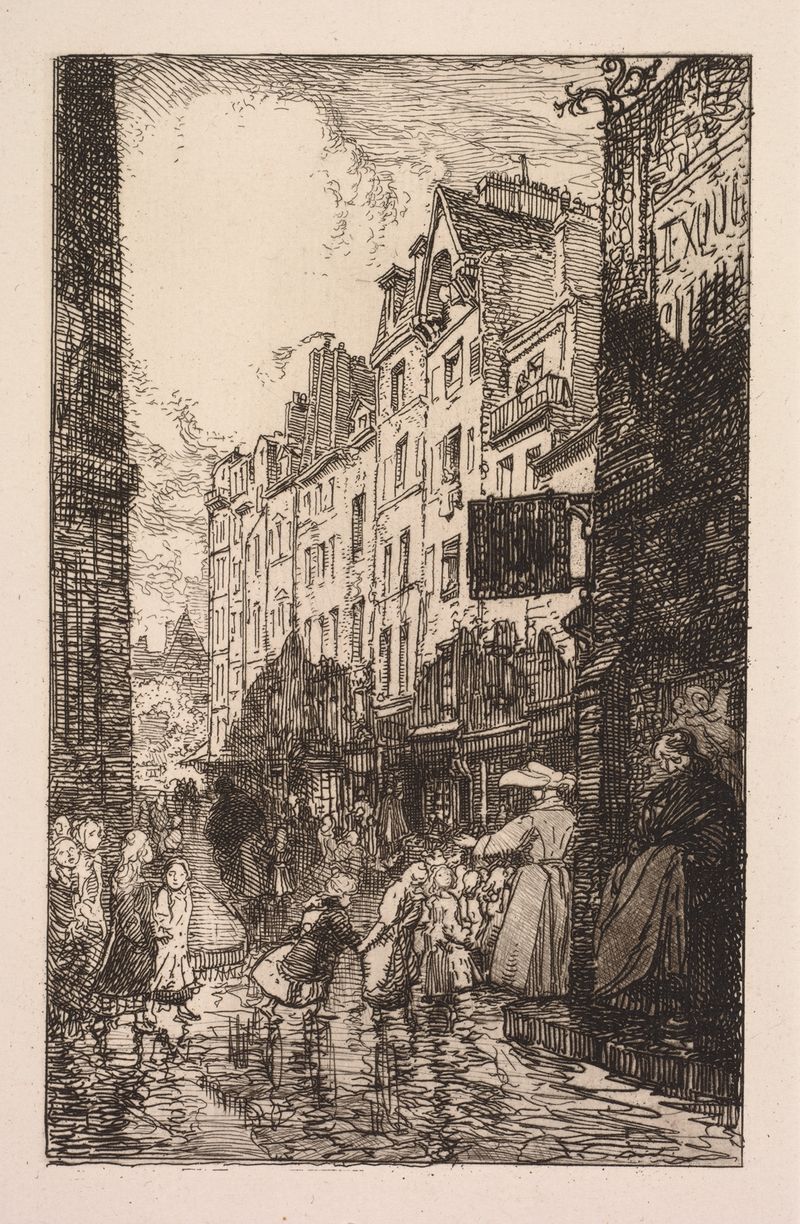
La Rue des Prêtres Saint-Séverin
Auguste Louis Lepère
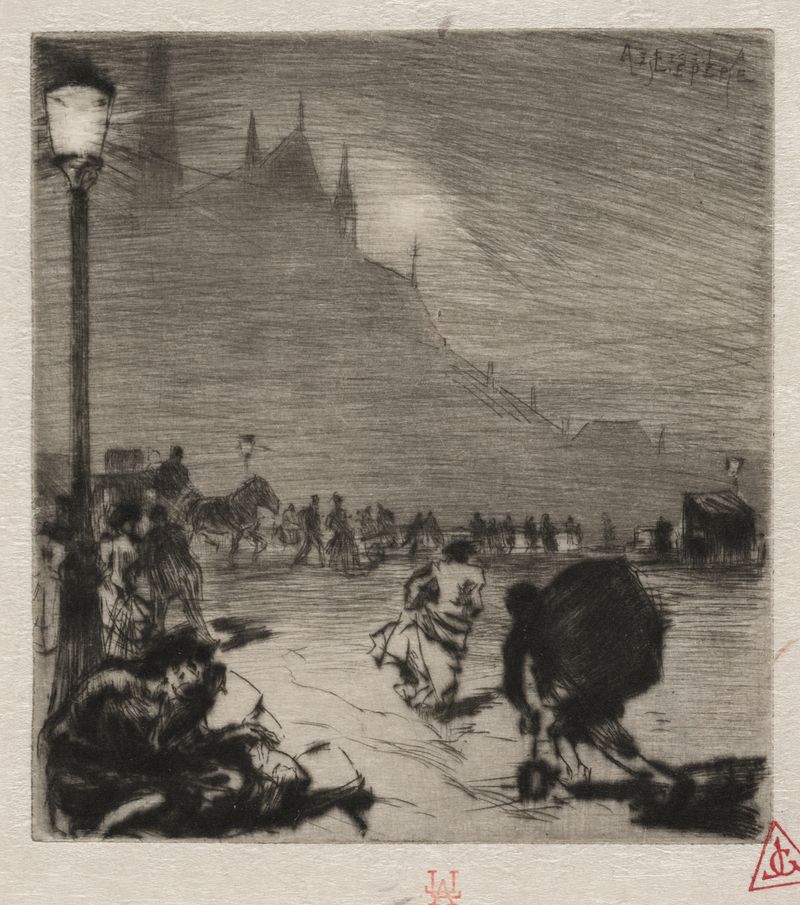
Au Coin du Pont-aux-Doubles
Auguste Louis Lepère
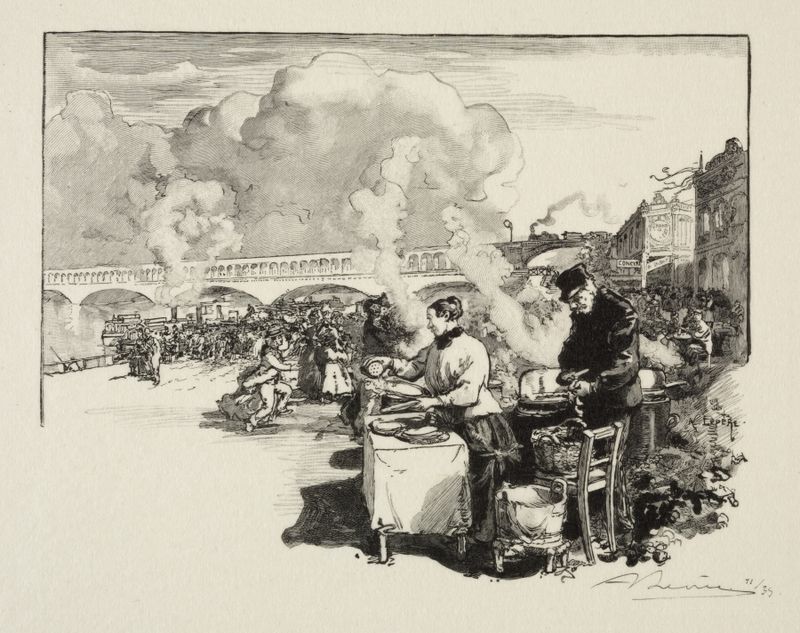
Debarcadère des bateaux-omnibus
Auguste Louis Lepère

La Seine, au quai de la Rapée
Auguste Louis Lepère
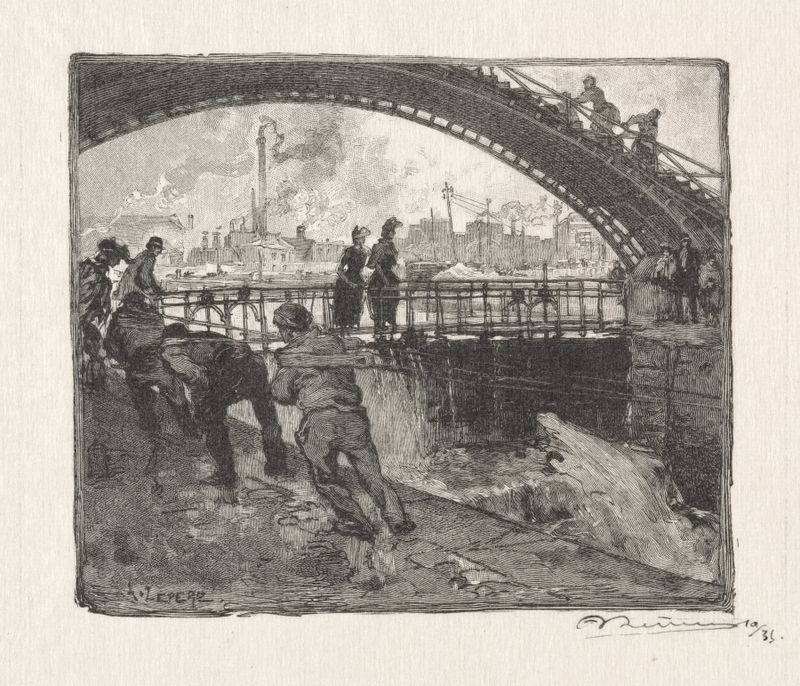
L’Ecluse du Canal St. Martin
Auguste Louis Lepère

Le Boulevard Montmartre, le Soir
Auguste Louis Lepère

Une Chasse au Mont Gérard
Auguste Louis Lepère
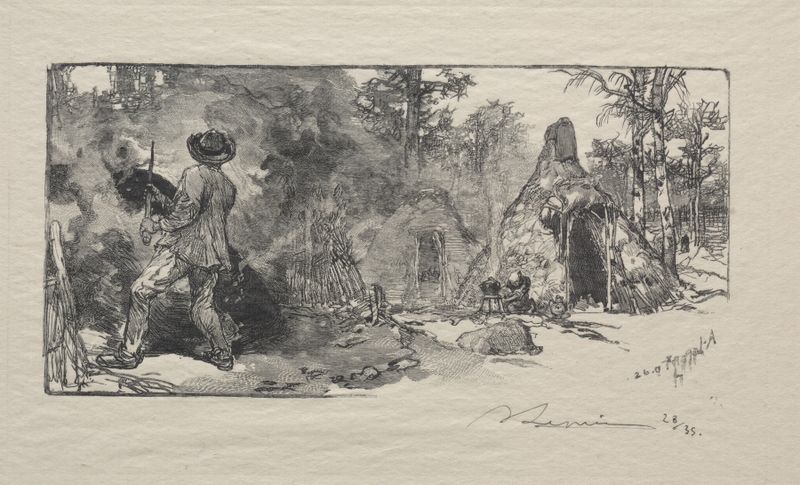
Les Charbonniere
Auguste Louis Lepère
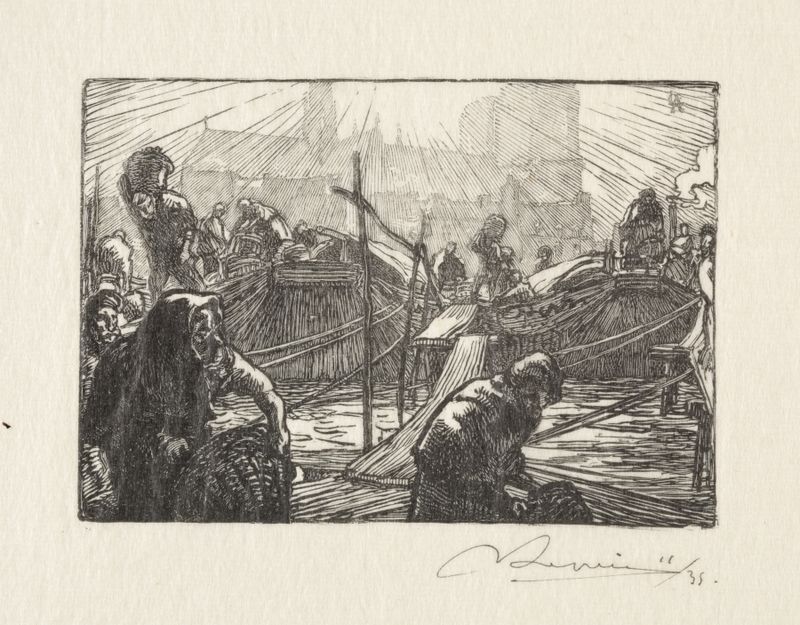
Notre Dame vue du Marché aux pommes
Auguste Louis Lepère

Le Palais des Arts Liberaux, Intèrieur
Auguste Louis Lepère





