
La Salpêtrière, Vue De La Rapée — History & Facts
Where does light end, and longing begin? In La Salpêtrière, Vue De La Rapée, the boundary between the two is an ethereal dance, inviting contemplation on movement amidst the stillness of architecture and nature. Focus first on the shimmering waters in the foreground; they glisten under a delicate sun, their surface animated by tiny ripples that suggest an awakening. Your gaze then sweeps upwards toward the imposing structure of La Salpêtrière in the background, its grand façade standing resolute against the soft blue of the sky. The use of light is masterful—notice how it spills onto the building, illuminating its details while casting subtle shadows that evoke a sense of depth and history.
The palette of pastel hues contrasts gently, creating a harmony that draws you deeper into the composition. Delve into the nuances—the contrast between the lively foreground and the stoic institution behind it speaks volumes. The movement of water juxtaposes the permanence of stone, hinting at the stories held within La Salpêtrière's walls, a former hospital for the mentally ill. Each ripple seems to echo the silent, unseen lives that once flowed through this place, transforming the surface into a mirror of forgotten narratives and desires. In 1752, the artist captured this view during a time when Paris was teeming with artistic innovation.
Raguenet, influenced by the burgeoning Rococo style, sought to blend beauty with social commentary. The city was a canvas of change, and the depiction of such a significant institution reflects the complexities of life and human experience prevalent in his era.
More Artworks by Nicolas Jean-Baptiste Raguenet
Browse all →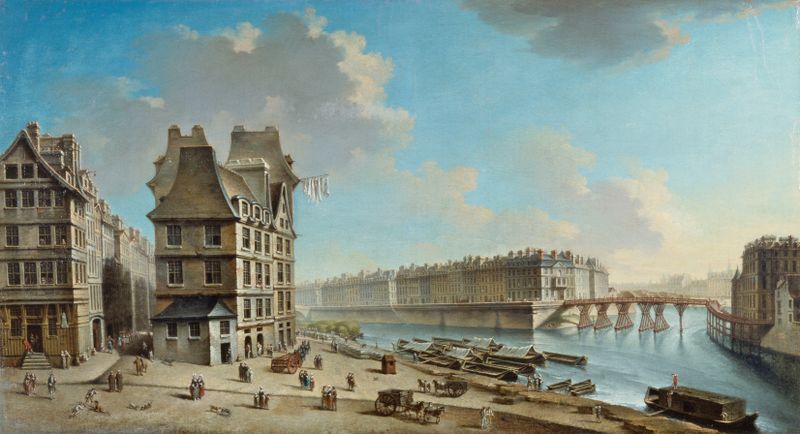
La Grève, l’Ile Saint-Louis et le Pont Rouge, vus de la place de la Grève
Nicolas Jean-Baptiste Raguenet
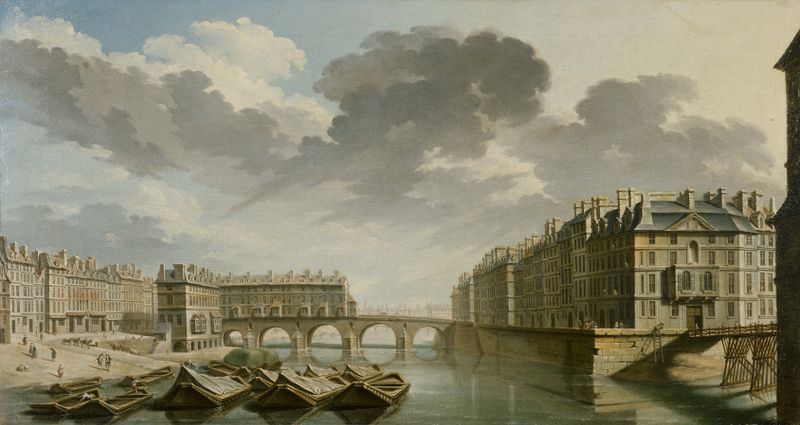
Le Quai des Ormes (actuel quai de l’Hôtel de Ville), le pont Marie et l’île Saint-Louis
Nicolas Jean-Baptiste Raguenet

Le Palais des Tuileries, vu du quai d’Orsay
Nicolas Jean-Baptiste Raguenet
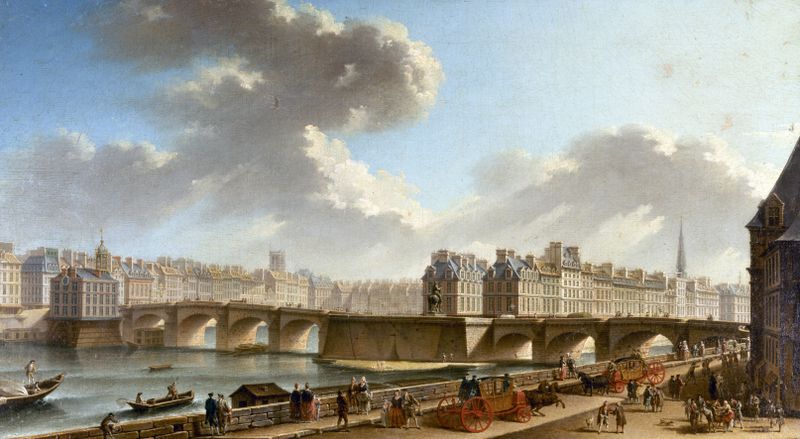
Le Pont-Neuf Et La Cité, Vus Du Quai De Conti
Nicolas Jean-Baptiste Raguenet
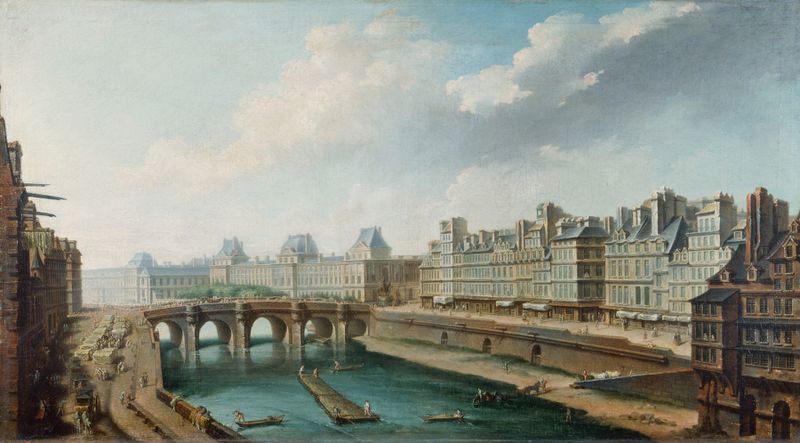
Le Louvre, le Pont-Neuf et le quai des Orfèvres, vus du quai des Grands-Augustins
Nicolas Jean-Baptiste Raguenet
Le Palais de l’archevêché, vue de la rive gauche
Nicolas Jean-Baptiste Raguenet
Le Chevet de Notre-Dame et la Pointe occidentale de l’Ile Saint-Louis
Nicolas Jean-Baptiste Raguenet
La Pointe orientale de l’île Saint-Louis, avec l’hôtel de Bretonvilliers et l’hôtel Lambert
Nicolas Jean-Baptiste Raguenet
Le cabaret l’Image Notre-Dame, place de Grève, actuelle place de l’Hôtel de Ville
Nicolas Jean-Baptiste Raguenet

La joute des mariniers, entre le pont Notre-Dame et le pont au Change
Nicolas Jean-Baptiste Raguenet





