
Le Palais de l’archevêché, vue de la rive gauche — History & Facts
Can paint confess what words never could? In a world where decay intertwines with remembrance, Le Palais de l’archevêché, vue de la rive gauche captures the haunting beauty of a once-magnificent structure, now yearning for the whispers of its past glory. Focus on the majestic archways stretching across the canvas, where sunlight filters through, illuminating the gently crumbling façades. The rich, muted colors of ochre and soft blues evoke nostalgia, while the play of light enhances the textures of the aging stone. Notice how Raguenet masterfully contrasts the vibrancy of nature on the left, lush and alive, against the somber stillness of the architecture, inviting the viewer to reflect on time's passage. Delve deeper into the emotional landscape of the painting.
The juxtaposition of the flourishing trees and the decaying palace suggests a dialogue between life and loss, evoking a sense of melancholy for what once was. The stillness of the water mirrors the building's decay, amplifying the sensation of time standing still — a poignant reminder of the inevitability of change and the fragility of human creations. In 1756, Raguenet painted this piece while residing in France, during a period marked by both artistic innovation and the philosophical undercurrents of the Enlightenment. The artwork reflects the growing interest in landscape painting and the exploration of emotions through nature.
It stands as a testament to a moment in history when artists began to contemplate their relationship with the past, capturing the ephemerality of existence.
More Artworks by Nicolas Jean-Baptiste Raguenet
Browse all →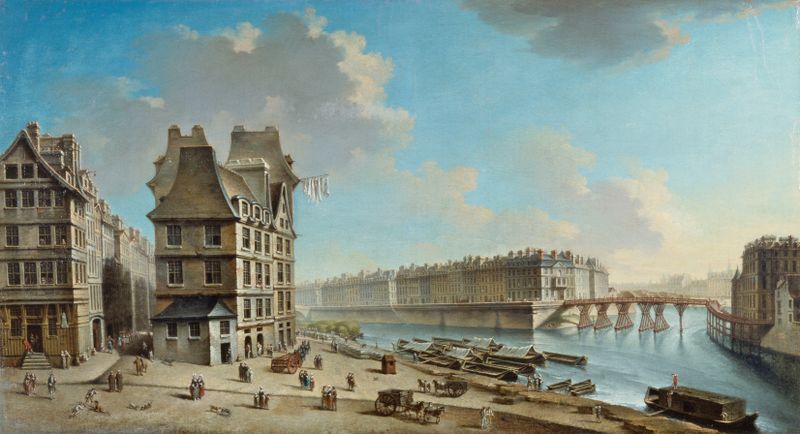
La Grève, l’Ile Saint-Louis et le Pont Rouge, vus de la place de la Grève
Nicolas Jean-Baptiste Raguenet
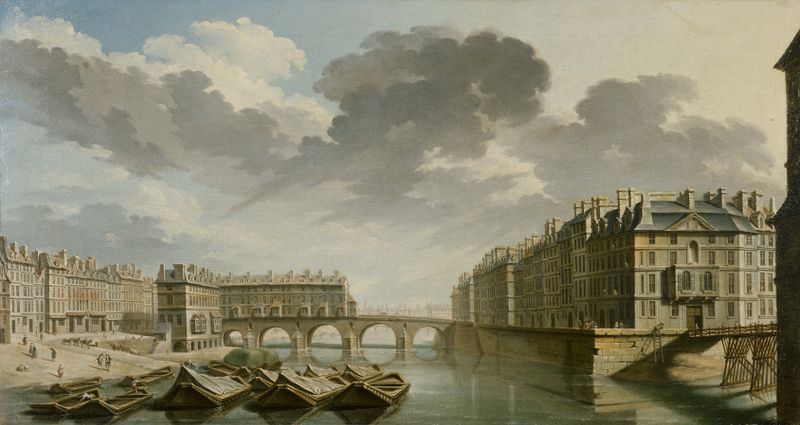
Le Quai des Ormes (actuel quai de l’Hôtel de Ville), le pont Marie et l’île Saint-Louis
Nicolas Jean-Baptiste Raguenet

Le Palais des Tuileries, vu du quai d’Orsay
Nicolas Jean-Baptiste Raguenet
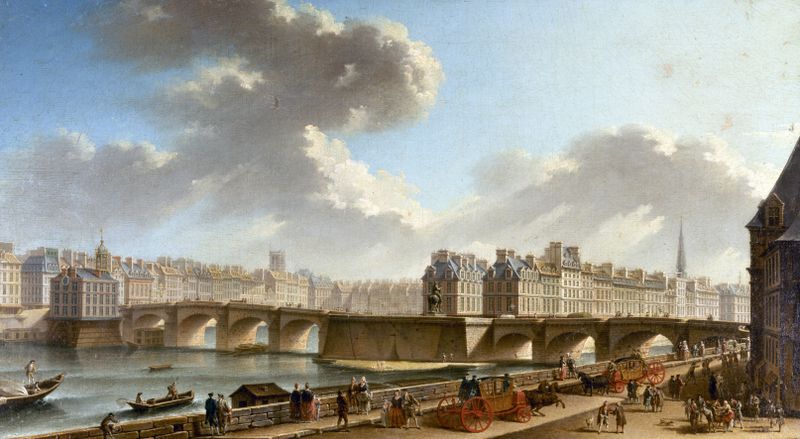
Le Pont-Neuf Et La Cité, Vus Du Quai De Conti
Nicolas Jean-Baptiste Raguenet
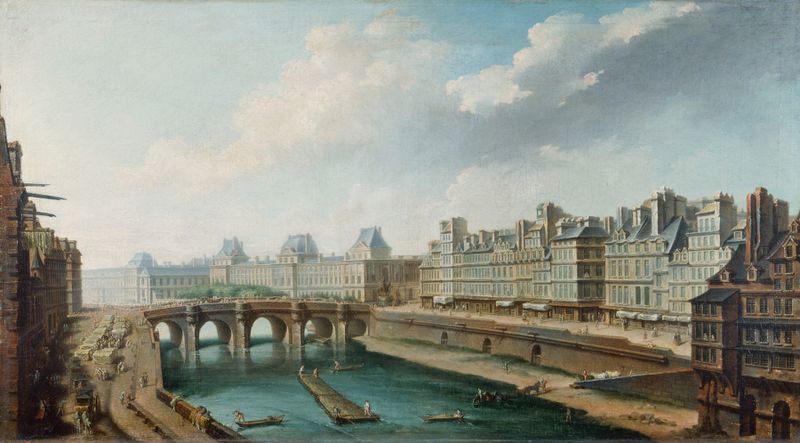
Le Louvre, le Pont-Neuf et le quai des Orfèvres, vus du quai des Grands-Augustins
Nicolas Jean-Baptiste Raguenet
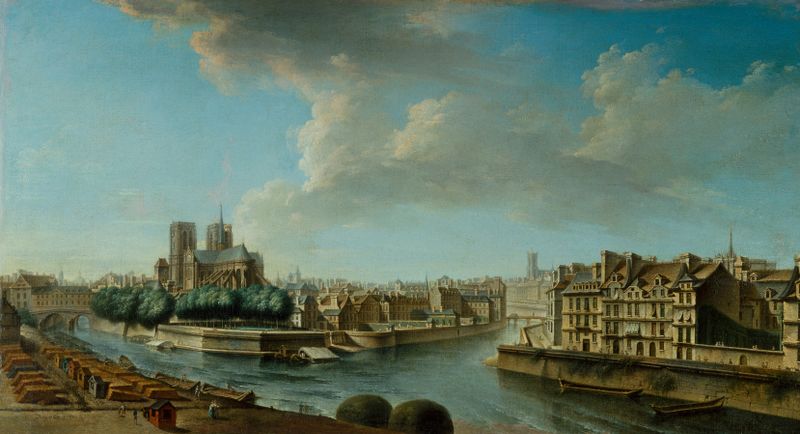
Le Chevet de Notre-Dame et la Pointe occidentale de l’Ile Saint-Louis
Nicolas Jean-Baptiste Raguenet
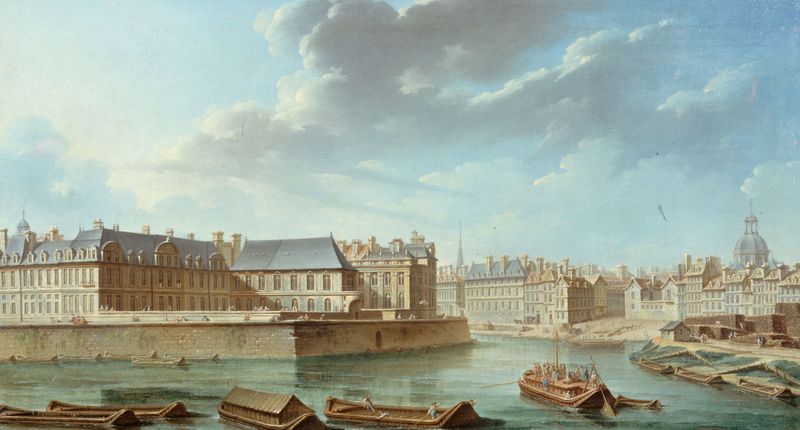
La Pointe orientale de l’île Saint-Louis, avec l’hôtel de Bretonvilliers et l’hôtel Lambert
Nicolas Jean-Baptiste Raguenet
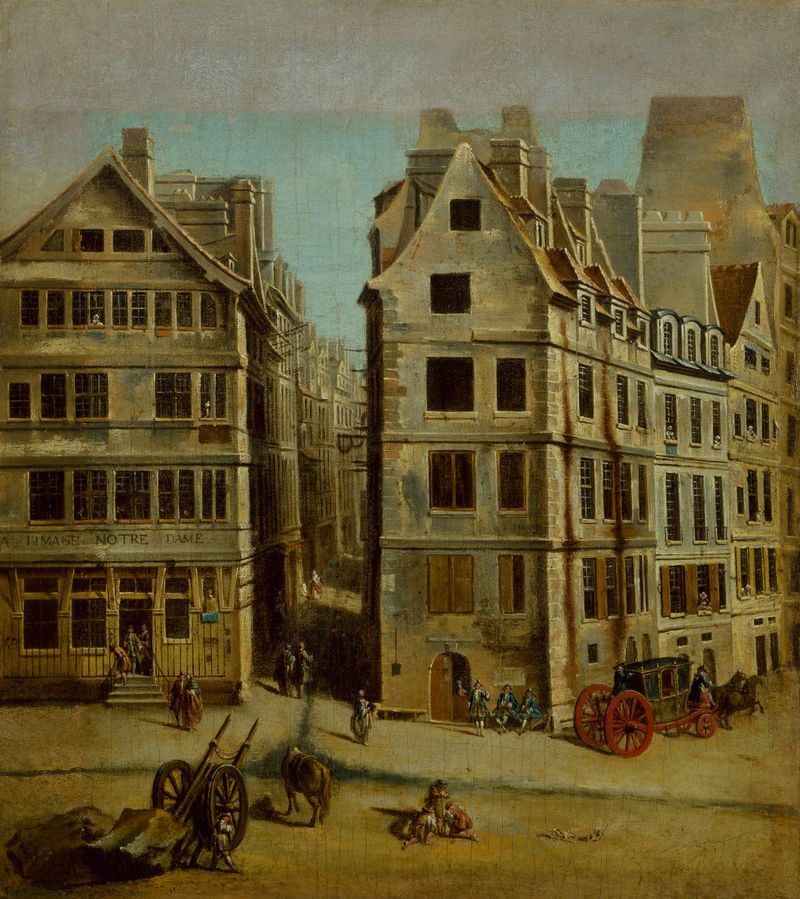
Le cabaret l’Image Notre-Dame, place de Grève, actuelle place de l’Hôtel de Ville
Nicolas Jean-Baptiste Raguenet

La joute des mariniers, entre le pont Notre-Dame et le pont au Change
Nicolas Jean-Baptiste Raguenet
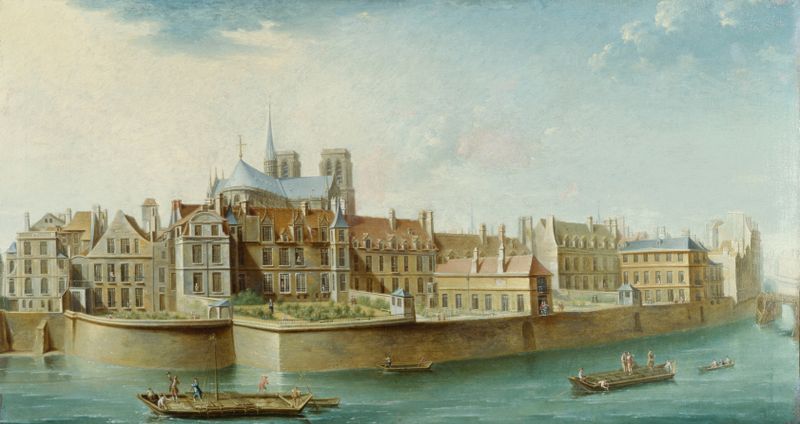
Le Cloître Notre-Dame, vu de l’île Saint Louis (quai d’Orléans)
Nicolas Jean-Baptiste Raguenet
More Architecture Art
Browse all →
The statue of Liberty
Frédéric Auguste Bartholdi

View of Houses in Delft, Known as ‘The Little Street’
Johannes Vermeer

View of Houses in Delft, Known as ‘The Little Street’
Johannes Vermeer

The Cathedral in Rouen. The portal, Grey Weather
Claude Monet

The yellow house
Vincent van Gogh

The Church in Auvers-sur-Oise, View from the Chevet
Vincent van Gogh