
Le cabaret l’Image Notre-Dame, place de Grève, actuelle place de l’Hôtel de Ville — History & Facts
This moment captured on canvas speaks to the intricate dance between fate and artistry, where every detail whispers of stories untold and destinies entwined. Look closely at the vibrant gathering at the cabaret, where figures mingle beneath a soft canopy of light. Notice how the warm hues of ochre and gold envelop the scene, illuminating the faces filled with laughter and exuberance. Focus on the lively gestures of patrons as they engage in friendly conversation, their animated expressions revealing a world of connection amidst the chaos of 18th-century Paris.
The composition draws you in, leading your eyes across the bustling space, each element choreographed to evoke a sense of joyous camaraderie. Yet, beneath the surface, there’s a tension between the exuberant outward joy and the quiet undertones of the era. The figures, each seemingly lost in the moment, are also a reflection of a society on the brink of change. The juxtaposition of raucous celebration against the backdrop of impending revolution suggests a destiny that hangs delicately in the balance.
The subtle expressions of weariness in some faces remind viewers that even amidst festivity, the weight of the world lingers nearby. In 1751, the artist painted this tableau during a time of cultural blossoming in France, as the Enlightenment began to reshape societal norms. Raguenet, immersed in the vibrant artistic currents of Paris, sought to capture the essence of urban life amid an age of transformation. His work reflects not only the vivacity of the cabaret culture but also hints at the societal shifts that would soon ripple through the fabric of French life, forever altering its destiny.
More Artworks by Nicolas Jean-Baptiste Raguenet
Browse all →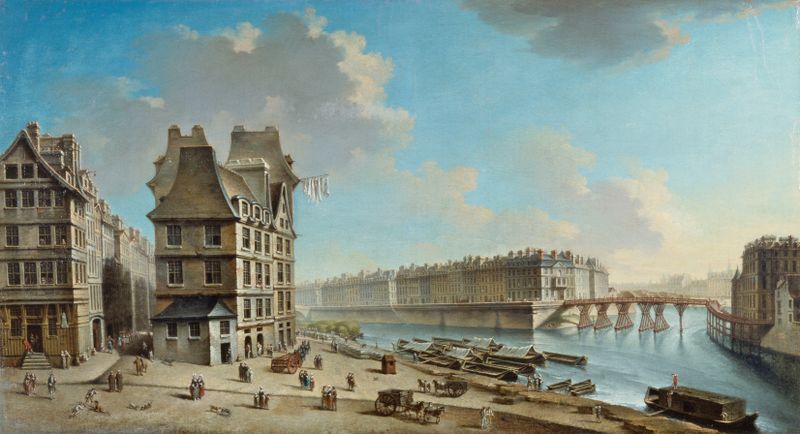
La Grève, l’Ile Saint-Louis et le Pont Rouge, vus de la place de la Grève
Nicolas Jean-Baptiste Raguenet
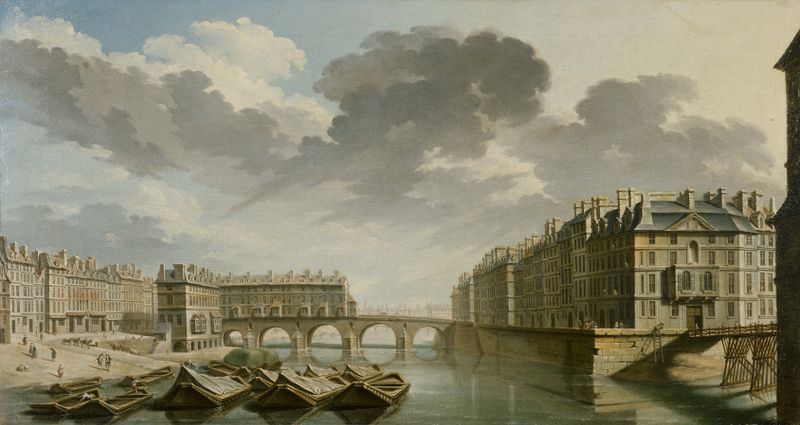
Le Quai des Ormes (actuel quai de l’Hôtel de Ville), le pont Marie et l’île Saint-Louis
Nicolas Jean-Baptiste Raguenet

Le Palais des Tuileries, vu du quai d’Orsay
Nicolas Jean-Baptiste Raguenet
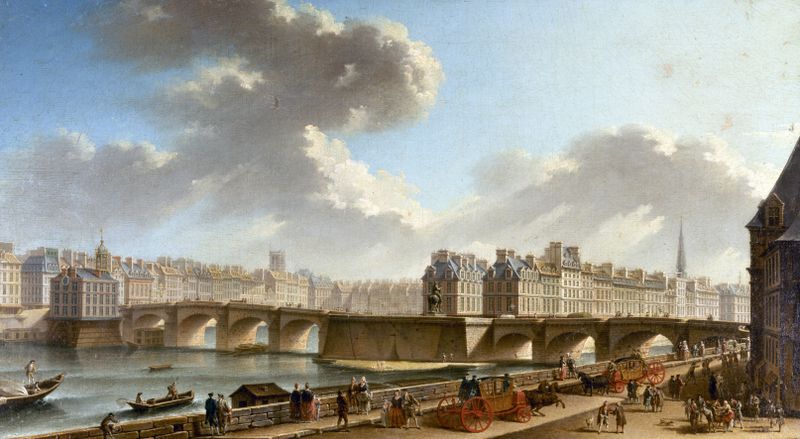
Le Pont-Neuf Et La Cité, Vus Du Quai De Conti
Nicolas Jean-Baptiste Raguenet
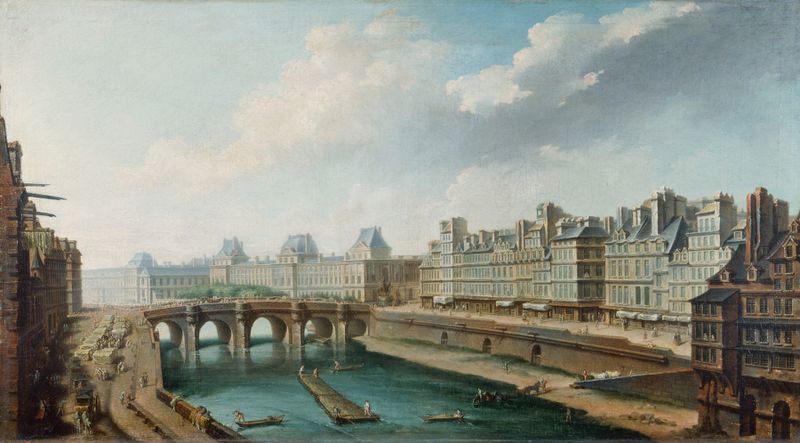
Le Louvre, le Pont-Neuf et le quai des Orfèvres, vus du quai des Grands-Augustins
Nicolas Jean-Baptiste Raguenet
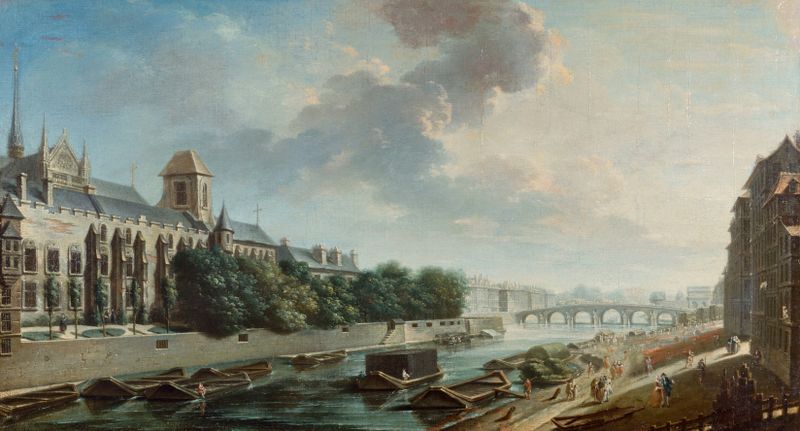
Le Palais de l’archevêché, vue de la rive gauche
Nicolas Jean-Baptiste Raguenet
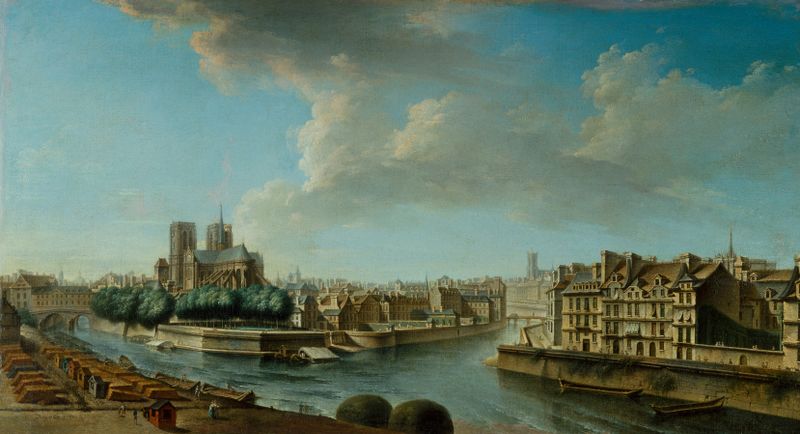
Le Chevet de Notre-Dame et la Pointe occidentale de l’Ile Saint-Louis
Nicolas Jean-Baptiste Raguenet
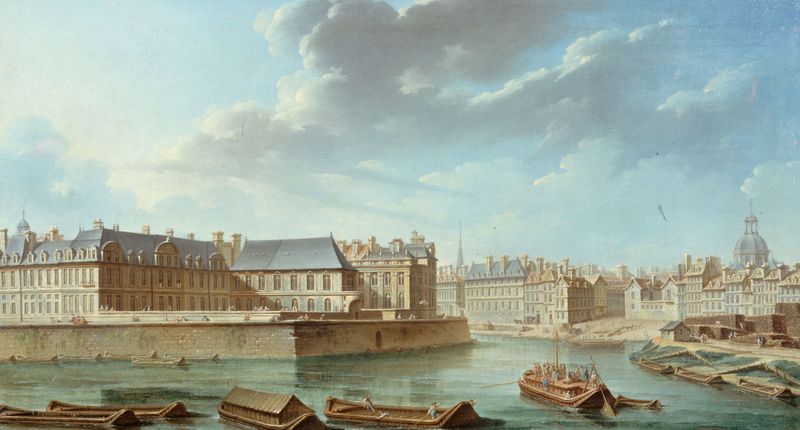
La Pointe orientale de l’île Saint-Louis, avec l’hôtel de Bretonvilliers et l’hôtel Lambert
Nicolas Jean-Baptiste Raguenet

La joute des mariniers, entre le pont Notre-Dame et le pont au Change
Nicolas Jean-Baptiste Raguenet
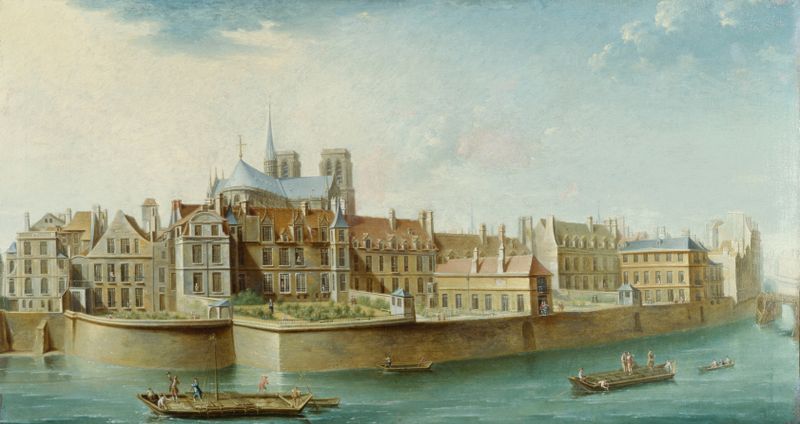
Le Cloître Notre-Dame, vu de l’île Saint Louis (quai d’Orléans)
Nicolas Jean-Baptiste Raguenet





