
La Seine à Samois — History & Facts
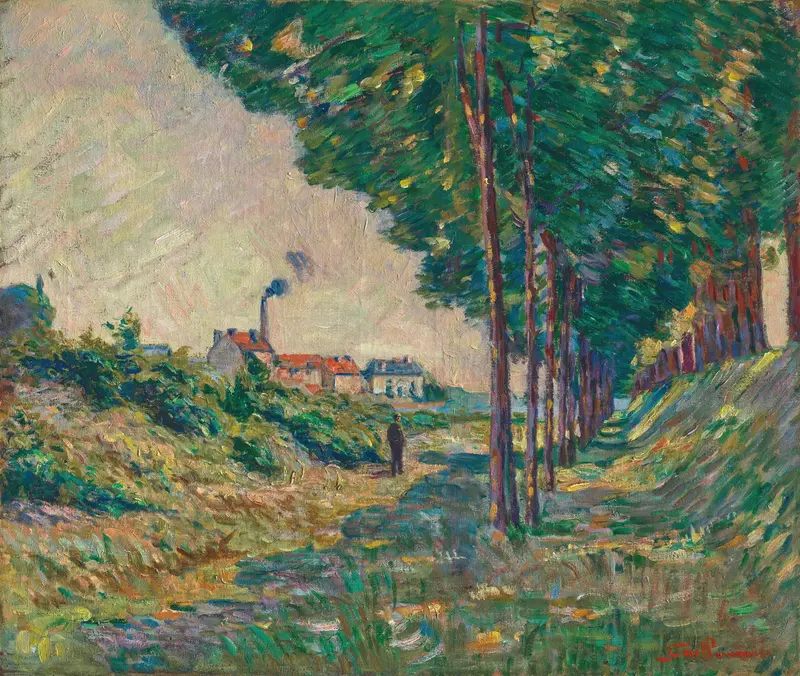
The first thing that catches the eye in La Seine à Samois is the river’s glassy surface, a mirror that doubles the world above it and invites the viewer to linger at its edge. The scene is alive with gentle movement: two figures stroll along the sunlit towpath, their shadows stretching into the pale mauve and gold cobblestones, while the distant boat floats quietly near the opposite bank. Trees, their trunks and branches rendered in quick, broken strokes, lean toward their own reflections, their autumnal colors melting into the water.
The sky, too, is restless, its clouds built from thick, swirling dabs of paint that echo the shimmering play of light below. Every element seems to vibrate with the late afternoon’s softness, as if the air itself were painted. Painted around 1898, this work belongs to the world of late nineteenth-century France, when artists like Armand Guillaumin sought to capture the fleeting moods of nature along the Seine. The Impressionist movement, with its devotion to painting en plein air and its fascination with changing light, was still shaping the way landscapes were seen and valued.
Such paintings were rarely grand commissions; instead, they were often made for private collectors or for the artist’s own circle, prized for their immediacy and freshness. Today, La Seine à Samois resides in the MuMa Museum of modern art André Malraux, a quiet testament to an era when artists found new poetry in the everyday. Let your gaze return to the water’s surface, and notice how every brushstroke seems to ripple with the promise of another moment just about to pass.
More Artworks by Armand Guillaumin

La Seine À Charenton
Armand Guillaumin
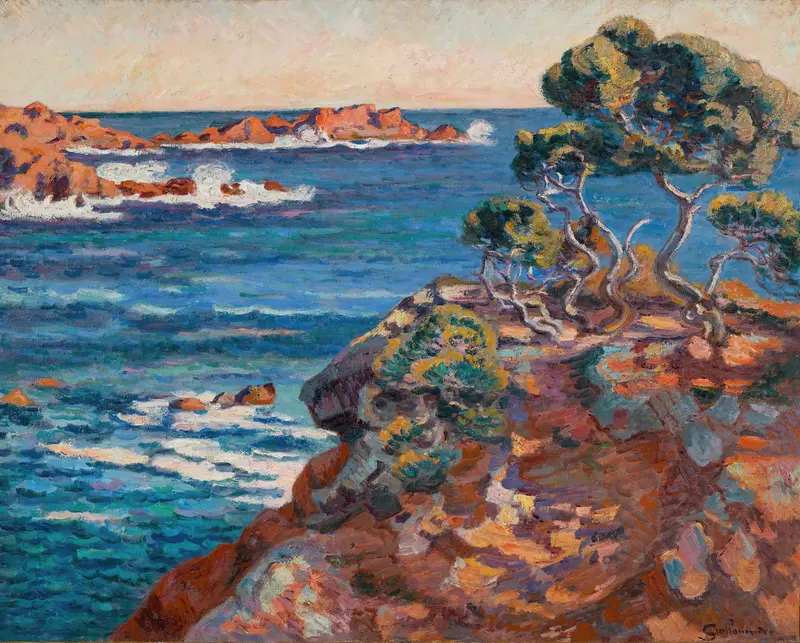
Bord De Mer À Agay
Armand Guillaumin
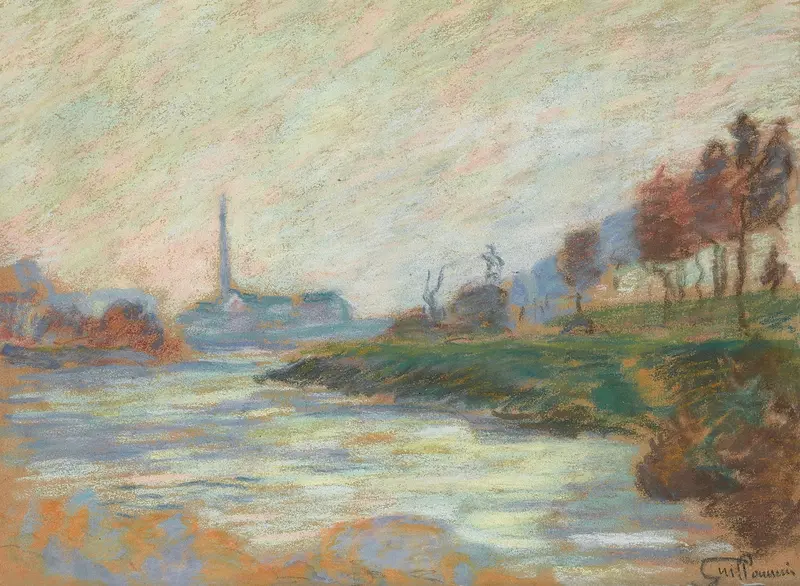
Confluent De La Marne Et De La Seine, Île De La France
Armand Guillaumin
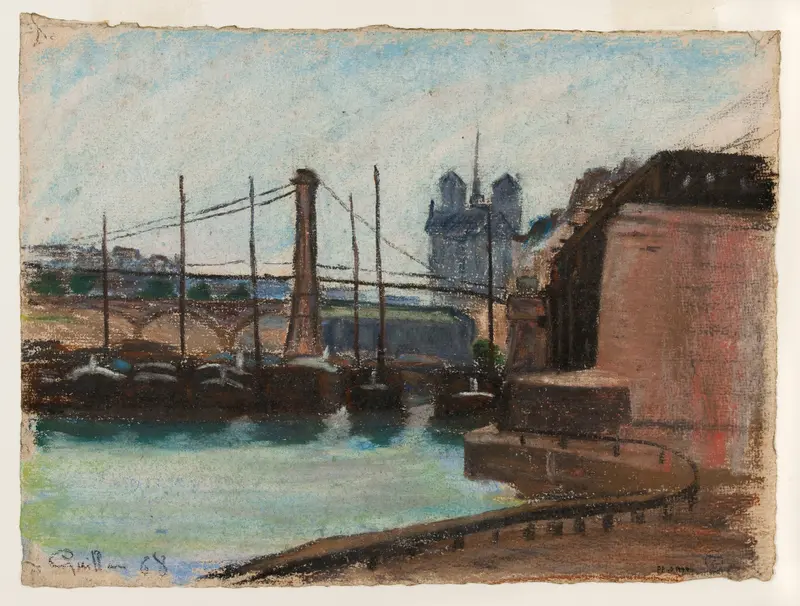
Le Pont d’Austerlitz
Armand Guillaumin
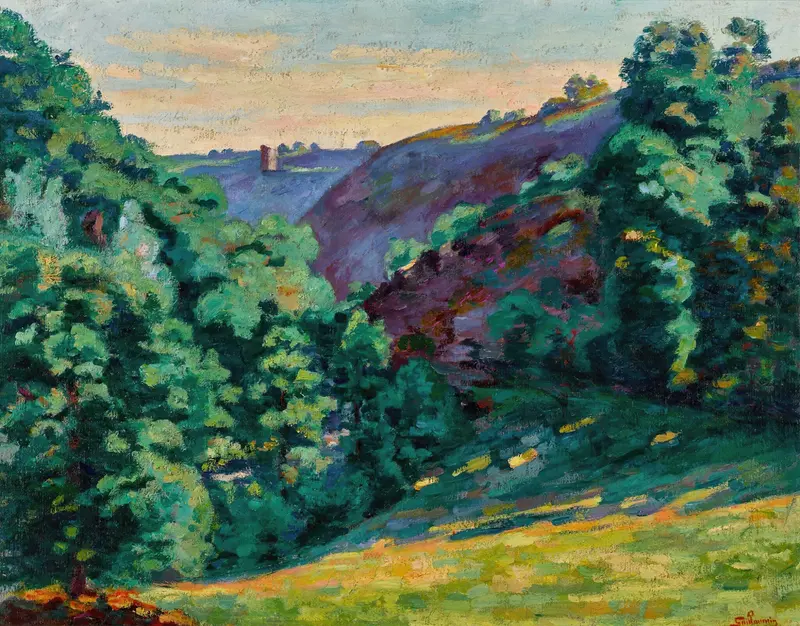
Le Ravin de la folie, vue de Chateau Crozant
Armand Guillaumin
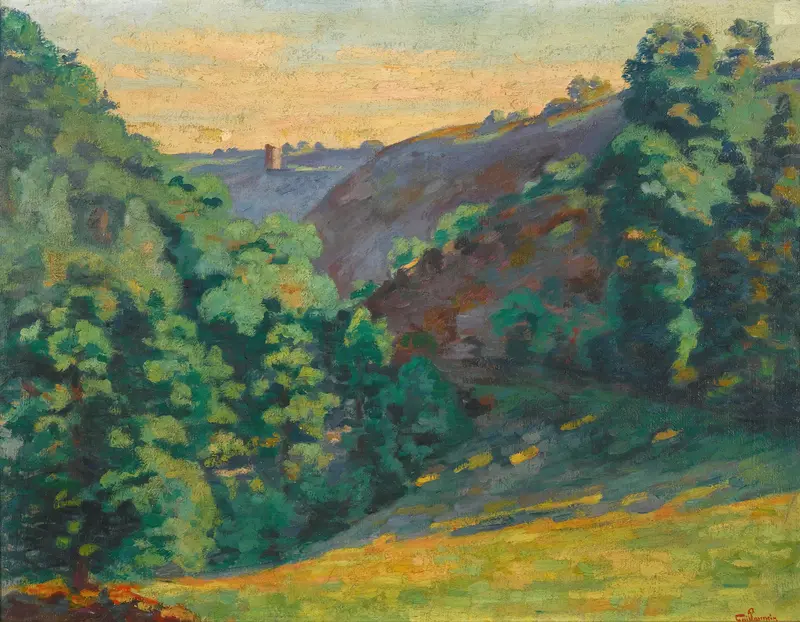
Crozant, Le Ravin De La Sedelle À La Folie
Armand Guillaumin
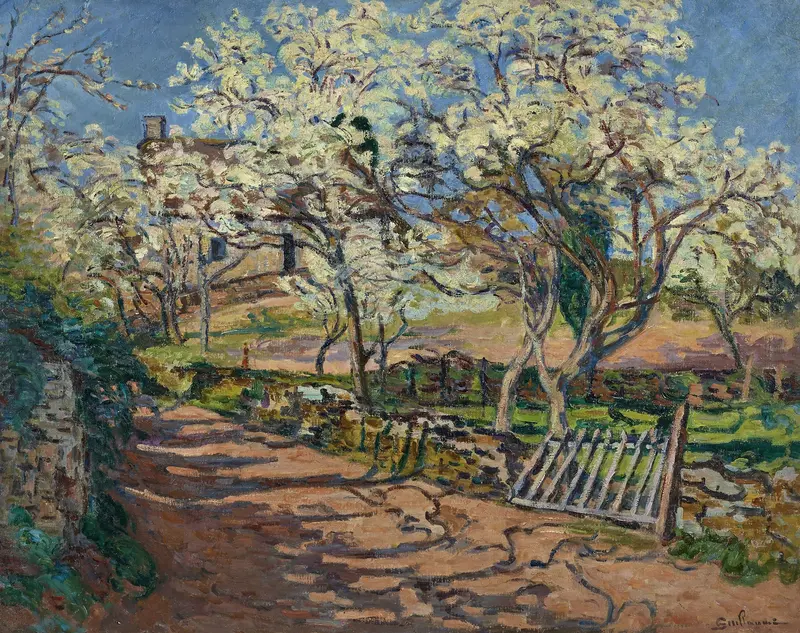
Paysage de Printemps
Armand Guillaumin
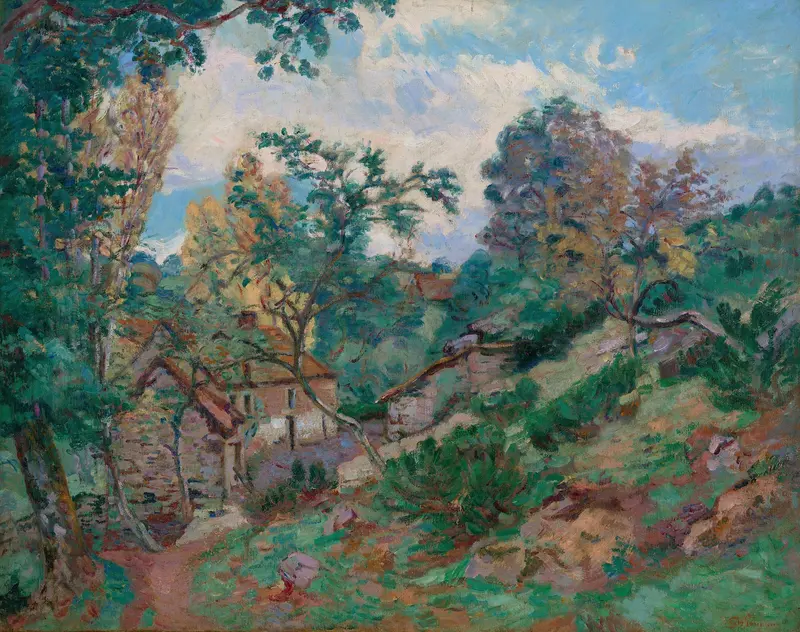
Paysage
Armand Guillaumin
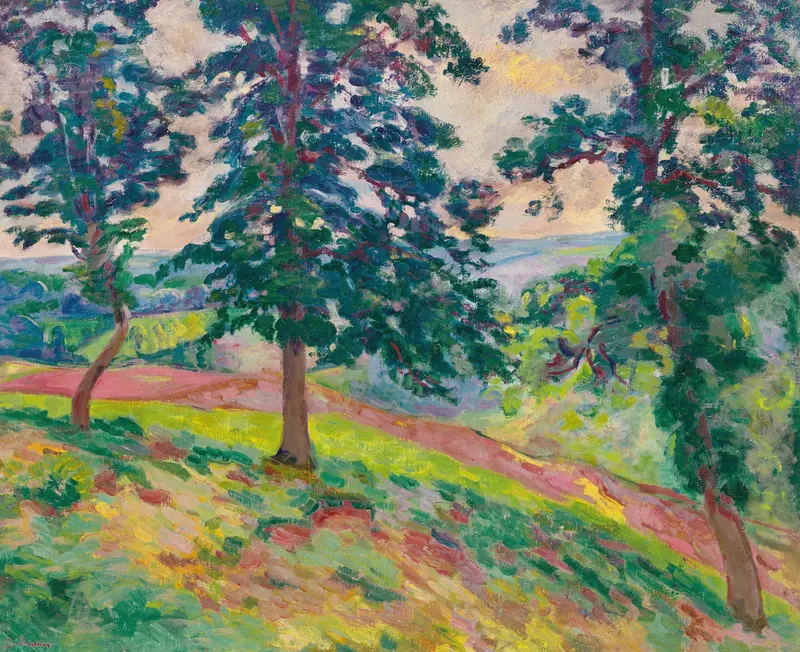
La vallée de la creuse
Armand Guillaumin
Le chemin de halage à Charenton, Ile de France
Armand Guillaumin
More Landscape Art

The Starry Night
Vincent van Gogh

View of Delft
Johannes Vermeer

Water Lilies
Claude Monet

The Grand Canal, Venice, looking north-west from the Ca' Corner to the Ca' Contarini degli Scrigni, with the campanile of Santa Maria della Carità
Canaletto

Windsor Castle
Canaletto

The Grand Canal looking North-East from the Palazzo Dolfin-Manin to the Rialto Bridge
Canaletto