
Lago di Lugano 65 Österreichische Galerie Belvedere — History & Facts
The first thing that arrests the viewer in Lago di Lugano 65 Österreichische Galerie Belvedere is the way the golden light pours across the landscape, as if the entire world is pausing to witness the slow revelation of morning or the hush of evening. The composition draws the eye from the rocky foreground, where a small group of travelers winds along a path, toward the luminous expanse of water and the distant, sculptural mountains. The figures are dwarfed by the vastness around them, their journey almost swallowed by the grandeur of nature, yet their presence adds a quiet pulse of human life to the scene.
The church nestled among cypress trees on the left signals a settled community, while the winding shoreline and mirrored lake invite the viewer to imagine the world beyond the frame. Every brushstroke seems calibrated to balance the warmth of the sun with the coolness of shadow, setting a contemplative mood. Painted in 1868, this work belongs to a period when European artists, inspired by Romanticism and the rise of landscape painting, sought out dramatic vistas and moments of atmospheric transformation. Such landscapes were often commissioned or collected by those eager to bring distant beauty into their homes, or to celebrate the natural wonders of their own regions.
While the details of this particular painting’s commission and early history remain elusive, its presence today in the collection of the Österreichische Galerie Belvedere places it among works that reflect both the aspirations and the anxieties of a rapidly changing nineteenth-century Europe. The world that produced this painting was one in which travel, science, and art were opening new ways of seeing—yet the longing for peace, rootedness, and awe persists in every glowing inch of the canvas. Let your gaze linger on the path, and imagine where it might lead.
More Artworks by Albert August Zimmermann
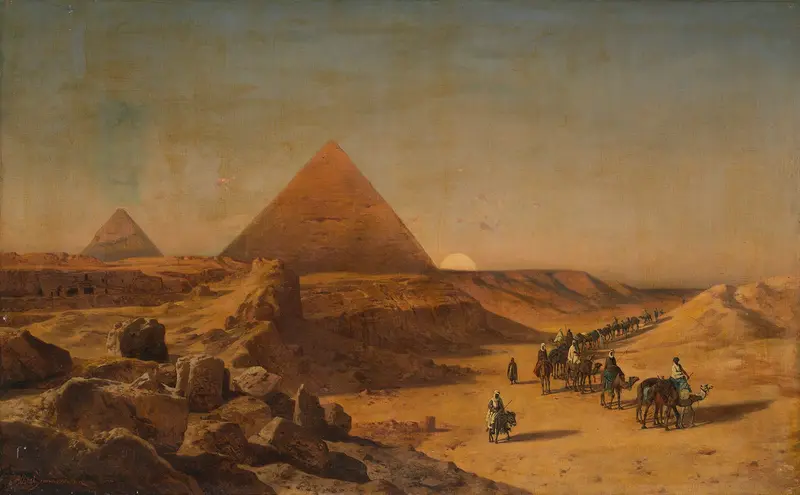
Pyramids
Albert August Zimmermann

Schwäbische Alb
Albert August Zimmermann
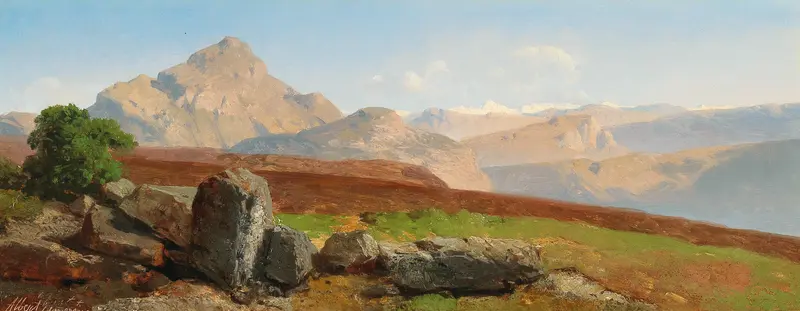
Mountain Landscape
Albert August Zimmermann
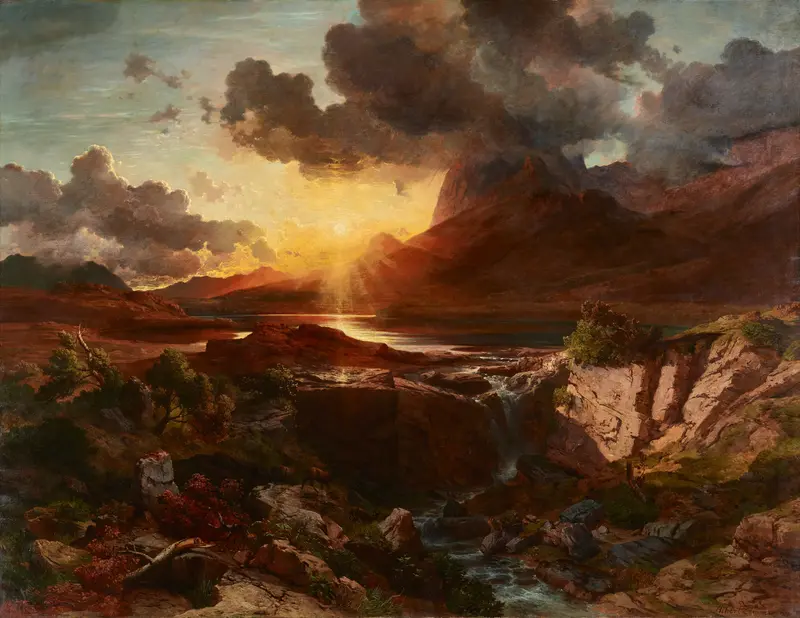
Sonnenuntergang am Hintersee in Berchtesgaden 13 Österreichische Galerie Belvedere
Albert August Zimmermann
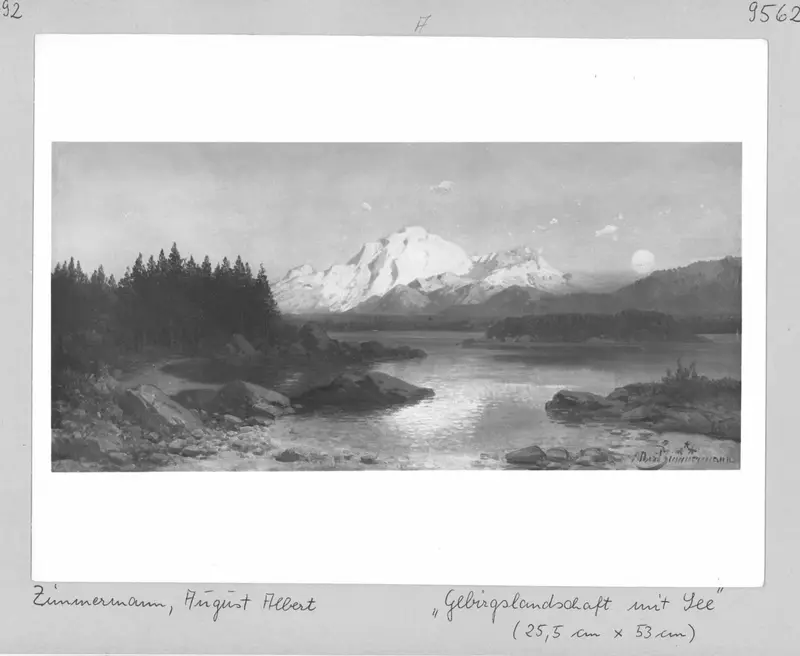
Mountain-landscape with lake
Albert August Zimmermann
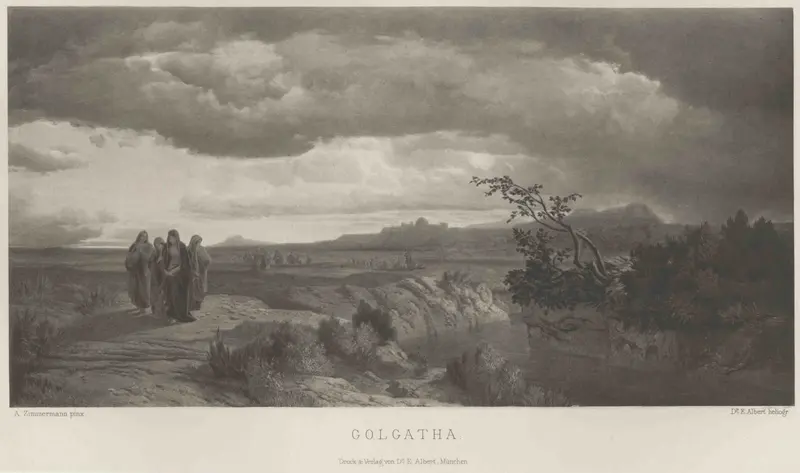
Golgatha
Albert August Zimmermann
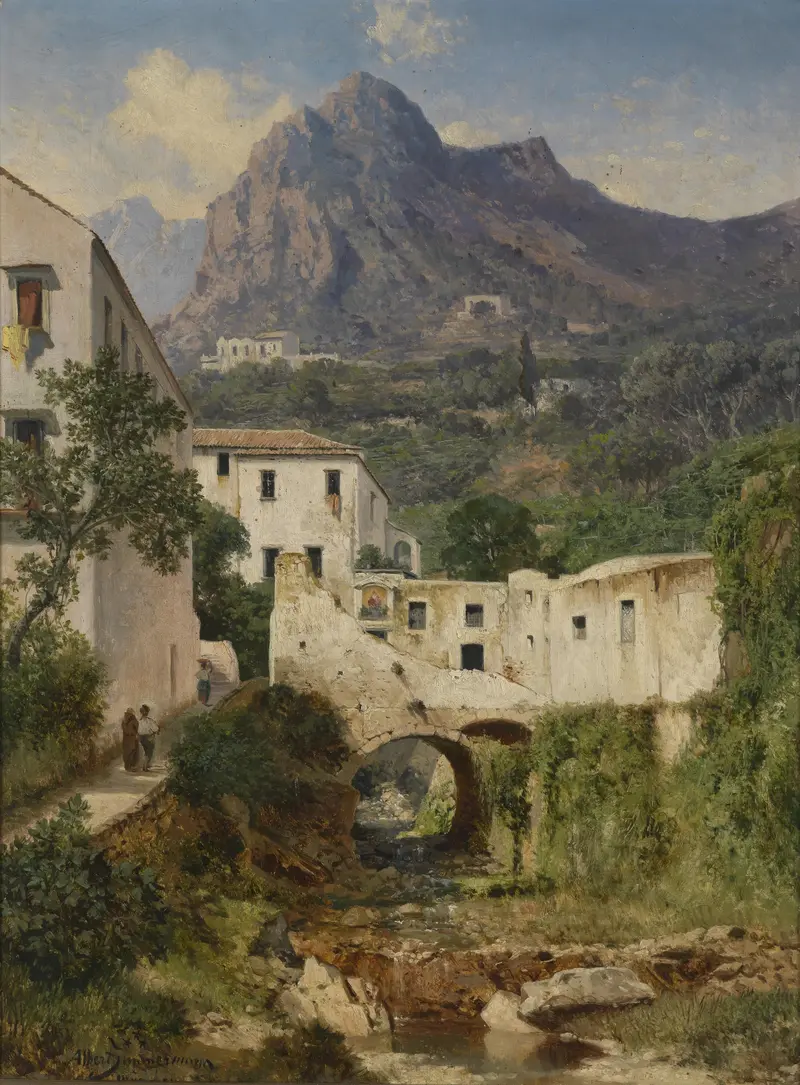
Mühltal bei Amalfi
Albert August Zimmermann
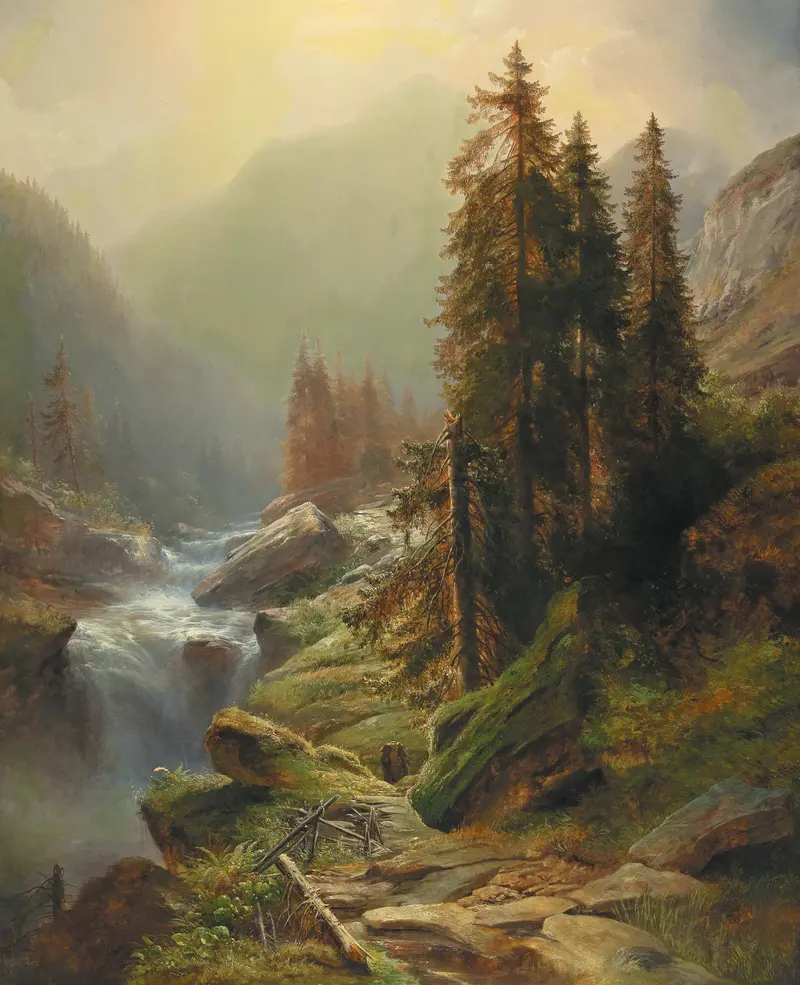
Large Mountain Landscape
Albert August Zimmermann
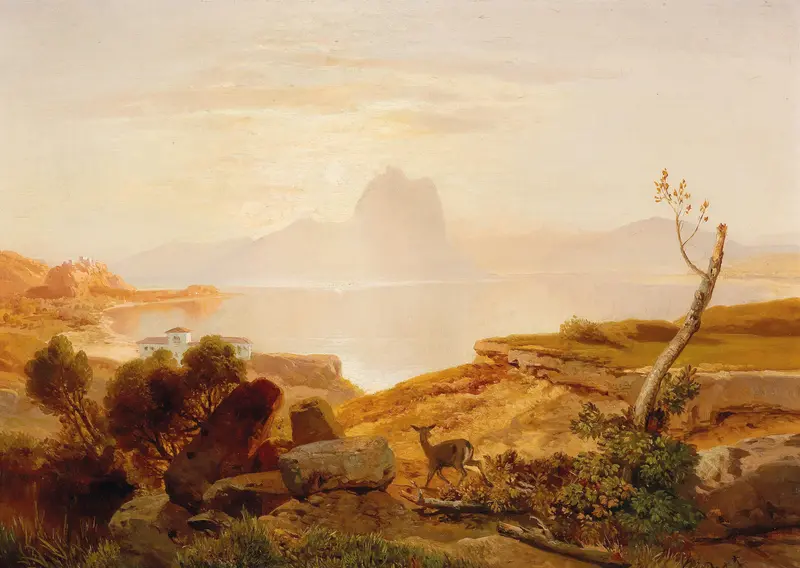
Partie am Como See
Albert August Zimmermann
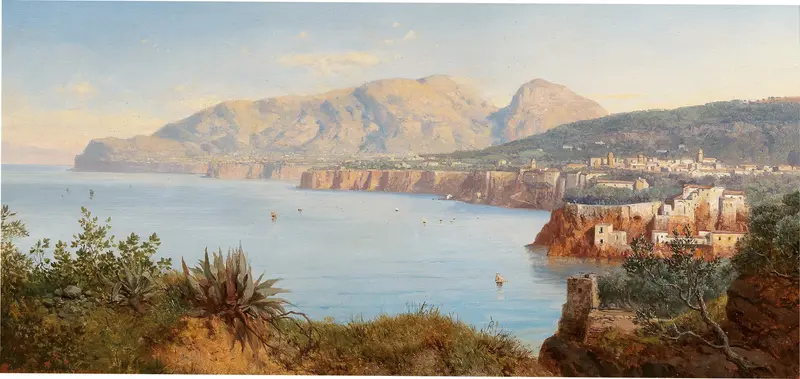
Coastal landscape in Sorrento near Naples
Albert August Zimmermann
More Landscape Art

The Starry Night
Vincent van Gogh

View of Delft
Johannes Vermeer

Water Lilies
Claude Monet

The Grand Canal, Venice, looking north-west from the Ca' Corner to the Ca' Contarini degli Scrigni, with the campanile of Santa Maria della Carità
Canaletto

Windsor Castle
Canaletto

The Grand Canal looking North-East from the Palazzo Dolfin-Manin to the Rialto Bridge
Canaletto