
Schwäbische Alb — History & Facts
A lone, wind-bent tree stands guard over a quiet pond, its twisted branches echoing the gentle undulations of the land behind it. Your eye is drawn up the sandy rise, where a shepherd and his flock pause in the open, dwarfed by the rolling sky. The painter has chosen a moment of stillness, where the drama is not in action but in the play of light across earth and cloud.
The vastness of the Schwäbische Alb stretches into the distance, the horizon melting into blue, while the foreground plants and water anchor you to the present, tangible world. Everything in the scene is arranged to lead you from the humble shrubbery to the distant, almost dreamlike hills, inviting you to wander with your gaze. Painted by Albert August Zimmermann by 1888, this landscape belongs to a tradition that flourished in 19th-century Germany, when artists and collectors alike turned their attention to the native countryside. Such works often found homes in bourgeois parlors or regional museums, celebrating a sense of place and national identity as industrialization transformed the land.
The Dorotheum collection, where this painting is documented, is a reminder that many of these scenes have passed quietly through private hands, their histories largely unwritten. What survives is the painter’s invitation: to pause, to look, and to find meaning in the ordinary sweep of land and sky.
More Artworks by Albert August Zimmermann
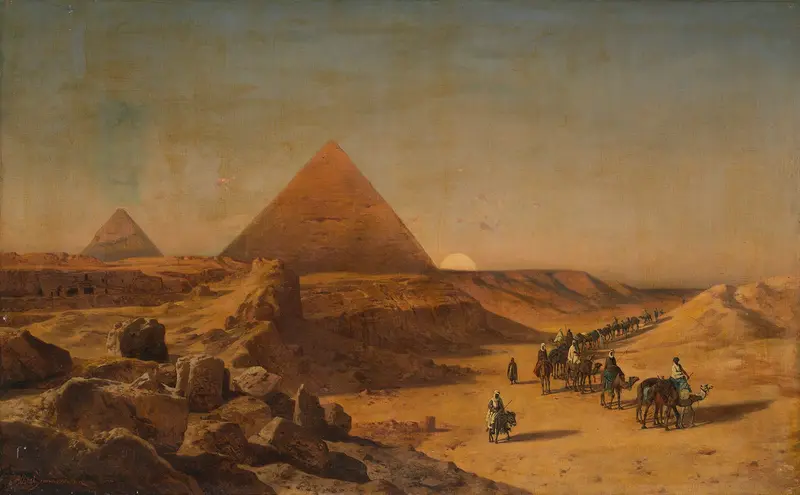
Pyramids
Albert August Zimmermann
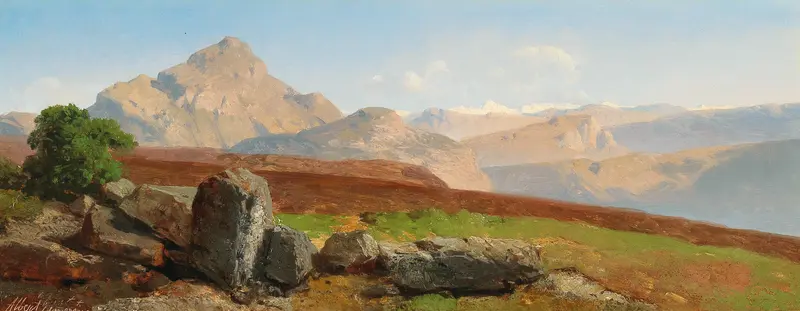
Mountain Landscape
Albert August Zimmermann
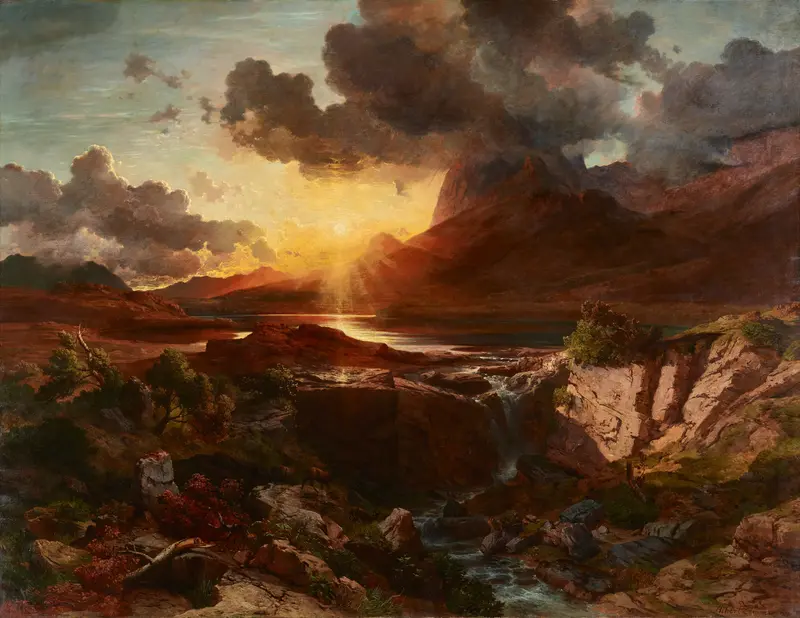
Sonnenuntergang am Hintersee in Berchtesgaden 13 Österreichische Galerie Belvedere
Albert August Zimmermann
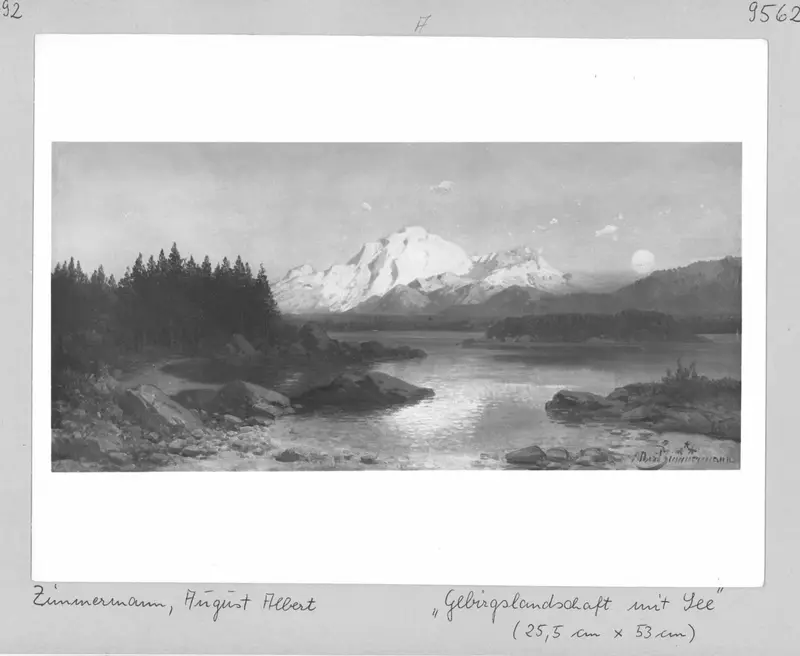
Mountain-landscape with lake
Albert August Zimmermann
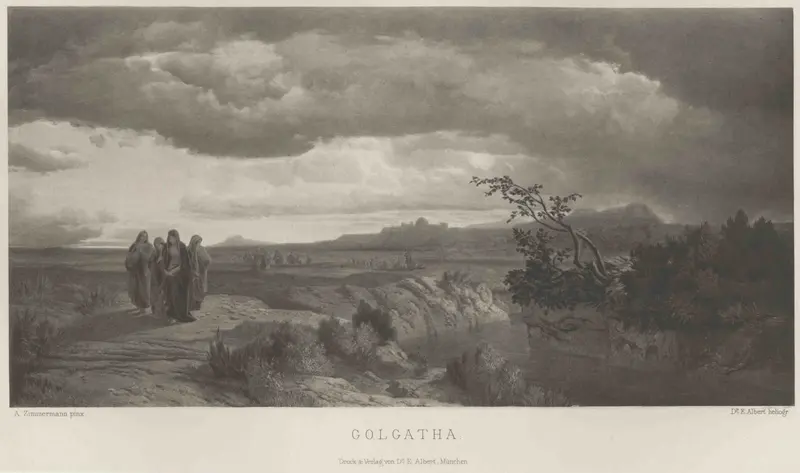
Golgatha
Albert August Zimmermann
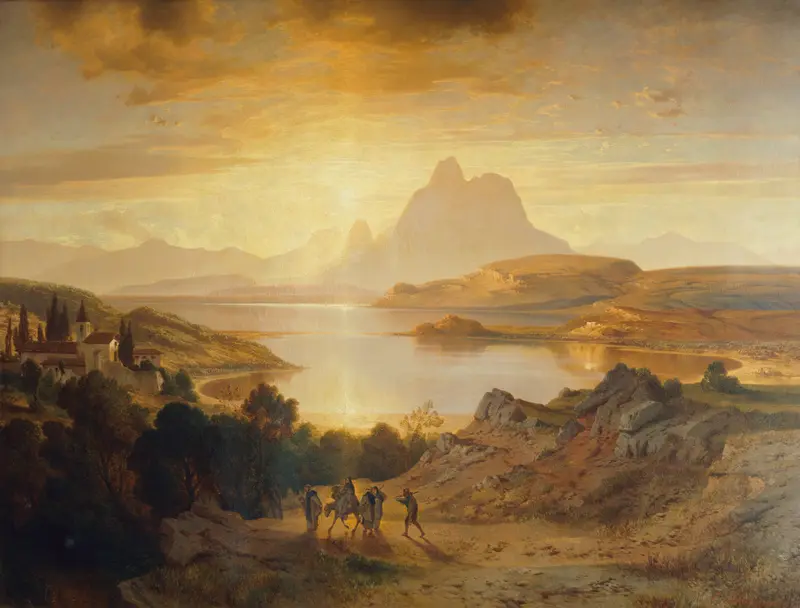
Lago di Lugano 65 Österreichische Galerie Belvedere
Albert August Zimmermann
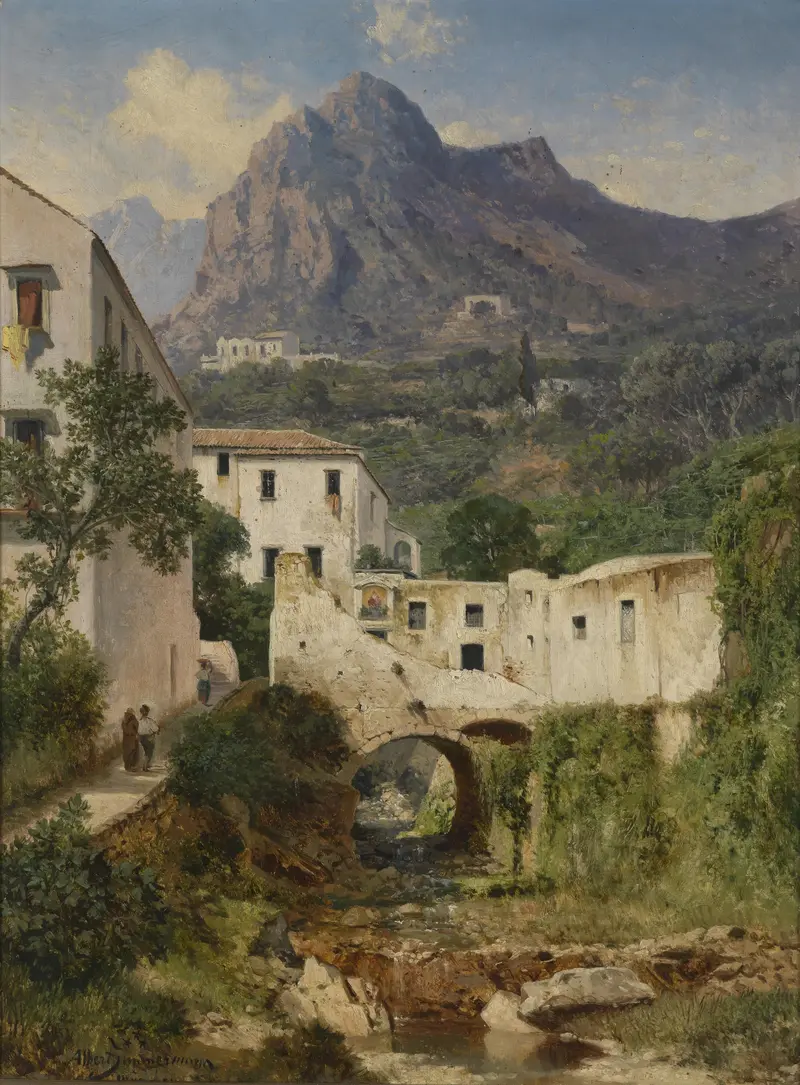
Mühltal bei Amalfi
Albert August Zimmermann
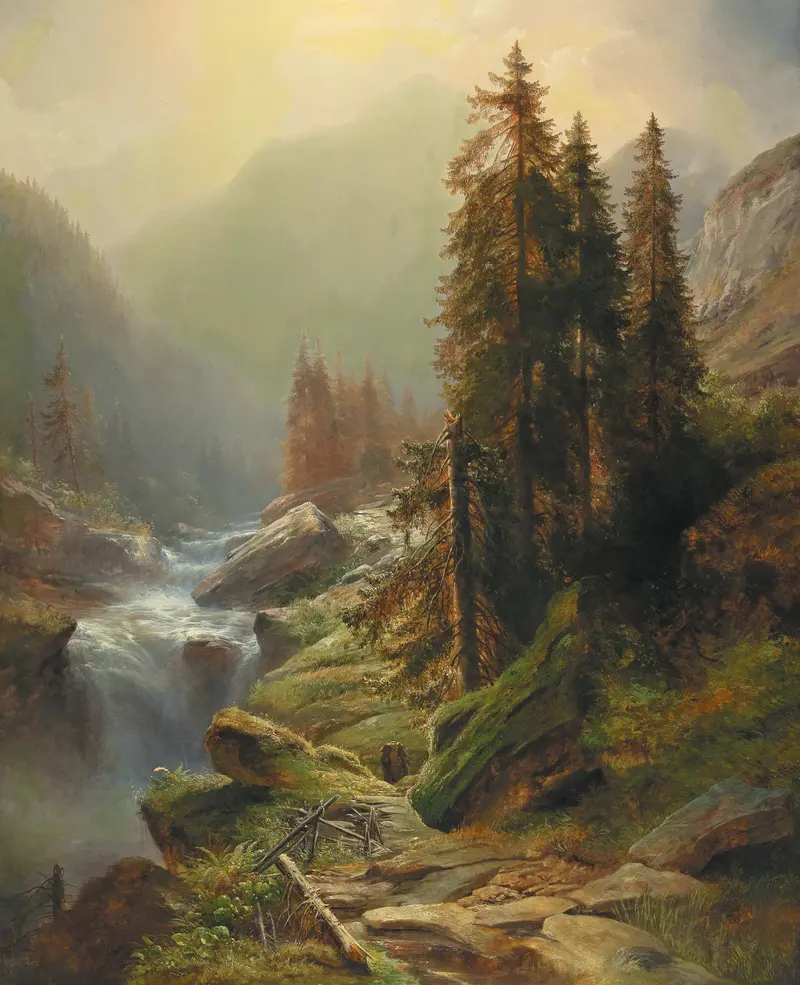
Large Mountain Landscape
Albert August Zimmermann
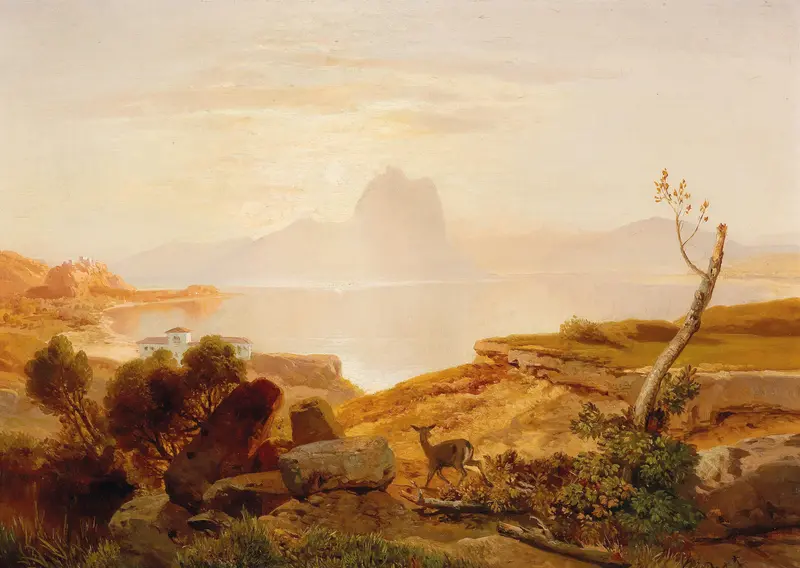
Partie am Como See
Albert August Zimmermann
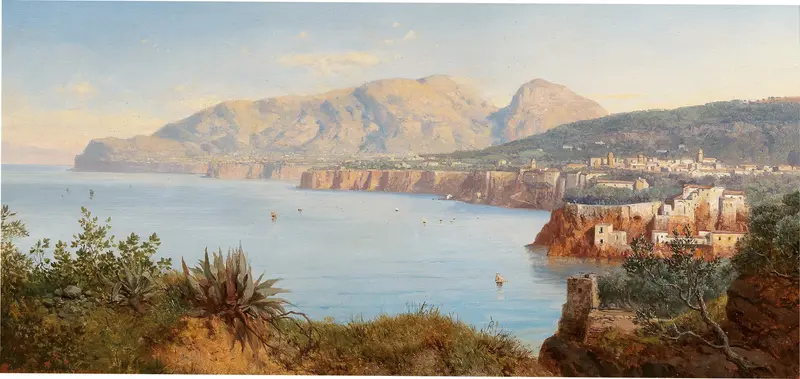
Coastal landscape in Sorrento near Naples
Albert August Zimmermann
More Landscape Art

The Starry Night
Vincent van Gogh

View of Delft
Johannes Vermeer

Water Lilies
Claude Monet

The Grand Canal, Venice, looking north-west from the Ca' Corner to the Ca' Contarini degli Scrigni, with the campanile of Santa Maria della Carità
Canaletto

Windsor Castle
Canaletto

The Grand Canal looking North-East from the Palazzo Dolfin-Manin to the Rialto Bridge
Canaletto