
Large Mountain Landscape — History & Facts
What first seizes the eye in Large Mountain Landscape is the sense of air thick with golden light, as if the entire world is caught in the hush of late afternoon. The viewer is drawn along a rough path, past mossy boulders and broken branches, toward the rush of water that tumbles over rocks below. Every detail—the splash of the stream, the delicate needles of the pines, the way sunlight strikes the upper branches—serves to heighten the drama of scale and solitude.
The painting leads the gaze upward from the cool shadows of the forest floor to the distant, mist-softened peaks, inviting a slow, almost meditative journey through space and light. Painted in 1850, this work by Albert August Zimmermann belongs to a period when landscape painting was gaining new prominence across Europe. Artists of the Romantic era, especially in the German-speaking lands, sought out wild, untamed nature as a counterpoint to the rapid changes of industrial society. Such paintings were often commissioned for private homes or public buildings, intended to transport viewers into imagined realms of grandeur and reflection.
While little is recorded about the specific history of this canvas, now in the Dorotheum collection, its careful rendering and atmospheric effects place it firmly within the tradition that made landscape a stage for both observation and reverie. Look again at the path winding into the unknown: it is an invitation, as much for the nineteenth-century viewer as for us, to lose oneself in the painted wilderness.
More Artworks by Albert August Zimmermann
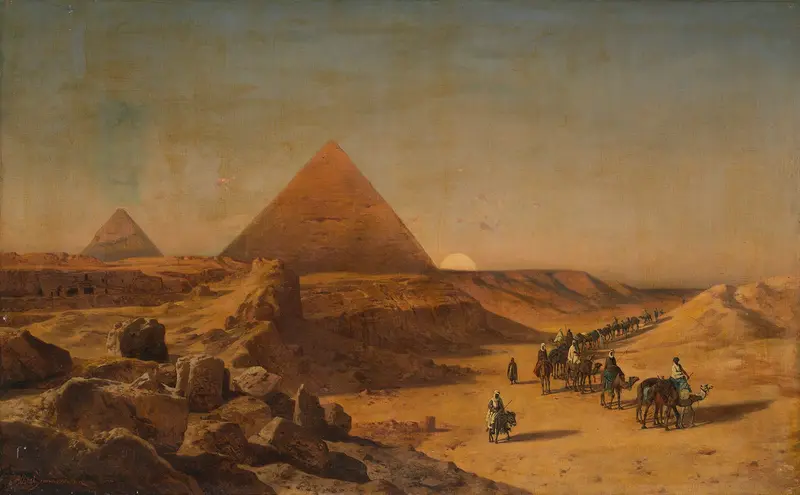
Pyramids
Albert August Zimmermann

Schwäbische Alb
Albert August Zimmermann
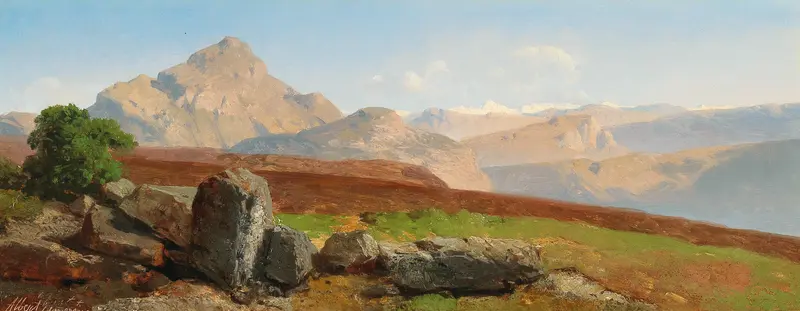
Mountain Landscape
Albert August Zimmermann
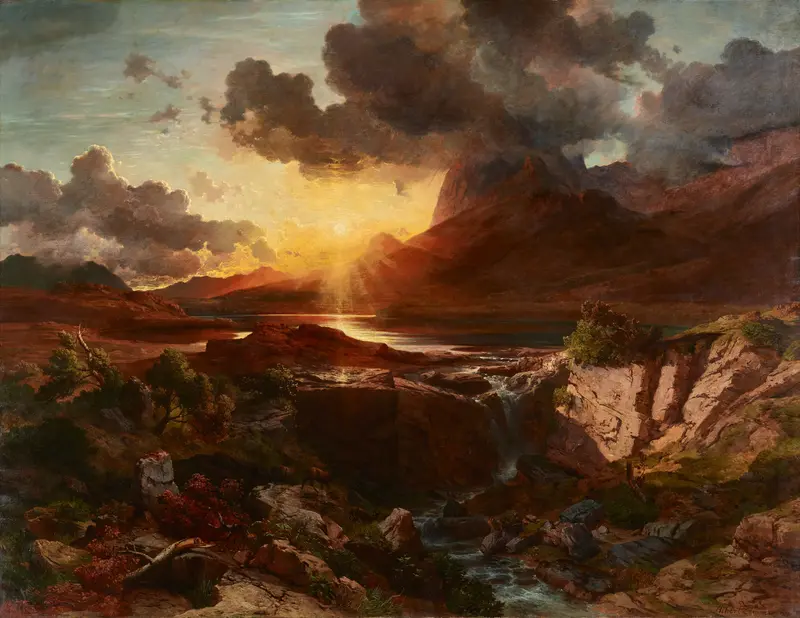
Sonnenuntergang am Hintersee in Berchtesgaden 13 Österreichische Galerie Belvedere
Albert August Zimmermann
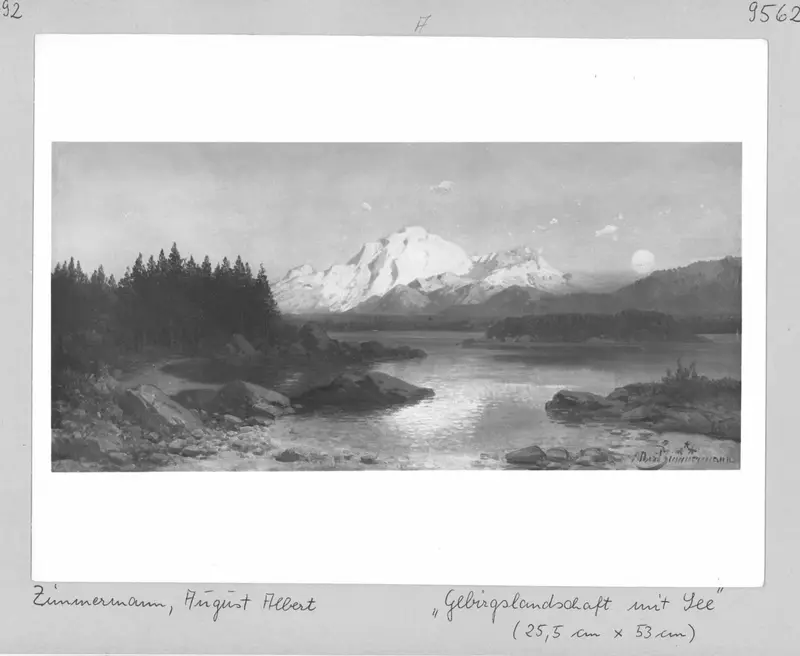
Mountain-landscape with lake
Albert August Zimmermann
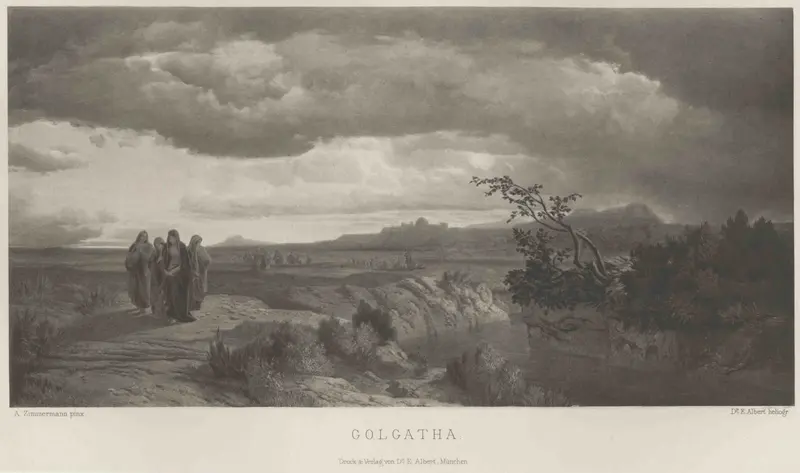
Golgatha
Albert August Zimmermann
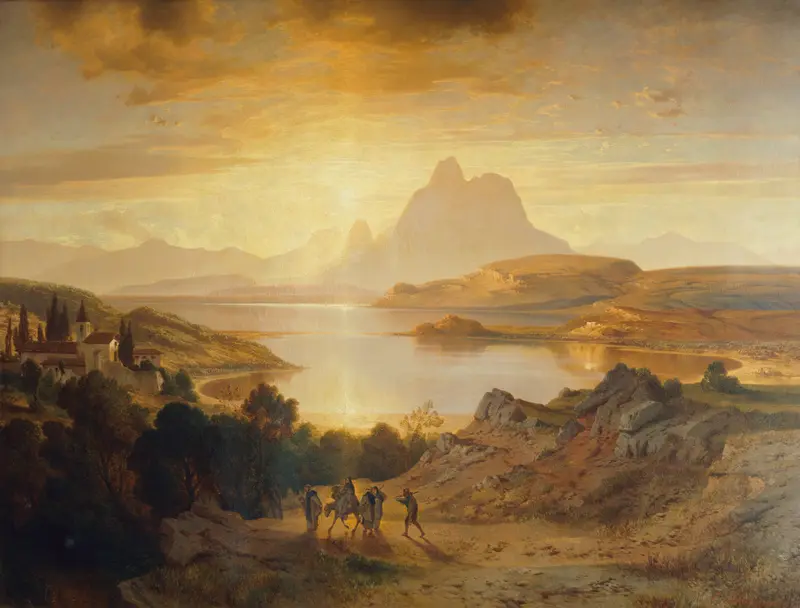
Lago di Lugano 65 Österreichische Galerie Belvedere
Albert August Zimmermann
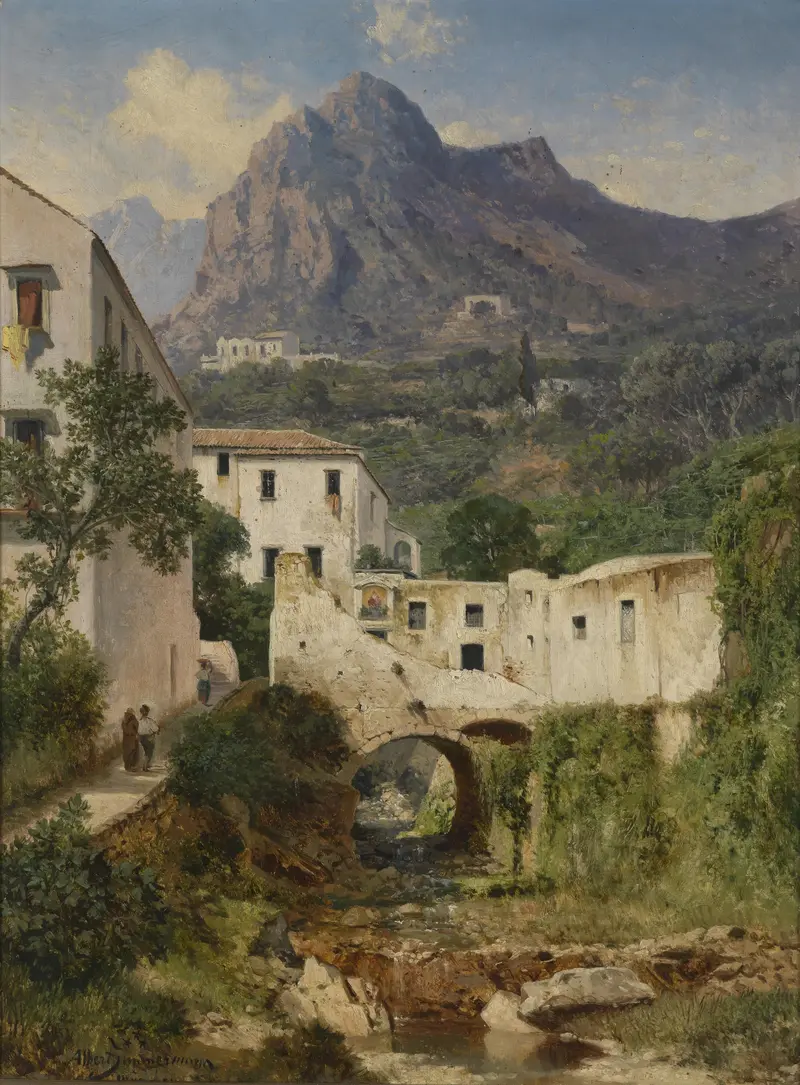
Mühltal bei Amalfi
Albert August Zimmermann
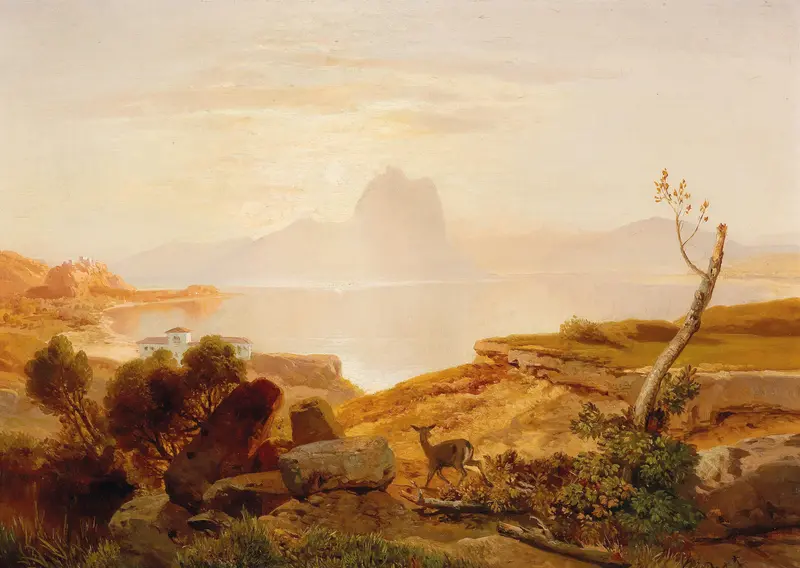
Partie am Como See
Albert August Zimmermann
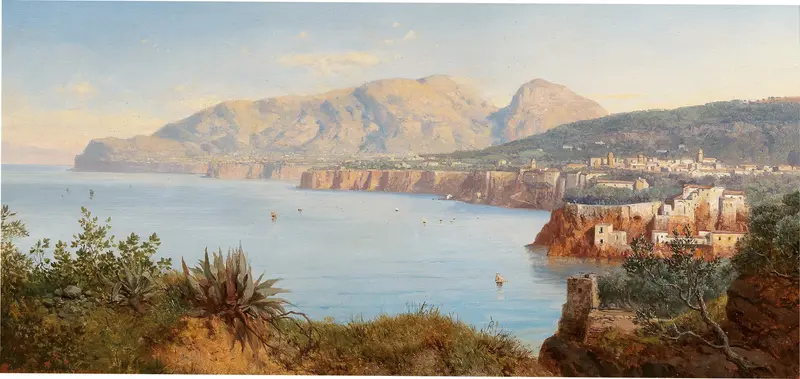
Coastal landscape in Sorrento near Naples
Albert August Zimmermann
More Landscape Art

The Starry Night
Vincent van Gogh

View of Delft
Johannes Vermeer

Water Lilies
Claude Monet

The Grand Canal, Venice, looking north-west from the Ca' Corner to the Ca' Contarini degli Scrigni, with the campanile of Santa Maria della Carità
Canaletto

Windsor Castle
Canaletto

The Grand Canal looking North-East from the Palazzo Dolfin-Manin to the Rialto Bridge
Canaletto