
Lake Hallstadt — History & Facts
In Lake Hallstadt, a serene panorama belies the tumultuous emotions that churn beneath its tranquil surface. The idyllic landscape, with its crystalline waters and majestic mountains, invites us in, yet there’s an unsettling chaos lurking beneath the idyllic facade. Look to the foreground where gentle ripples break the lake's glassy surface, hinting at movements unseen. The painter’s deft strokes create a delicate interplay of color; soft greens and ethereal blues blend harmoniously, while the sun bathes the scene in a warm, golden glow.
Notice how the light captures the intricate details of the quaint village nestled against the mountains, casting shadows that seem to whisper secrets of hidden struggles and unresolved tensions. The composition directs our gaze effortlessly across the canvas, evoking both peace and a sense of foreboding. At first glance, the beauty might distract from deeper themes of isolation and the fragility of life. The stillness of the water stands in stark contrast to the jagged peaks looming in the background, symbolizing the chaos that often accompanies tranquility.
The harmonious colors may mask the volatility of nature, inviting reflections on the duality of existence, where beauty can coexist with underlying turmoil. Here, stillness does not equal safety; rather, it hints at the storms that may erupt at any moment. Created in 1845, this piece emerged during a period of significant artistic evolution in Europe, characterized by a shift towards realism and emotional expression. Rudolf von Alt, influenced by the Romantic movement, found himself exploring the delicate balance between nature’s beauty and its fierce unpredictable power.
At this time, he was deeply engaged with landscapes, capturing the essence of places steeped in history and sentiment, while reflecting the turbulent societal changes of his era.
More Artworks by Rudolf von Alt
Browse all →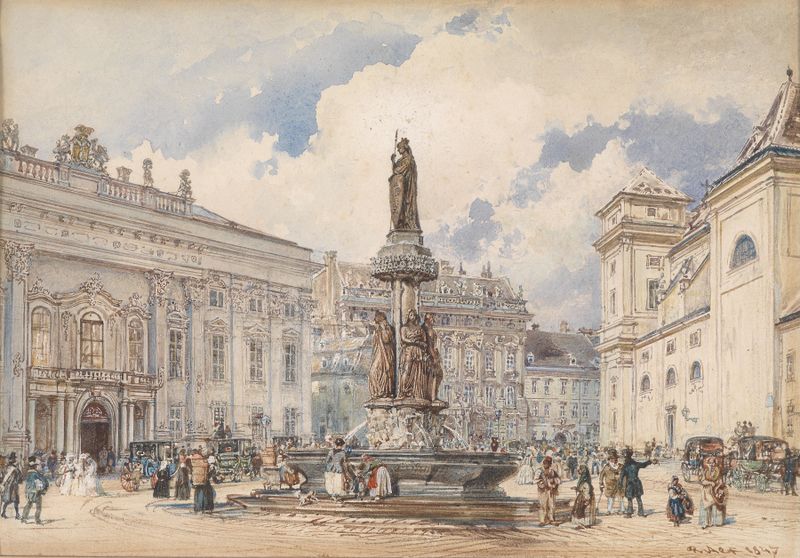
Freyung mit Austriabrunnen
Rudolf von Alt

The Interior of the Cathedral of Saint Stephen at Vienna
Rudolf von Alt
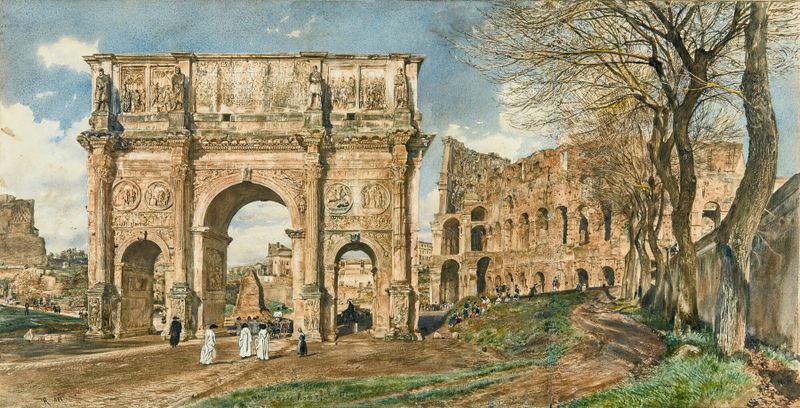
The Arch Of Constantine And The Colosseum, Rome
Rudolf von Alt

The Fleischmarkt in Vienna with the Greek-Orthodox Church of the Holy Trinity
Rudolf von Alt

Der Stephansdom in Wien
Rudolf von Alt
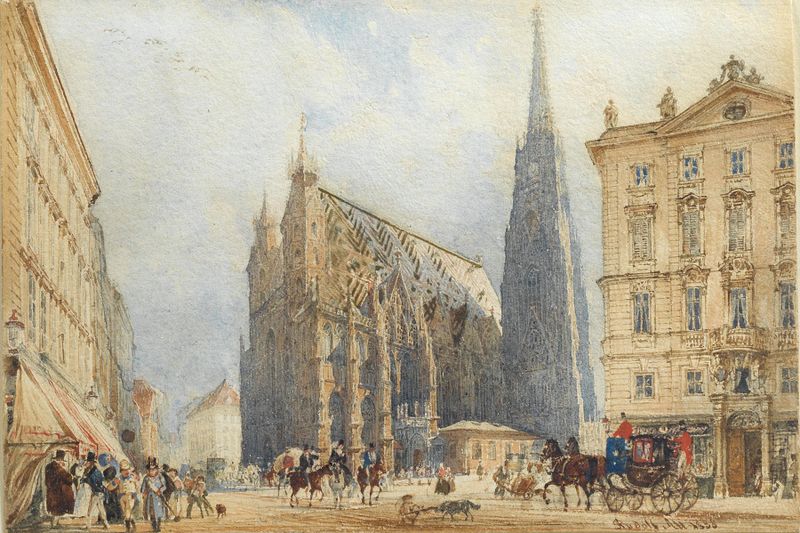
Stephansplatz
Rudolf von Alt
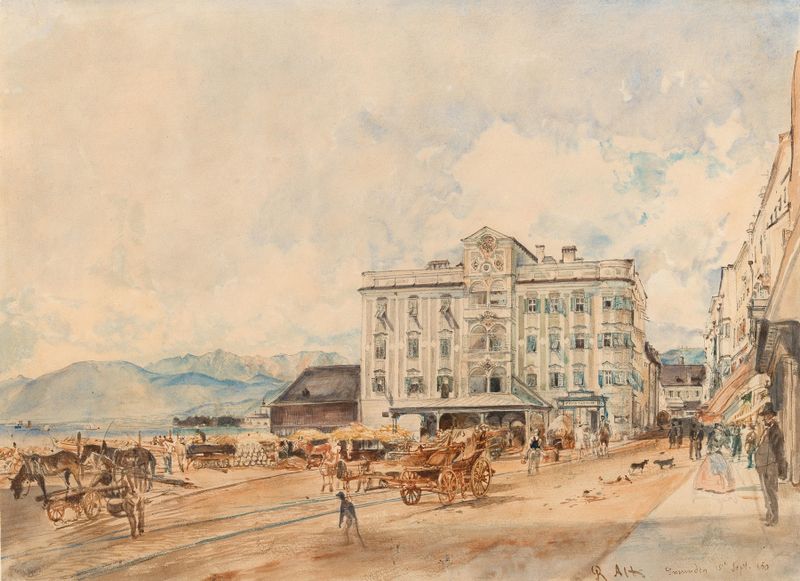
The Town Hall in Gmunden
Rudolf von Alt

View from Sant’Onofrio on Rome
Rudolf von Alt
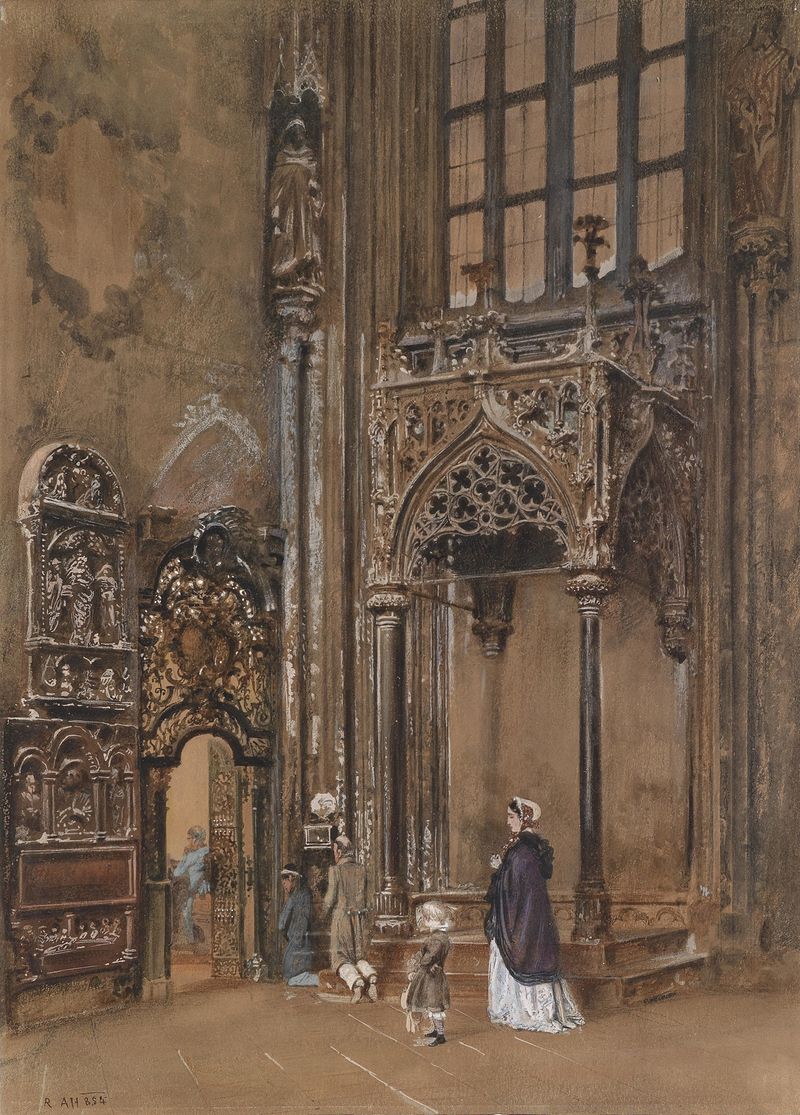
Kircheninneres
Rudolf von Alt
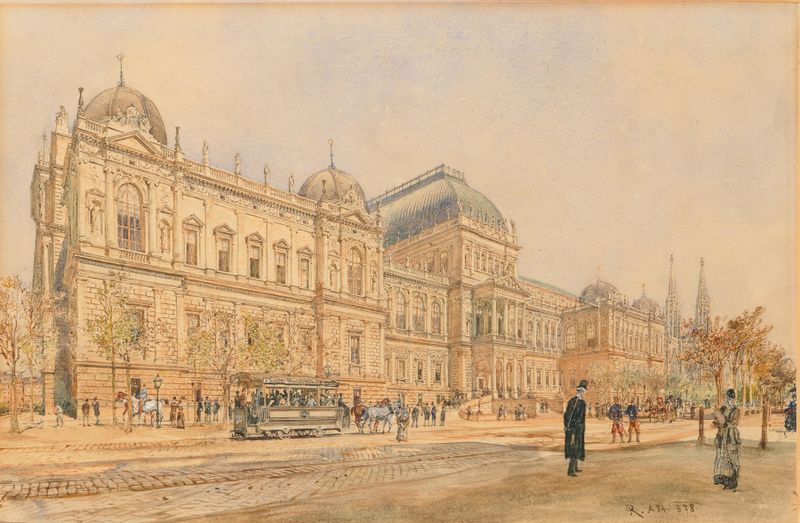
The University of Vienna on the Ringstrasse, with Horse-Drawn Tram and Figures, a view of the building still under construction in 1878 (erected by Heinrich von Ferstel 1873-1884)
Rudolf von Alt





