
Landscape — History & Facts
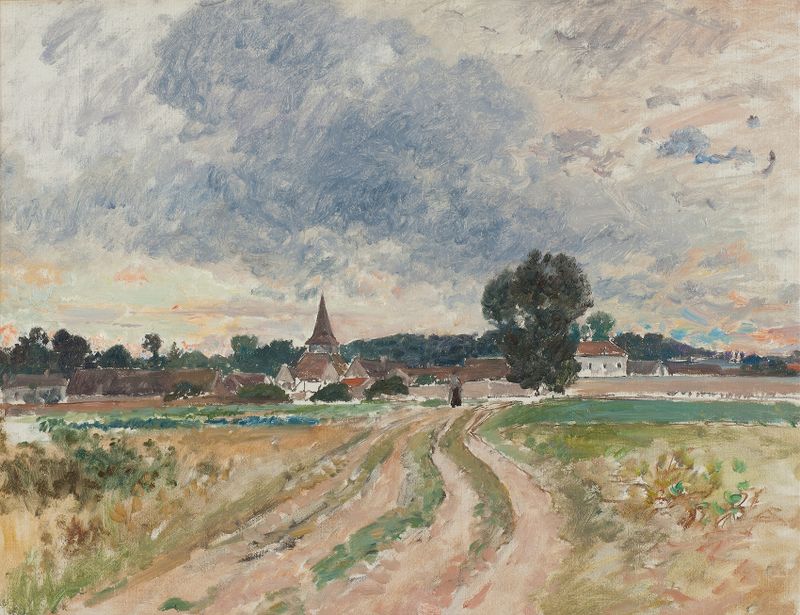
Could a single brushstroke hold eternity? In the realm of emptiness, the vast expanse of the landscape unfolds, inviting introspection through its muted tones and whispering silence. Look closely at the gentle gradients of color that stretch across the canvas; notice how the soft blues blend seamlessly into the warm earth tones below. The horizon line, delicately painted, draws your eye into an infinite distance, suggesting both depth and isolation. Each layer seems to breathe, while the sparse brushwork hints at a world beyond recognition, challenging the viewer to find solace in simplicity. The emotional tension arises from this sense of vastness juxtaposed against the intimate details—perhaps a lone tree or an unseen path that beckons into the unknown.
This balance of absence and presence evokes a profound loneliness, yet also a quiet strength that resonates deeply within us. The choice of a minimalistic palette further emphasizes this exploration of emptiness, prompting reflection on the nature of existence itself. Alfred Wahlberg painted Landscape in an era steeped in the Romantic sensibility, likely during the late 19th century in Sweden. This period was marked by a growing appreciation for the natural world, as artists sought to convey their emotional responses through landscapes.
Wahlberg, influenced by his contemporaries, embraced this ethos, channeling his own experiences into an artwork that speaks to the timeless interplay between solitude and reflection.
More Artworks by Alfred Wahlberg
Browse all →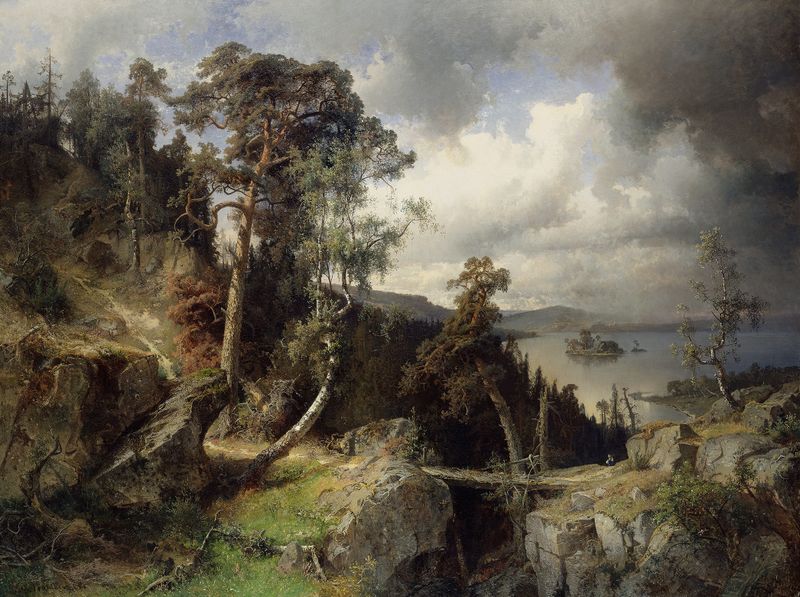
Swedish Landscape. Motif from Kolmården
Alfred Wahlberg
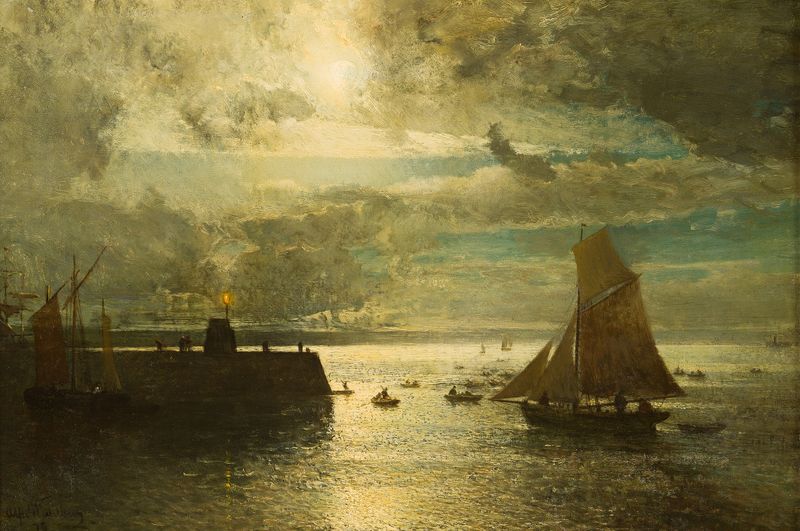
Moonlit Landscape
Alfred Wahlberg
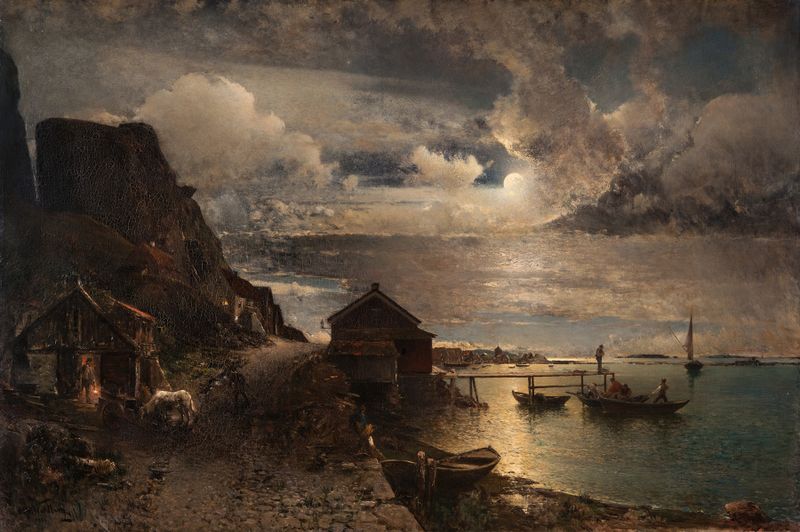
Moonlight, Fjällbacka
Alfred Wahlberg
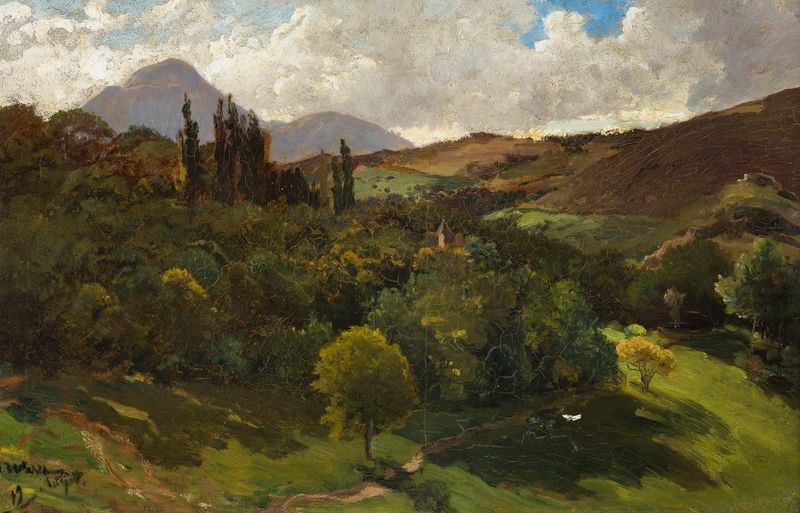
Southern Mountain Landscape
Alfred Wahlberg
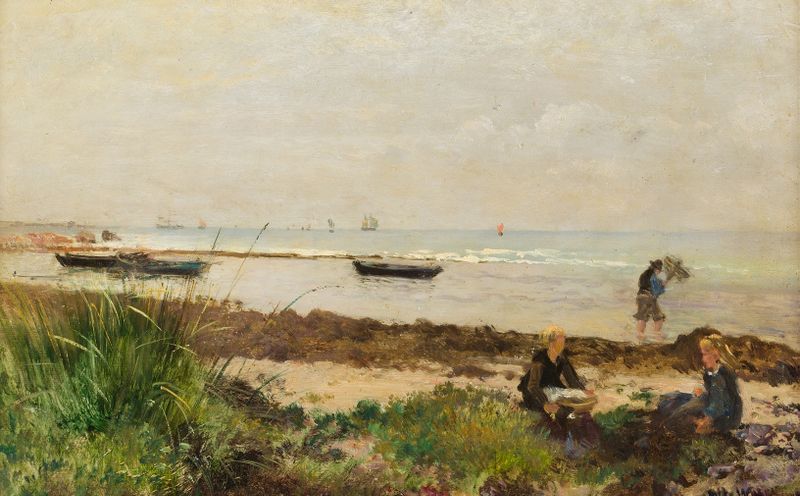
On the Beach
Alfred Wahlberg
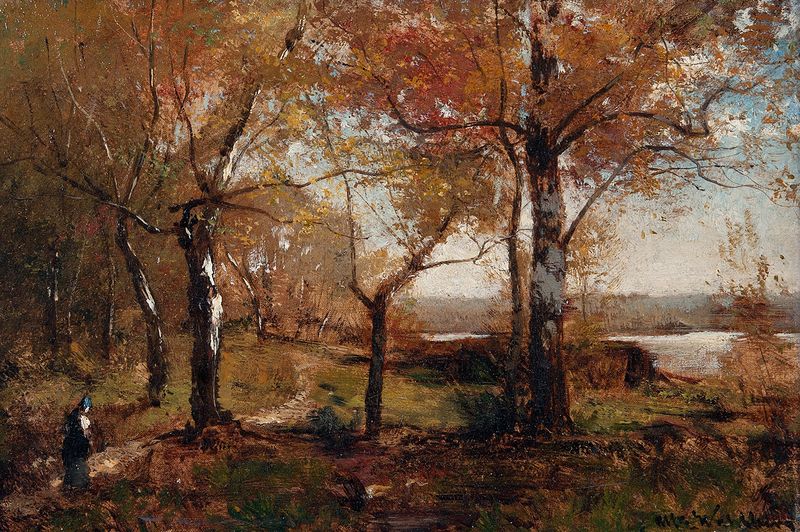
Autumn
Alfred Wahlberg
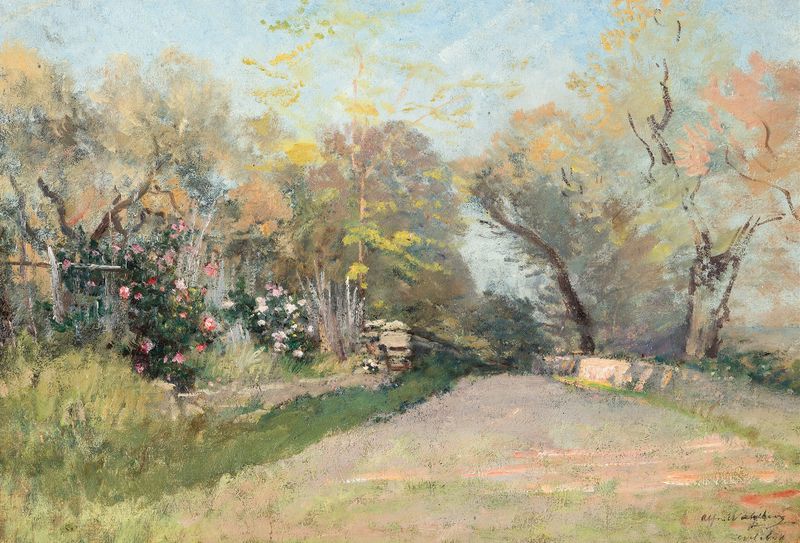
Landscape near Antibes. Study
Alfred Wahlberg
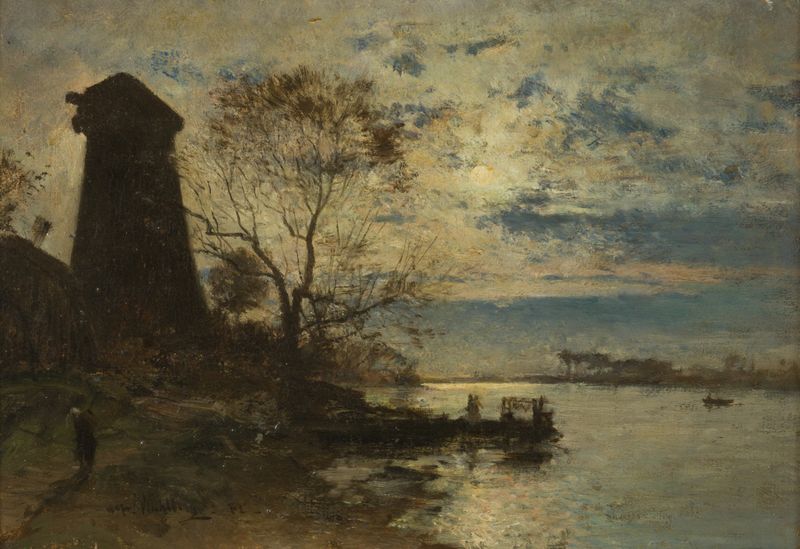
The Shore
Alfred Wahlberg
A Country Church. Study
Alfred Wahlberg





