Swedish Landscape. Motif from Kolmården — History & Facts
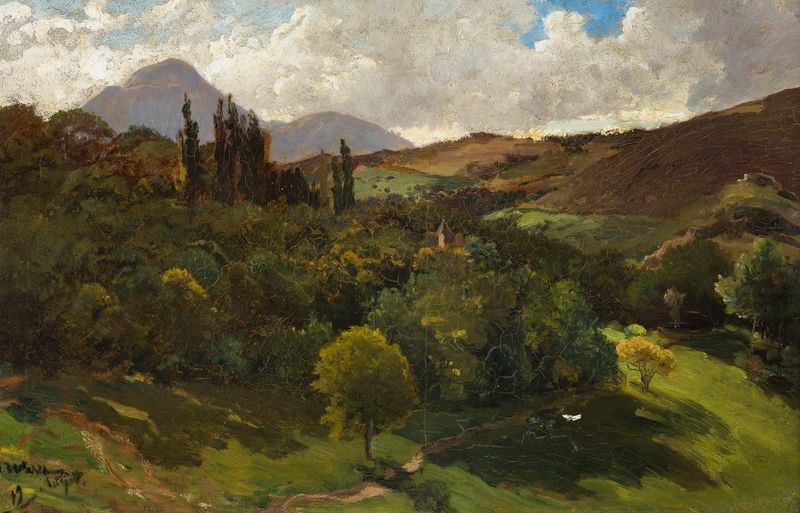
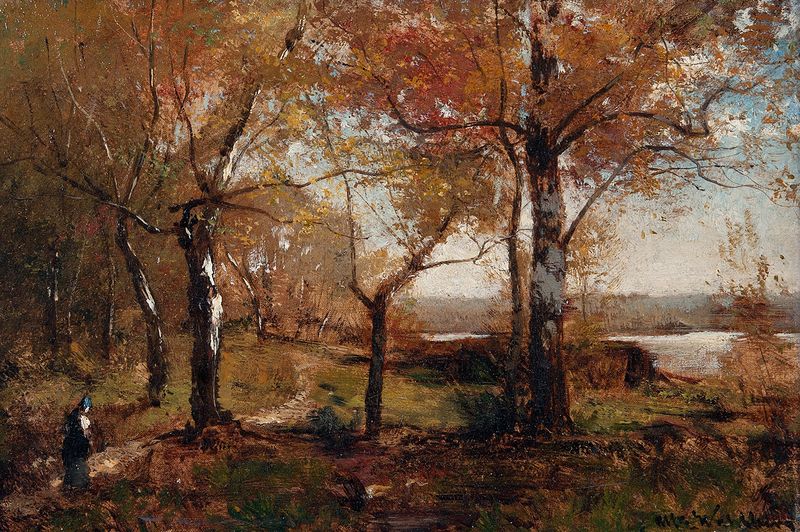
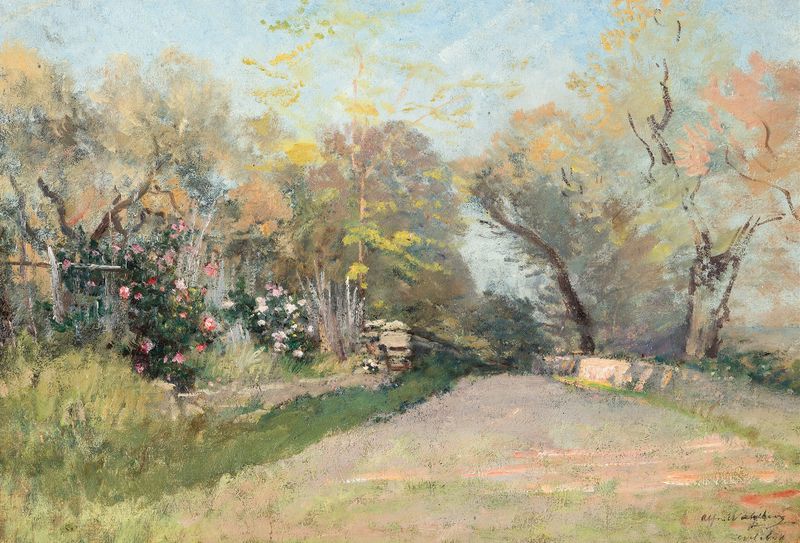
In the quiet embrace of nature, fear lies hidden beneath the gentle hues of the landscape. Alfred Wahlberg’s work captures a serene Swedish vista, yet it whispers of the tempestuous emotions that can ripple just below the surface. Focus first on the delicate interplay of greens and blues that dominate the canvas, inviting you to explore the tranquil scene. Notice how the soft, dappled sunlight filters through the foliage, casting a mosaic of light and shadow across the ground.
The horizon, painted with both warmth and depth, draws your gaze toward a distant, tranquil expanse, while the foreground teems with intricate details – a winding path and the subtle textures of grass. Each brushstroke breathes life into the natural world, creating a moment that feels both intimate and expansive. Yet, the beauty of the landscape masks an underlying sense of unease. The path, although inviting, suggests a journey fraught with uncertainty, echoing the fears we confront as we navigate through life.
The interplay of light and shadow evokes a sense of duality—serenity juxtaposed against the unknown, reminding the viewer that even the most picturesque settings can conceal darker emotions. Wahlberg’s careful blending of colors highlights this tension, making every essence of the scene resonate with an emotional depth that transcends mere representation. Created in 1866 in Sweden, this artwork emerged during a time when the artist was deeply influenced by the natural beauty surrounding him. Wahlberg was part of the Romantic movement, which sought to connect emotional experiences with the grandeur of nature.
The mid-19th century saw an increasing fascination with landscapes, reflecting both personal introspection and a broader cultural yearning for connection to the untamed beauty of the world. In this work, Wahlberg deftly intertwines his personal reflections with the collective consciousness of his time.