
On the Beach — History & Facts
Can paint confess what words never could? In On the Beach, the delicate interplay of color and light suggests a profound narrative of rebirth and renewal, inviting us to ponder the unspoken stories of life at the shore. Look to the horizon, where the sun melts into the ocean, casting a soft golden hue over the rippling waves. The brushstrokes are fluid and dynamic, reflecting the movement of water and the gentle caress of the sea breeze. Notice how the figures—carefree souls interacting with the sand—are enveloped in this warm glow, each gesture animated with joy and freedom.
The composition draws your eye across the canvas, transforming a simple beach scene into a vibrant tableau of human connection and spirit. Yet, within this serene setting lies a contrast. While the figures seem joyous, their reflections in the water present a fleeting moment, hinting at the impermanence of happiness. The distant gulls glide above, symbols of longing and freedom, while the tactile textures of sand echo life's transitory nature.
Each element intertwines, suggesting that rebirth is not only about joy but also about embracing the ephemeral. During the late 19th century, Alfred Wahlberg painted On the Beach in Sweden, at a time when Impressionism was reshaping artistic expression. Reflecting the movement's emphasis on light and atmosphere, Wahlberg sought to capture the essence of fleeting moments. As an artist navigating a world filled with both change and nostalgia, he infused this work with a sense of longing and renewal, connecting deeply with the beauty and complexity of the human experience.
More Artworks by Alfred Wahlberg
Browse all →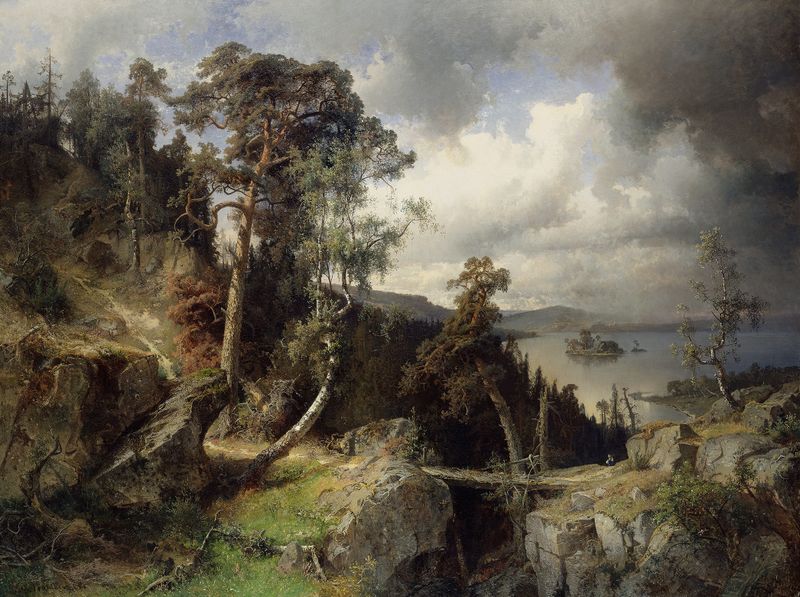
Swedish Landscape. Motif from Kolmården
Alfred Wahlberg

Landscape
Alfred Wahlberg
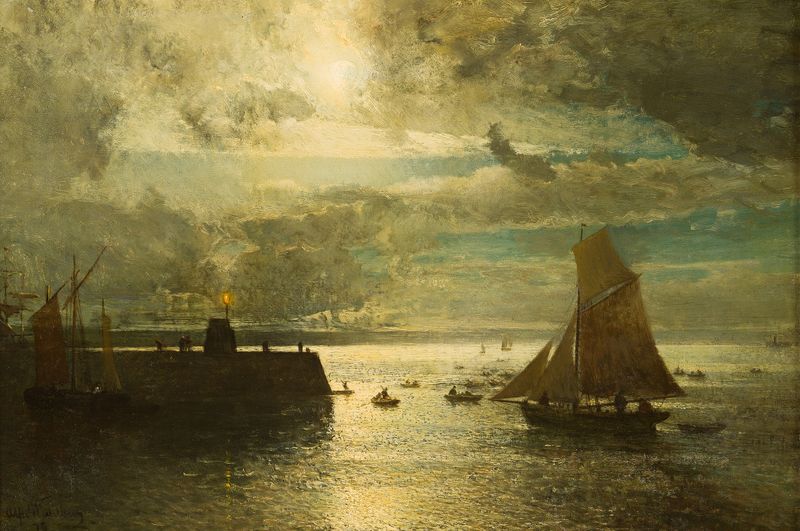
Moonlit Landscape
Alfred Wahlberg
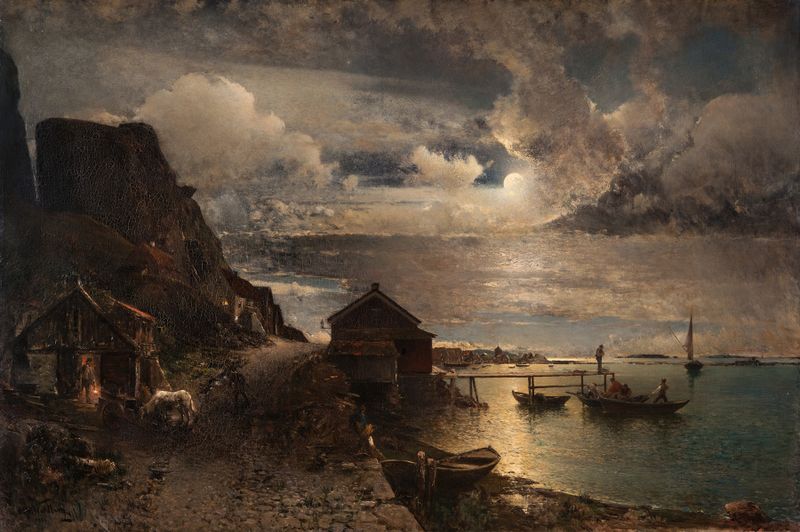
Moonlight, Fjällbacka
Alfred Wahlberg
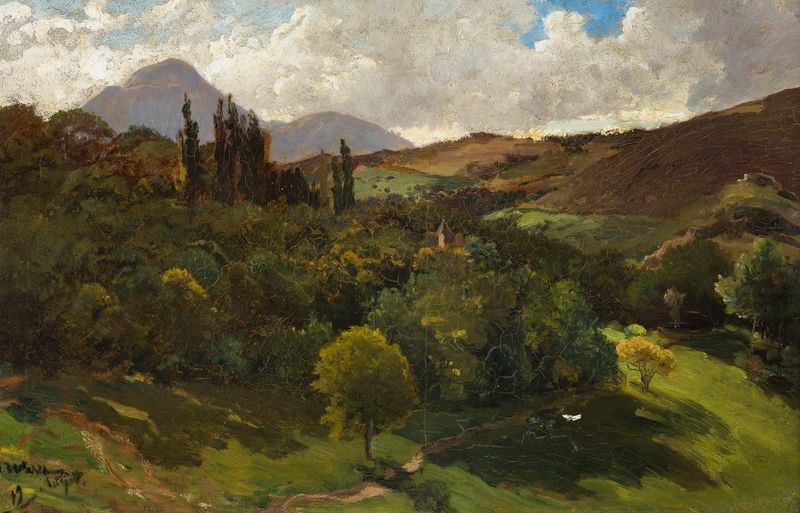
Southern Mountain Landscape
Alfred Wahlberg
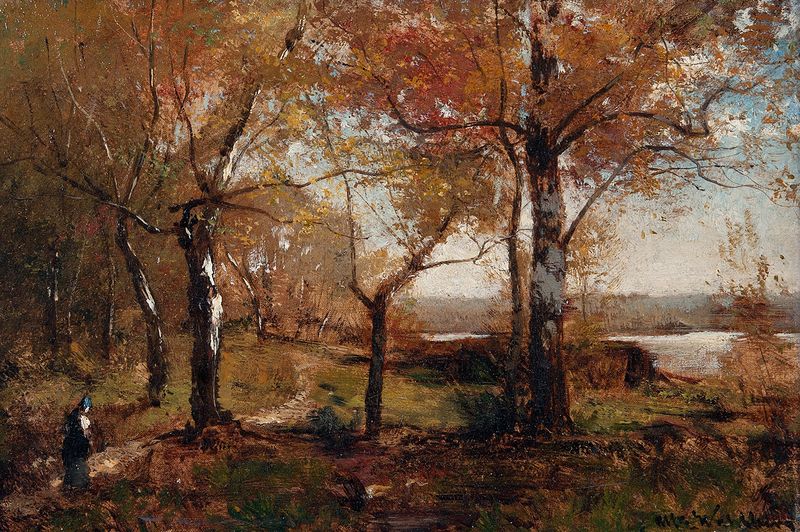
Autumn
Alfred Wahlberg

Landscape near Antibes. Study
Alfred Wahlberg
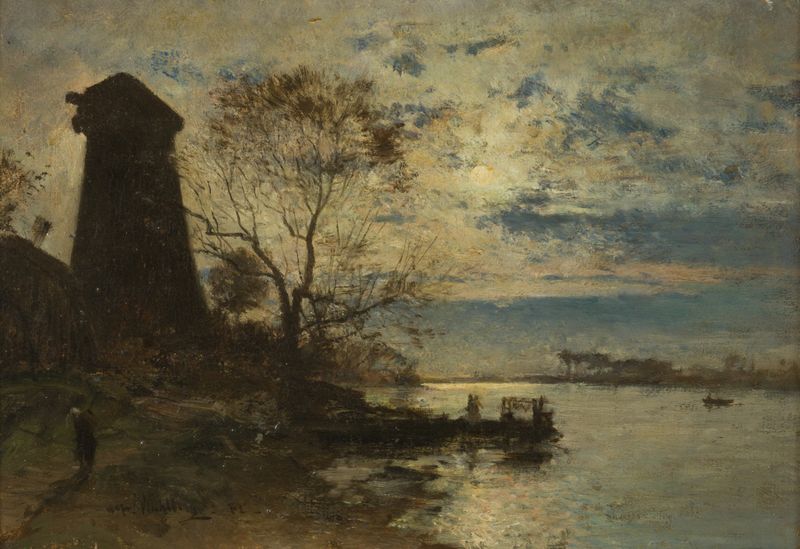
The Shore
Alfred Wahlberg
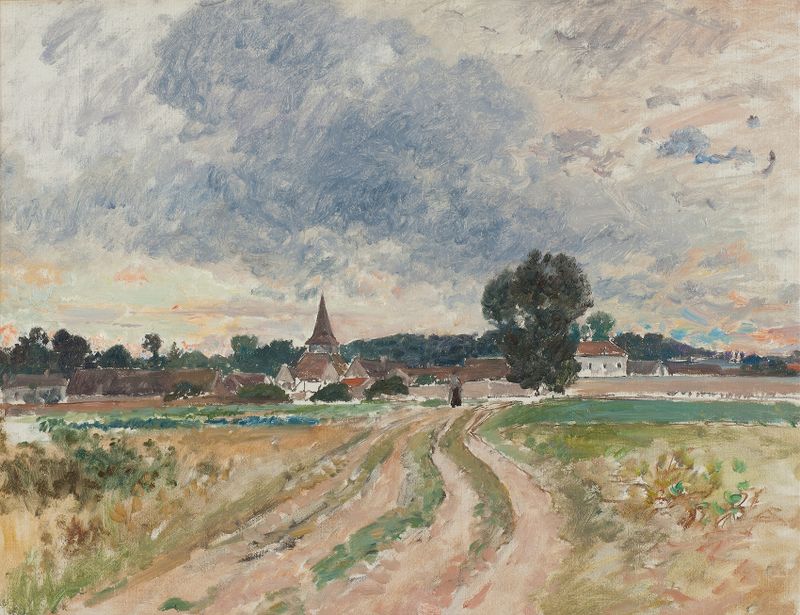
A Country Church. Study
Alfred Wahlberg





