Landscape — History & Facts
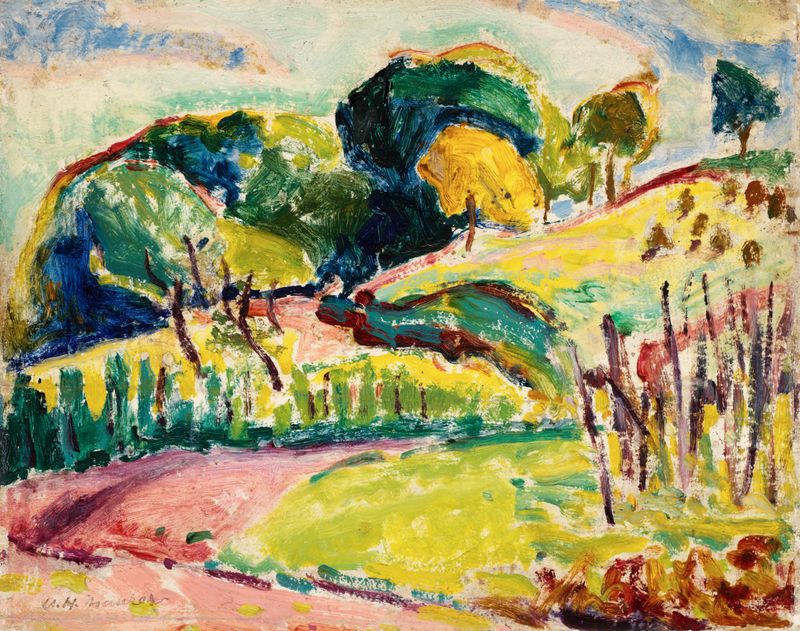
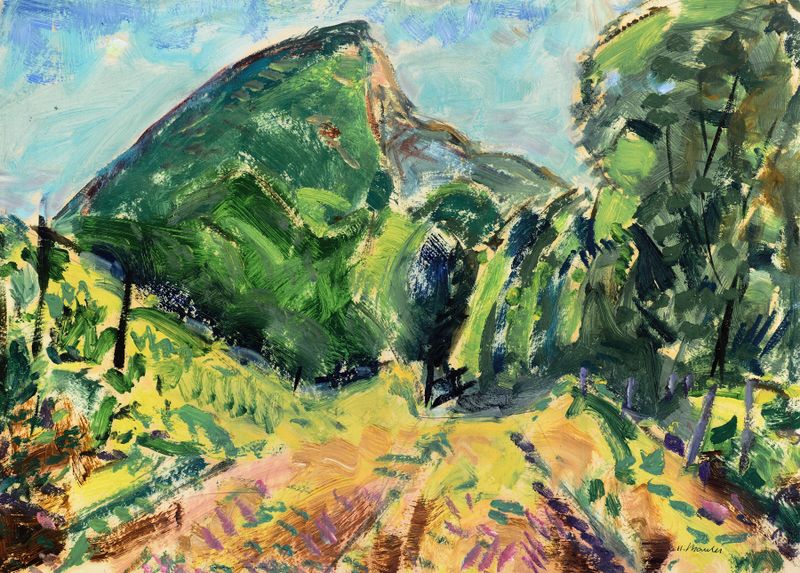
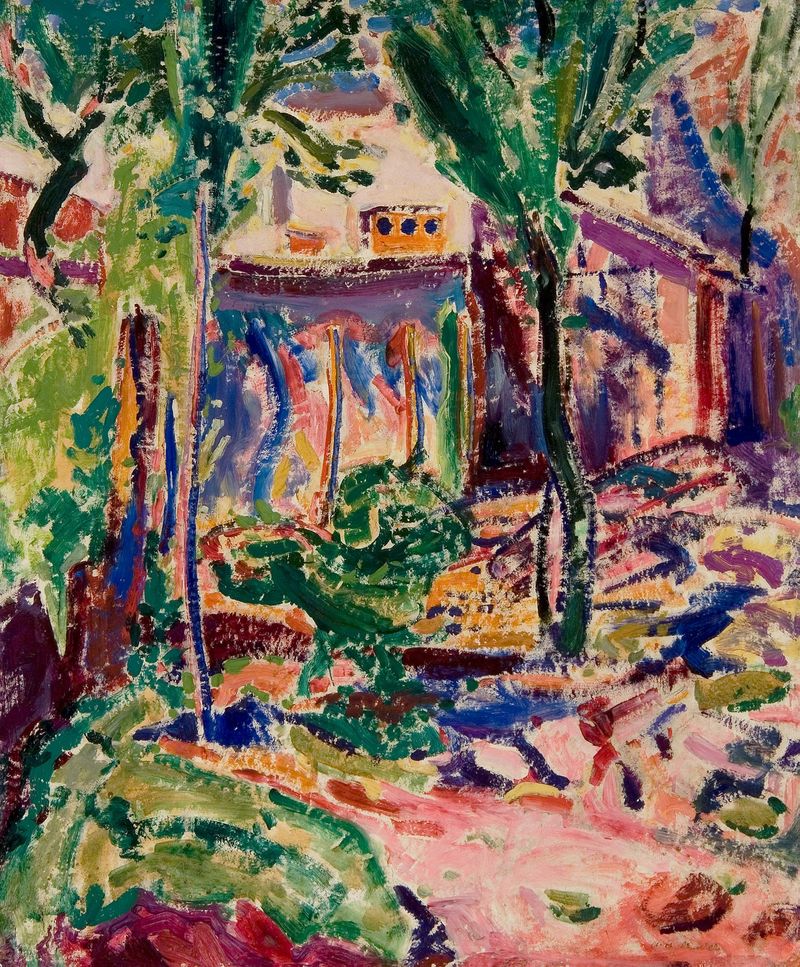
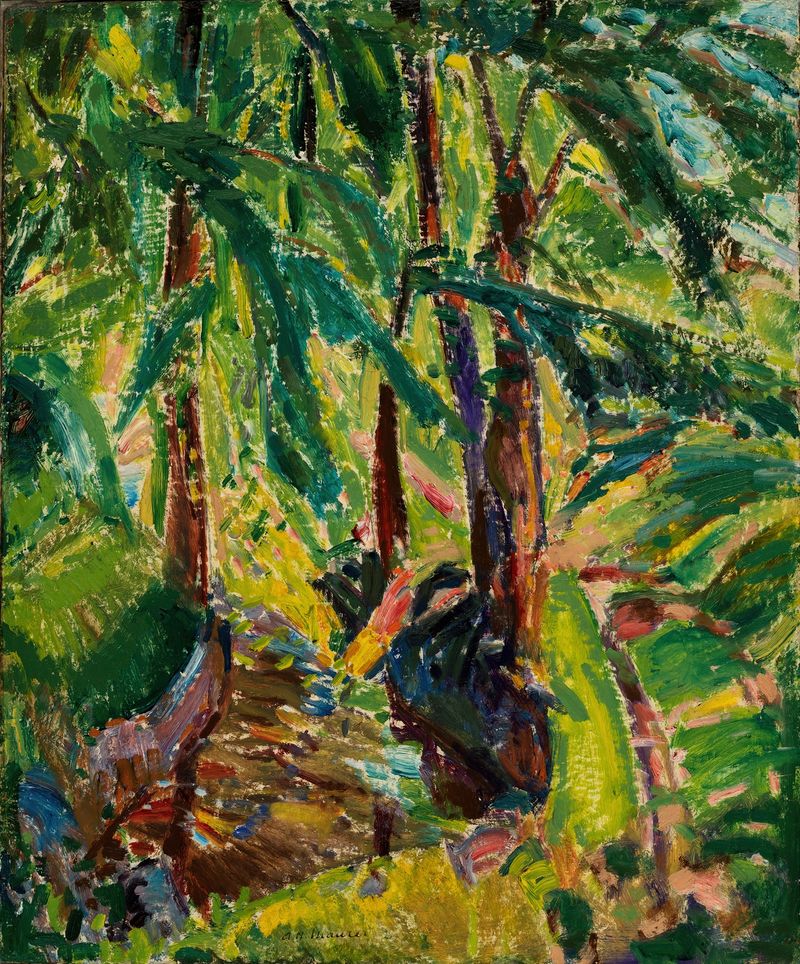
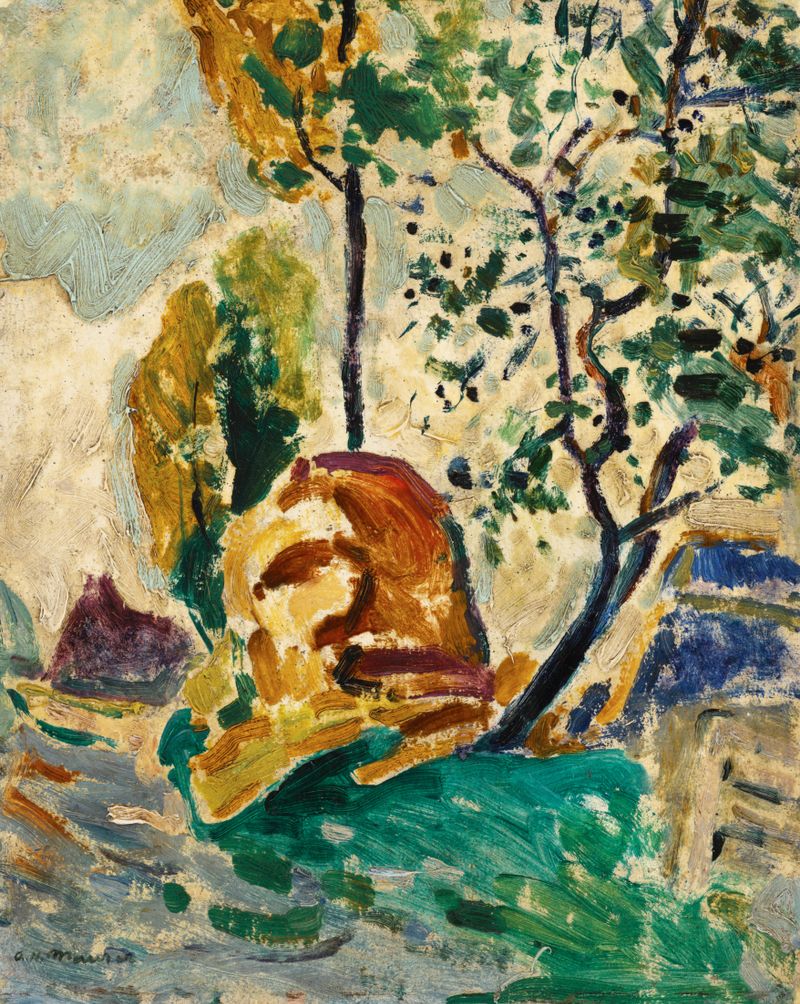
Who listens when art speaks of silence? In Landscape, an unassuming harmony envelops the viewer, inviting contemplation and introspection. Look to the center, where gentle hills rise in soft undulations, their muted greens and browns merging seamlessly. Notice how the brushstrokes are both spontaneous and deliberate, creating a textured surface that breathes life into the land, while the sky above glimmers with a quiet palette of blues and whites. The balance between foreground and background draws your eye, luring you deeper into the serene expanse. As you linger, the contrasts reveal themselves: the vibrancy of the earth juxtaposed against the ethereal sky suggests a dialogue between the tangible and the intangible.
Shadows dance among the trees, whispering tales of dusk and dawn, while the soft hues evoke a sense of tranquility and contemplation—an invitation to pause and reflect. This duality hints at the delicate balance of existence, where chaos and calm coalesce seamlessly in nature’s embrace. In the late 19th to early 20th century, when Landscape was created, Alfred Henry Maurer was navigating the complexities of modernism while maintaining a connection to traditional techniques. He painted amid a flourishing art scene, influenced by both Impressionism and the burgeoning abstraction movements.
At this time, Maurer sought to capture the essence of landscapes, refining his style to express not just the visual, but the emotional resonance of nature.