Landscape — History & Facts
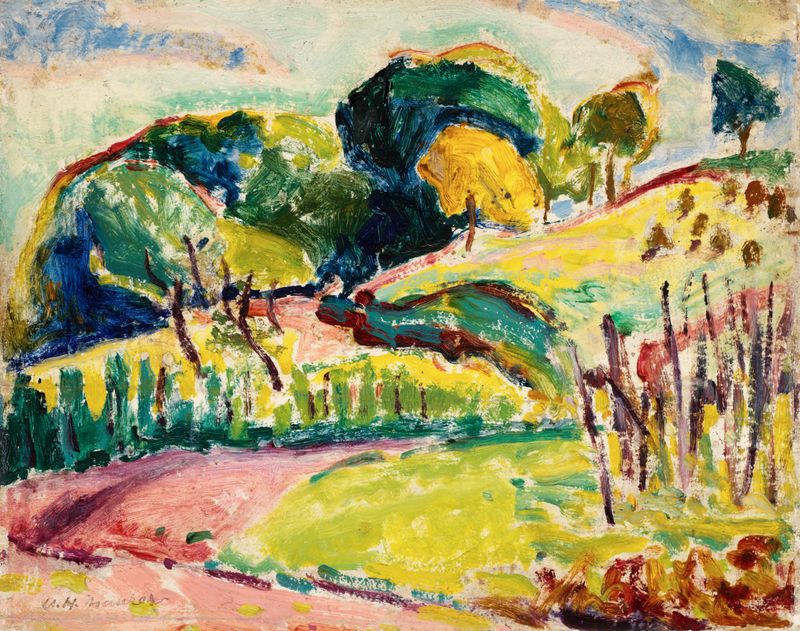
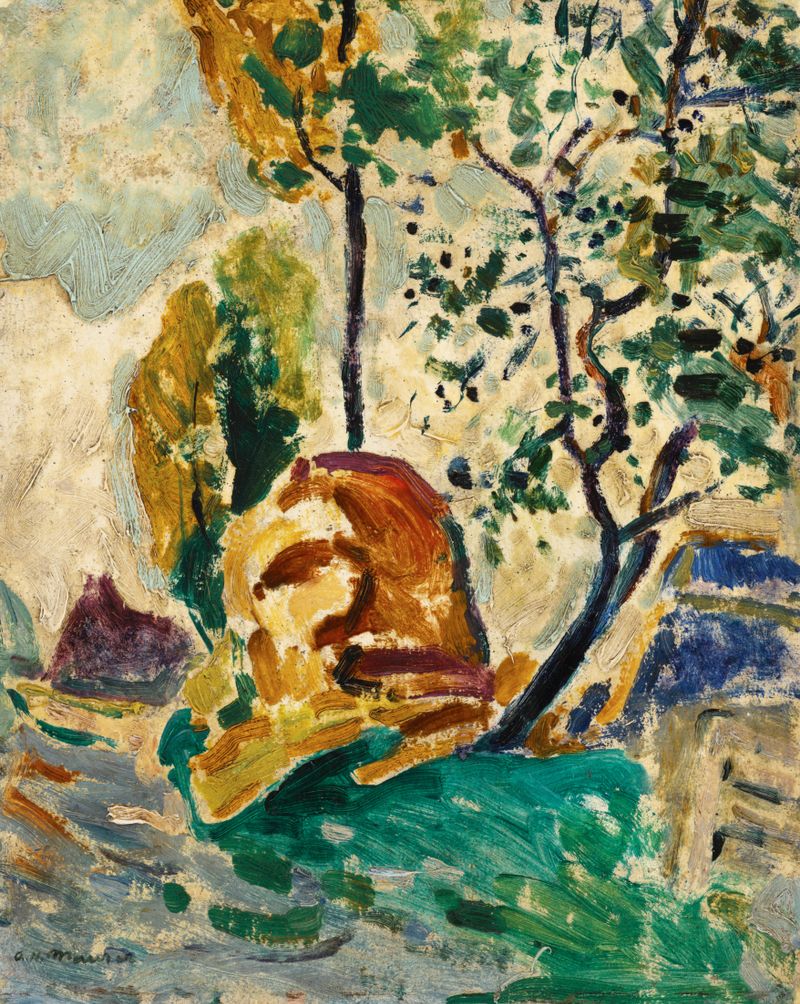
Could a single brushstroke hold eternity? In the delicate dancing of color and form, we find echoes of loss and yearning—a testament to what remains when everything else fades away. Look to the horizon, where soft, muted blues kiss warm ochres, creating a symphony of earth and sky. Notice how the gentle strokes blend in a way that feels both spontaneous and deliberate, inviting the viewer to lose themselves in the expansive calm. The canvas is alive with texture; the thick application of paint brings depth, while fainter areas suggest fleeting memories.
This interplay of light and shadow captures the essence of transience, drawing you deeper into the heart of the landscape. At first glance, this work may appear as a mere pastoral scene, yet it reveals layers of emotional complexity. The juxtaposition of vibrant and subdued hues mirrors the interplay of presence and absence, illustrating the duality of existence. Each brushstroke holds a whisper of nostalgia, inviting contemplation of the beauty found in moments that once were.
Here lies an intimate connection to the artist’s own experiences, reflecting a deeper meditation on loss and the passage of time. Maurer created this piece during a transformative period in early 20th-century America, when artists were seeking new ways to express their inner worlds. Living in New York City, he was part of a burgeoning movement that pushed against the constraints of realism, exploring abstraction and emotional depth. In this context, Landscape stands as a poignant reflection of the human spirit, encapsulating a moment of vulnerability and strength, echoing the shifting tides of his own life and the art world around him.