Landscape — History & Facts
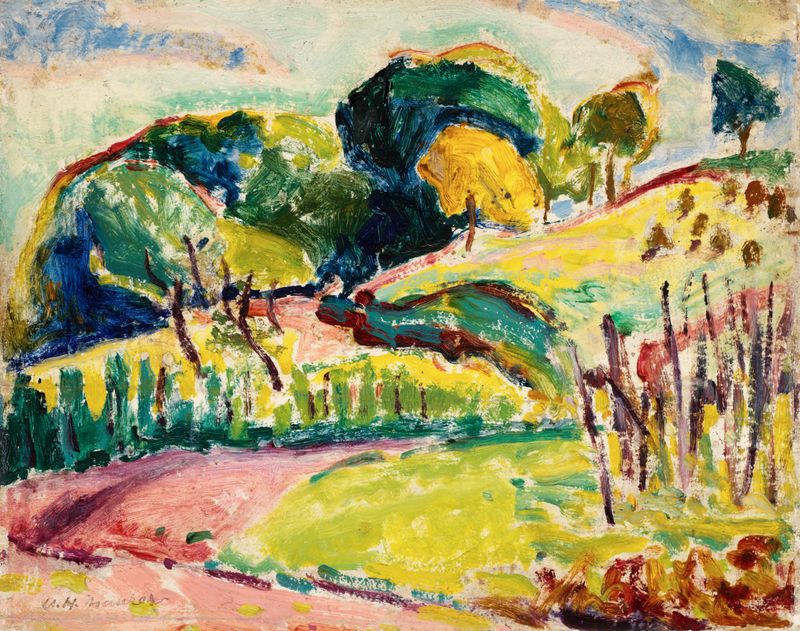
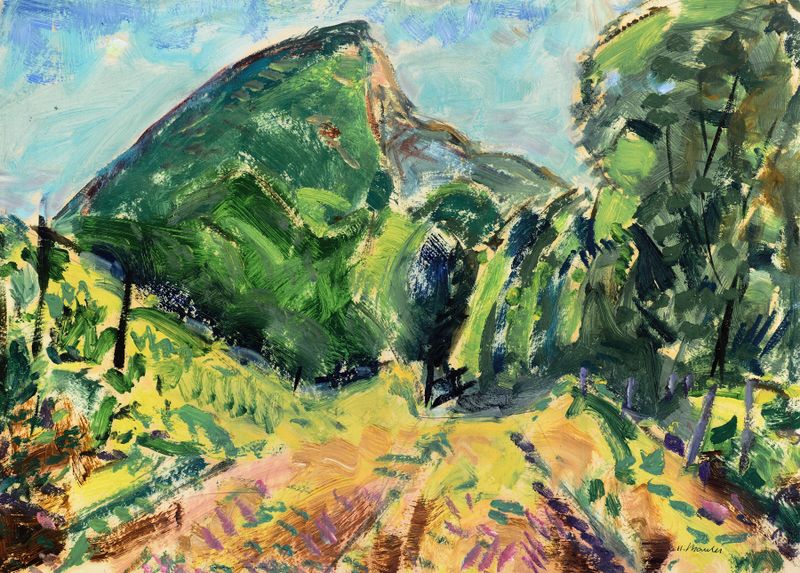
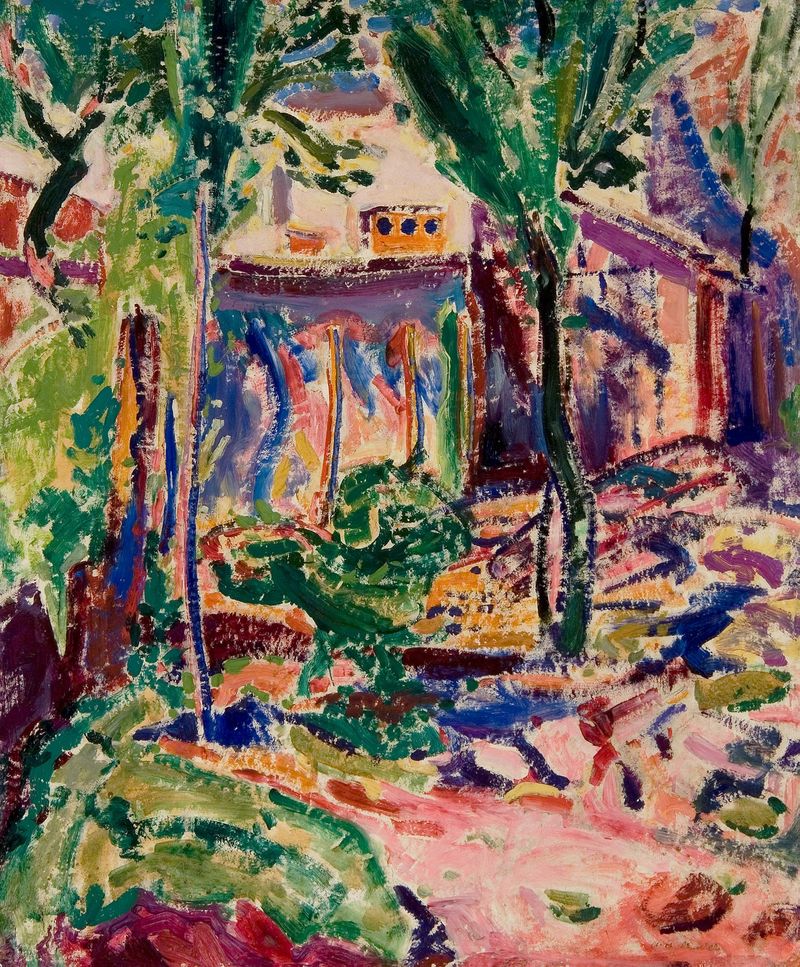
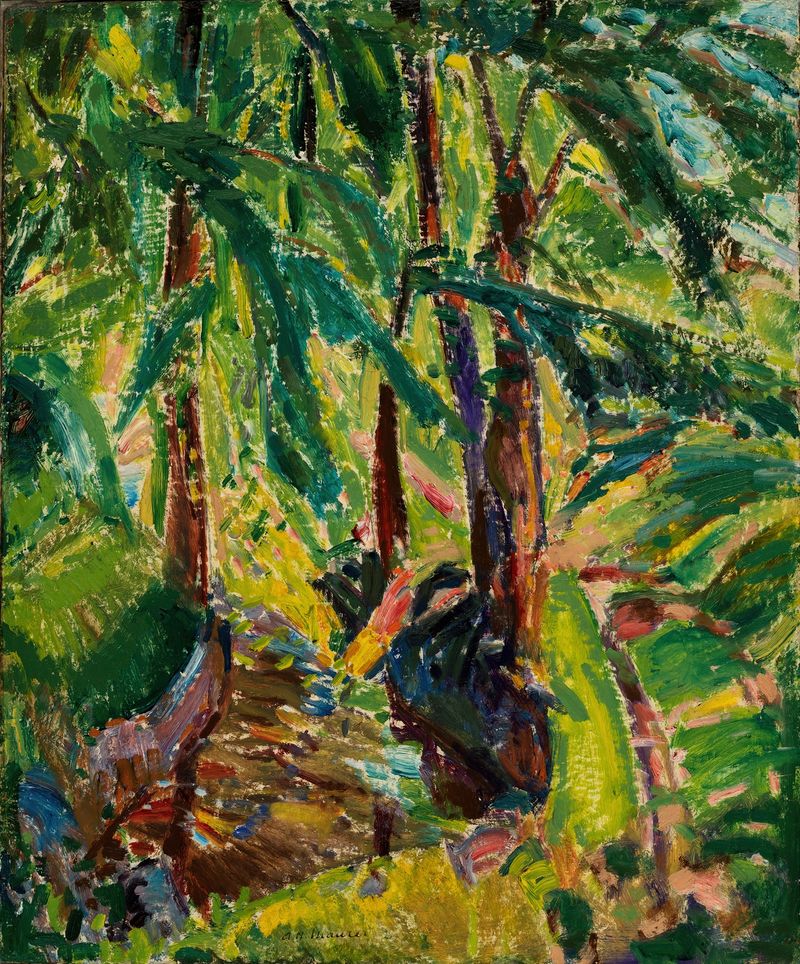
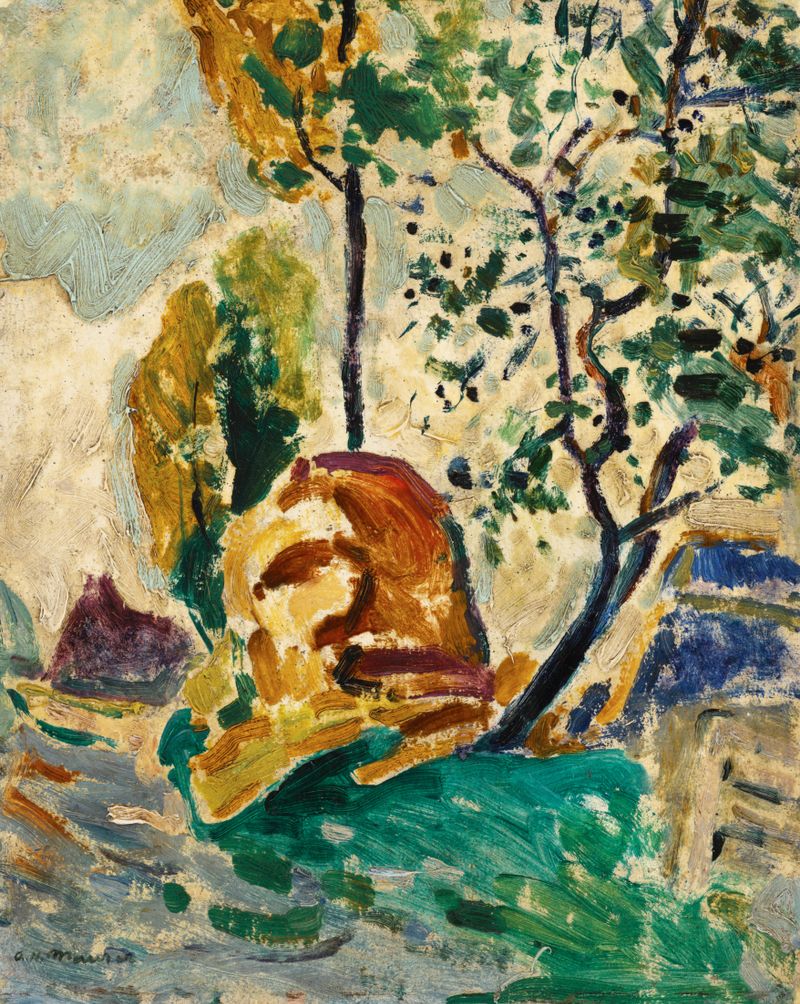
Could beauty survive in a century of chaos? Look to the canvas, where abstract forms collide with the earthy hues of a muted landscape, calling your attention to an unembellished horizon. The smooth brushstrokes create a soft contrast between the vibrant greens and subdued browns, inviting a journey to the distant line where earth meets sky. Notice how the layered texture adds depth, each stroke contributing to a sense of space that feels both vast and intimately empty, as if echoing the silence that often envelops such desolate beauty. Within this quiet expanse, hints of tension emerge through the juxtaposition of color and form.
The lighter areas depict a glimmer of hope, while the darker sections seem to draw you into a more profound abyss, suggesting a struggle between vitality and desolation. The composition balances these elements, inviting contemplation on what lies beneath the surface—a meditation on isolation, yet also a celebration of the resilience found within the void. Alfred Henry Maurer created Landscape in 1925, during a time marked by shifts in artistic perspectives and emerging modernism. Living in New York, he sought to break away from conventional representation, embracing abstraction as a form to express emotions and the complexities of existence.
This period saw a rapid transformation in the art world, where artists were grappling with the aftermath of World War I and the chaotic socio-political landscape that followed. Maurer's work reflects this tumultuous era, yet it also stands as a testament to the persistence of beauty amid uncertainty.