
Landscape — History & Facts
Can paint confess what words never could? In the embrace of muted hues, shadows stretch and dance, revealing the whispers of nature's secrets. Look to the left at the towering trees, their dark silhouettes rising against a tender sky. The rich greens and browns ground the composition, while the softer blue above invites an otherworldly calm. Notice how the shadows deepen beneath the foliage, hinting at unseen depths and hidden stories—each brushstroke conveys a sense of stillness, as if the land itself breathes quietly, waiting to be discovered. Beyond the surface, the play of light and shadow becomes a metaphor for duality—a reminder that beauty often lies in the balance of opposites.
The light breaks through with delicate warmth, contrasting with the cool, enveloping shadows that suggest the passage of time. This interplay elicits a feeling of nostalgia, as though the landscape holds memories of both joy and melancholy, drawing the viewer into a contemplative space. Painted in the 19th century, when the Romantic movement was flourishing, the artist sought to capture nature's splendor and its deeper emotional resonance. During this period, Dupré explored landscapes that reflected the sublime and the intimate, positioning himself among peers who valued the evocative power of the natural world.
His works resonate with a collective yearning for connection to both earth and introspection, capturing the essence of a changing time in art history.
More Artworks by Jules Dupré
Browse all →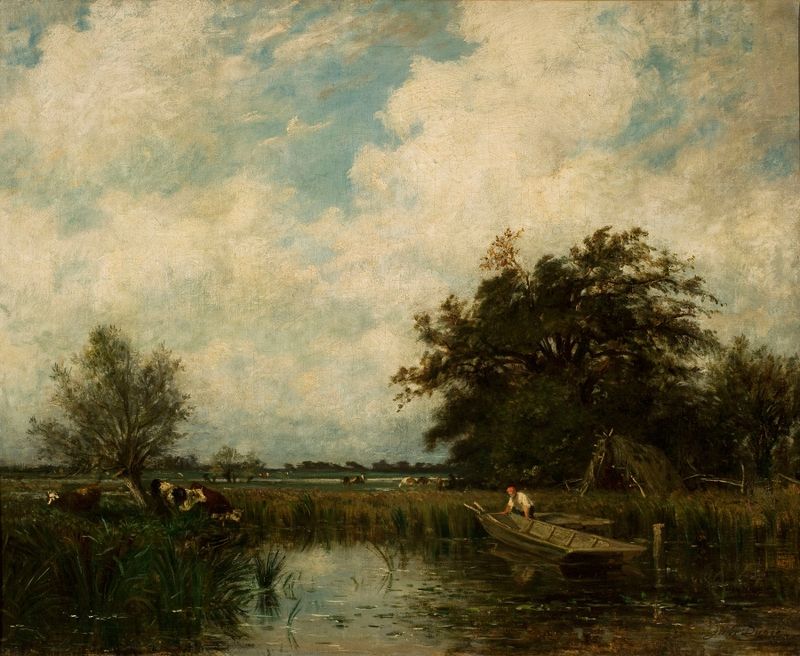
Landscape with a pond
Jules Dupré

The Cottage by the Roadside, Stormy Sky
Jules Dupré
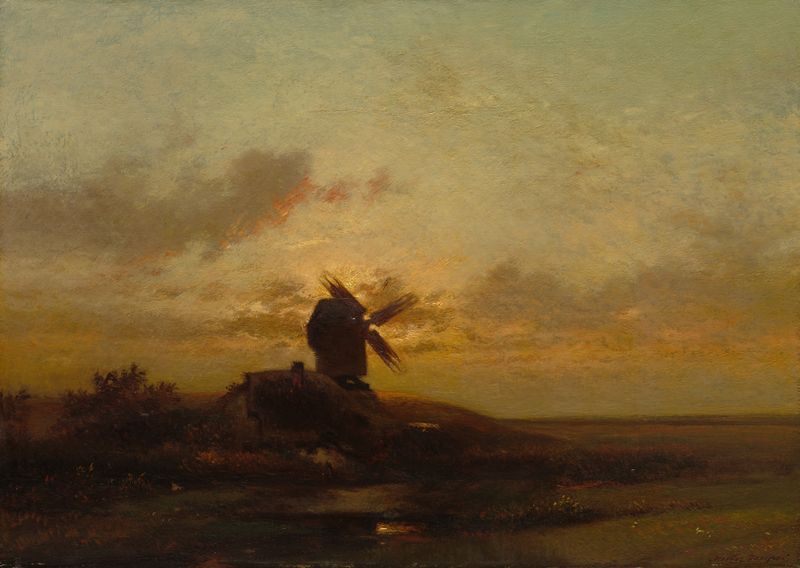
The Windmill
Jules Dupré

The Estuary Farm
Jules Dupré

Fontainebleau Oaks
Jules Dupré

Village Scene, Sunset
Jules Dupré

Barks Fleeing Before the Storm
Jules Dupré

Cows Crossing a Ford
Jules Dupré

The Old Oak
Jules Dupré

Weidelandschaft im Limousin
Jules Dupré





