
Landscape — History & Facts
When did color learn to lie? It seems to whisper the secrets of destiny, beckoning us to unravel its layers. Look to the horizon and immerse yourself in the rich hues of a golden sunset, where soft oranges and tranquil blues blend seamlessly into one another. Notice how the towering clouds gather, their delicate shapes illuminated by the sun’s warm embrace, creating a serene backdrop for the pastoral scene below. The gentle brushstrokes guide our eyes across the gently rolling hills, dotted with grazing cattle, while the foreground invites us closer with its delicate depiction of wild grasses swaying in the evening breeze. An emotional tension arises between the tranquil beauty of nature and the quiet inevitability of change that looms in the background.
The pastoral scene suggests a harmonious existence, yet the encroaching dusk hints at the passage of time and the fate of all things within this idyllic landscape. It is a reminder of the transient moments that define our lives—comforting yet haunting, it captures nature’s duality of beauty and impermanence. During the years 1635 to 1691, the artist captured this intricate balance of light and nature in a period marked by political and cultural upheaval in the Netherlands. Cuyp's work is often associated with the Dutch Golden Age, a time when artists sought to depict the beauty of the world around them with exquisite realism.
His landscapes not only reflect the serene rural life but also symbolize the complex interplay of hope and the inevitable passage of time, revealing both personal and universal truths.
More Artworks by Aelbert Cuyp
Browse all →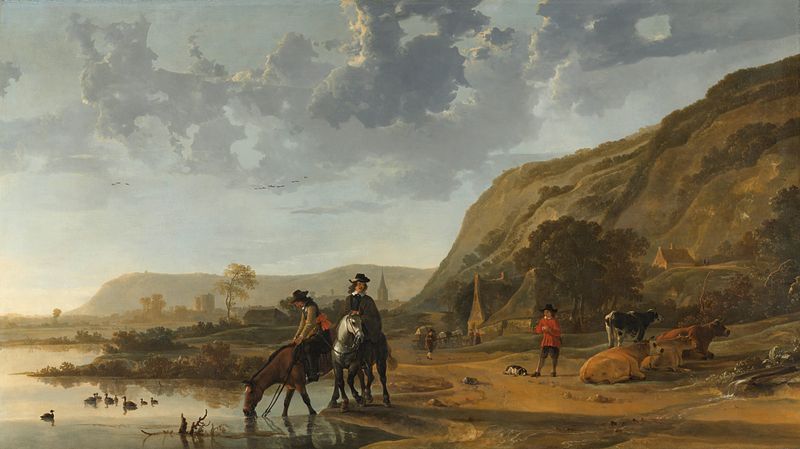
River Landscape with Riders
Aelbert Cuyp

Gezicht op Dordrecht
Aelbert Cuyp
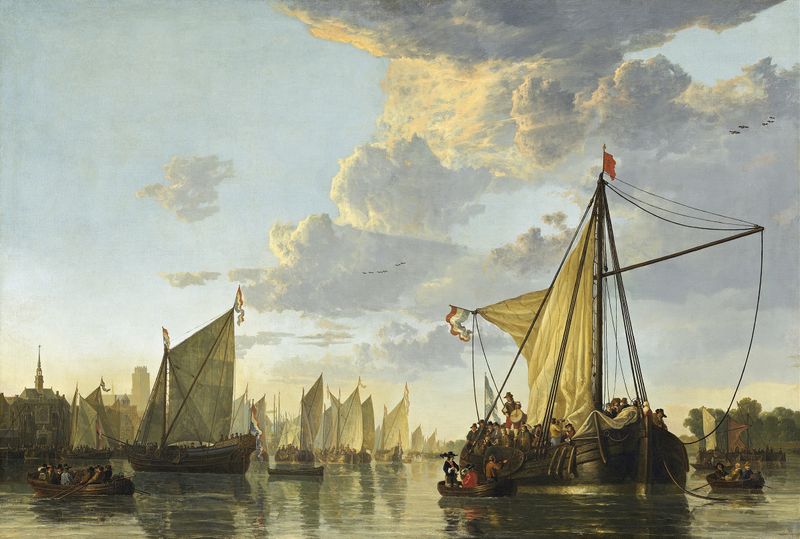
The Maas at Dordrecht
Aelbert Cuyp
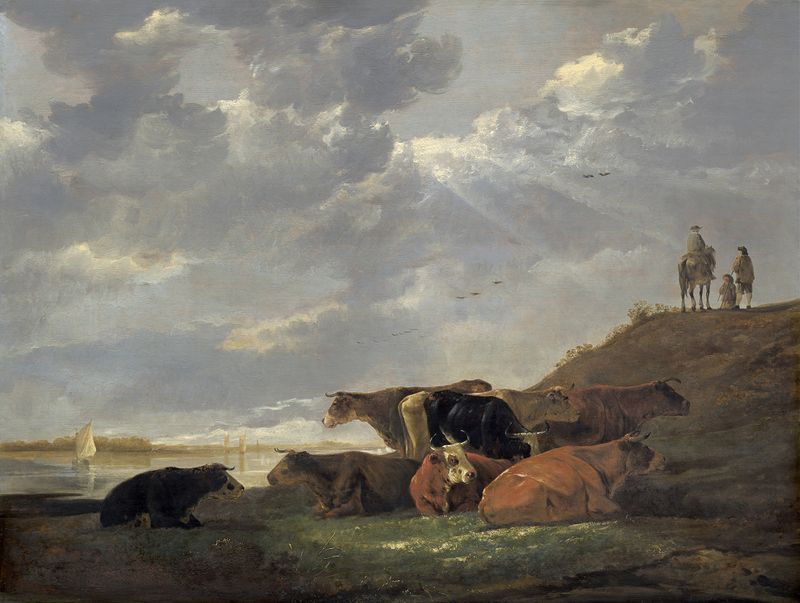
River Landscape with Cows
Aelbert Cuyp
River Landscape
Aelbert Cuyp

Landscape near Dordrecht
Aelbert Cuyp
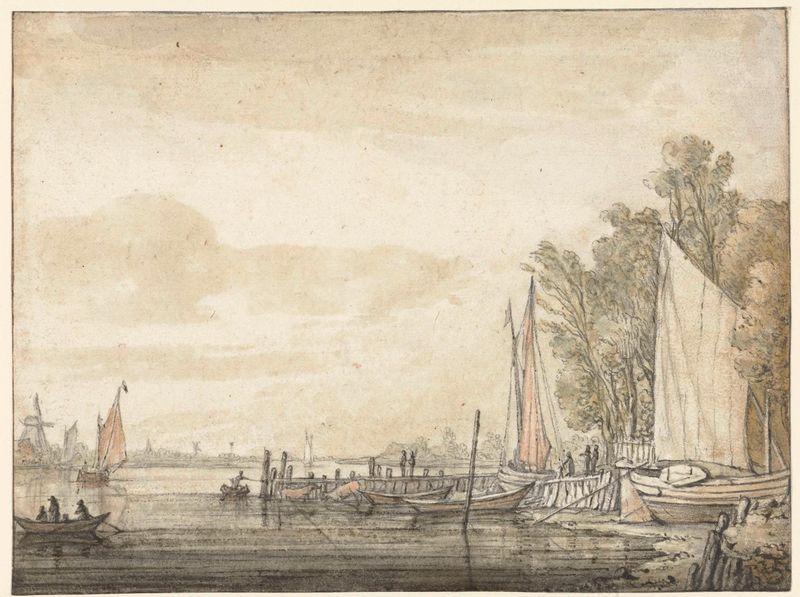
Boten bij een steiger in een rivier
Aelbert Cuyp

Bevroren rivier met schaatsers bij een kerk
Aelbert Cuyp
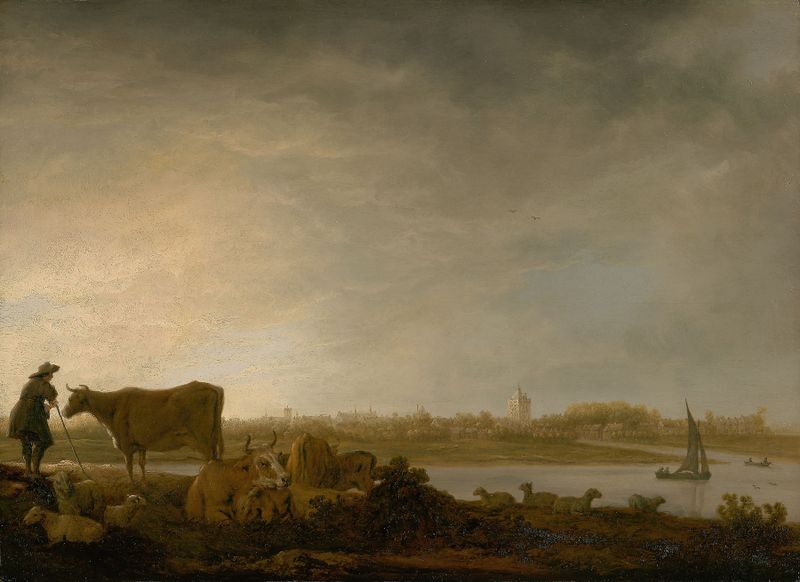
A View of Vianen with a Herdsman and Cattle by a River
Aelbert Cuyp

River Landscape with Cows
Aelbert Cuyp





