
Landscape by moonlight — History & Facts
In the quiet of the night, time unfolds gently, revealing layers of emotion and reflection. Look to the sweeping horizon where deep blues and velvety blacks interlace, creating a tranquil sky that cradles the luminescent moon. Notice how the light gracefully spills over the landscape, illuminating the contours of distant hills and the stillness of a serene body of water below. Rich greens and muted browns ground the scene, suggesting life and history amidst the nocturnal calm, while the subtle brushstrokes evoke movement, as if nature itself holds its breath in reverence. Yet, beneath this calm, a tension simmers.
The moonlight casts contrasting shadows, hinting at the duality of light and dark, presence and absence. The landscape, though serene, whispers stories of the past, speaking of time's inexorable passage and the fleeting nature of beauty. Each element – from the trees standing sentinel to the reflective surface of the water – suggests both permanence and impermanence, inviting the viewer to ponder their own place within this continuum. Created in 1852, this piece emerged during a transformative moment in the artist's career, as he navigated the challenges and changes of the Romantic movement.
Working in France, Dupré was inspired by the natural beauty around him, as well as the growing interest in capturing atmospheric effects. It was a time when artists were increasingly drawn to portray nature's emotional depth, seeking to evoke not only sights but also the sensations and contemplations that accompany the passage of time.
More Artworks by Jules Dupré
Browse all →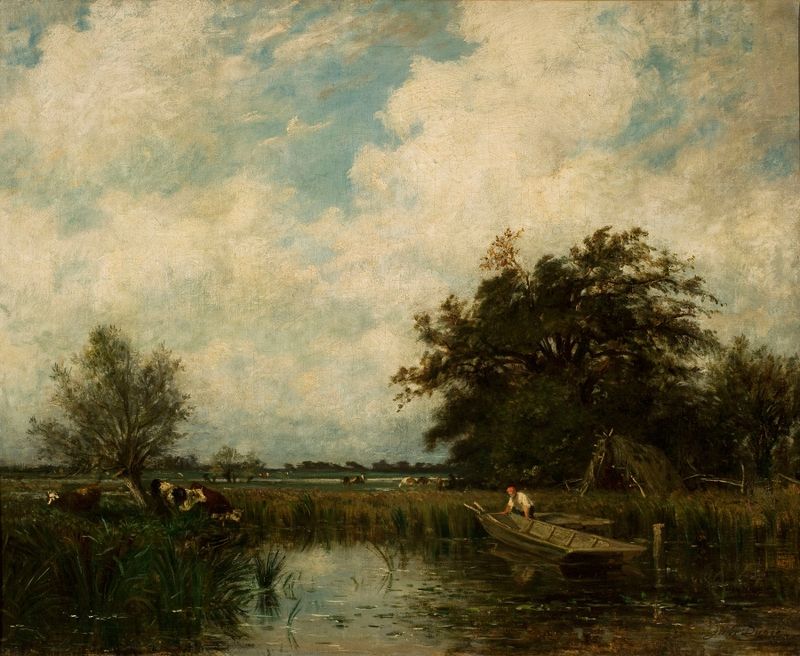
Landscape with a pond
Jules Dupré

The Cottage by the Roadside, Stormy Sky
Jules Dupré
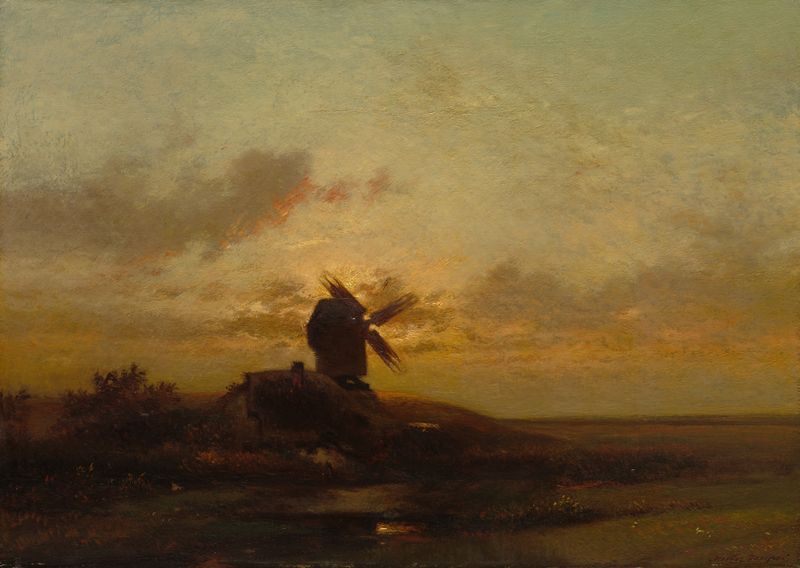
The Windmill
Jules Dupré

The Estuary Farm
Jules Dupré

Fontainebleau Oaks
Jules Dupré

Village Scene, Sunset
Jules Dupré

Barks Fleeing Before the Storm
Jules Dupré

Cows Crossing a Ford
Jules Dupré

The Old Oak
Jules Dupré

Weidelandschaft im Limousin
Jules Dupré





