
Woodland by the Fjord — History & Facts
The eye is drawn first to the dappled clearing, where sunlight pours through a dense canopy and pools on a patch of golden earth, ringed by slender, twisting birches. This is a forest that feels both secretive and inviting, its tangled undergrowth and arching branches forming a living threshold between shadow and light. A narrow stream glimmers at the edge, guiding the gaze toward the fjord’s calm water beyond, just visible through the trees.
Every detail—the ferns, the wildflowers, the mossy trunks—serves to heighten the sense of discovery, as if the viewer has stumbled upon a hidden glade where the forest opens itself for a moment before closing again. Painted sometime between 1827 and 1852, Woodland by the Fjord belongs to a period when artists across Northern Europe turned their attention to nature’s quieter corners. The work’s intimacy and careful observation suggest the influence of the Romantic movement, which encouraged painters to seek the emotional resonance of landscape rather than its grand spectacle. In Norway, where August Cappelen lived and worked, such scenes would have spoken to a growing sense of national identity rooted in the land’s wildness and beauty.
Now held by the National Museum of Art, Architecture and Design, this painting stands as a testament to an era when the forest was both a real place and a realm of imagination—inviting us to step softly, look closely, and linger.
More Artworks by August Cappelen

Landscape Study with a Precipice
August Cappelen

Decaying forest
August Cappelen
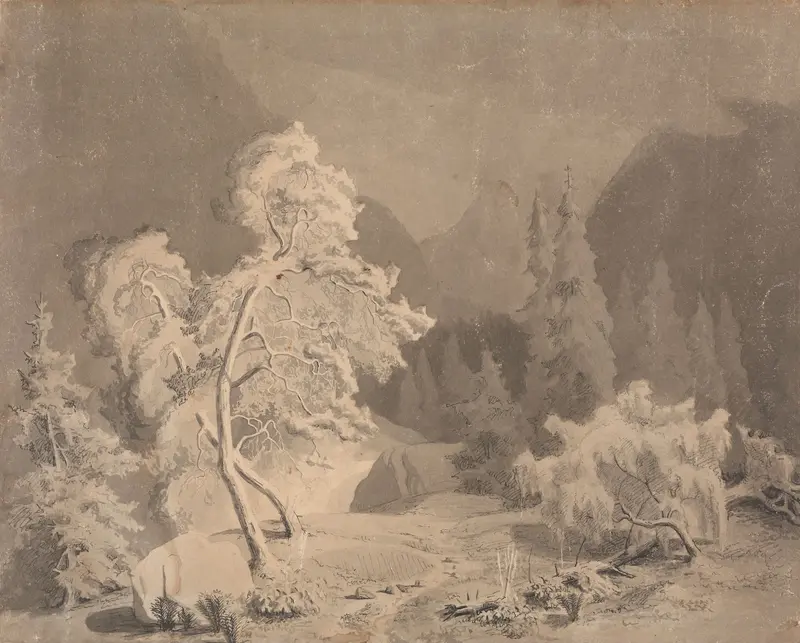
Forest Landscape
August Cappelen
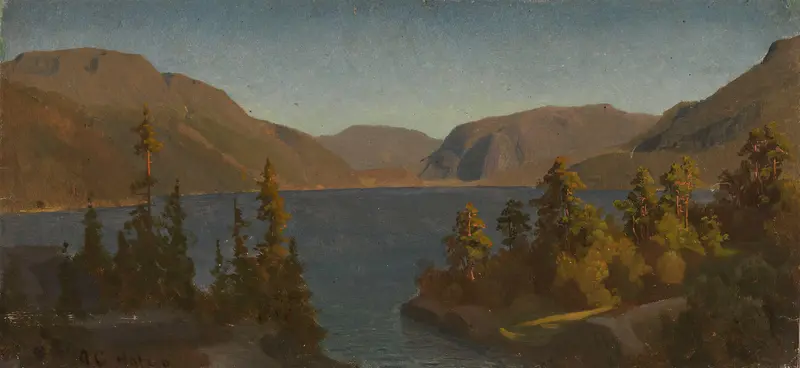
Lake in Telemark
August Cappelen
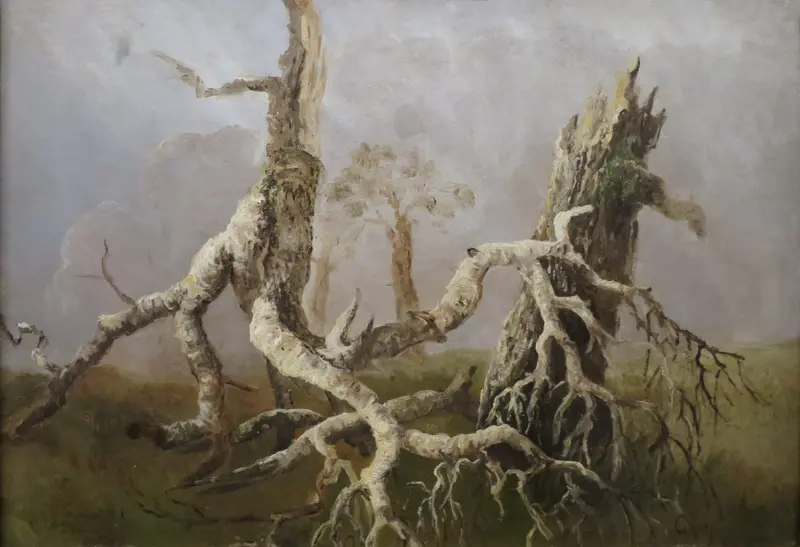
Dying Trees
August Cappelen
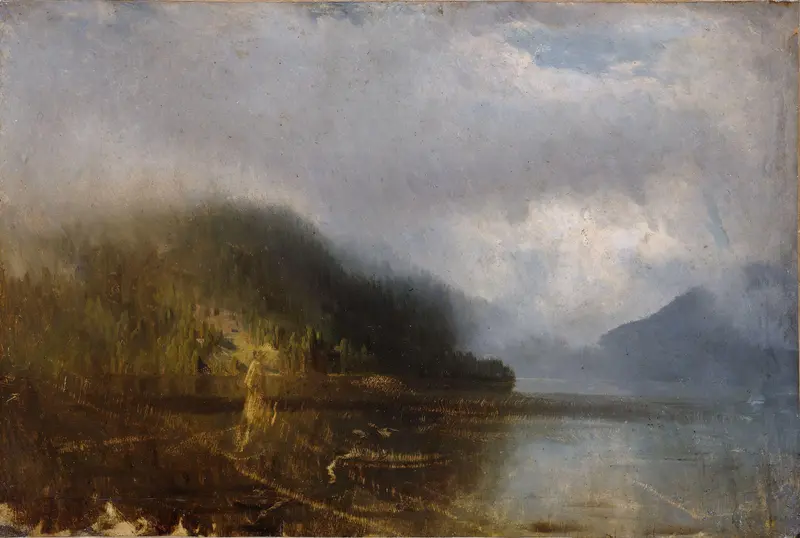
Lake in Fog
August Cappelen
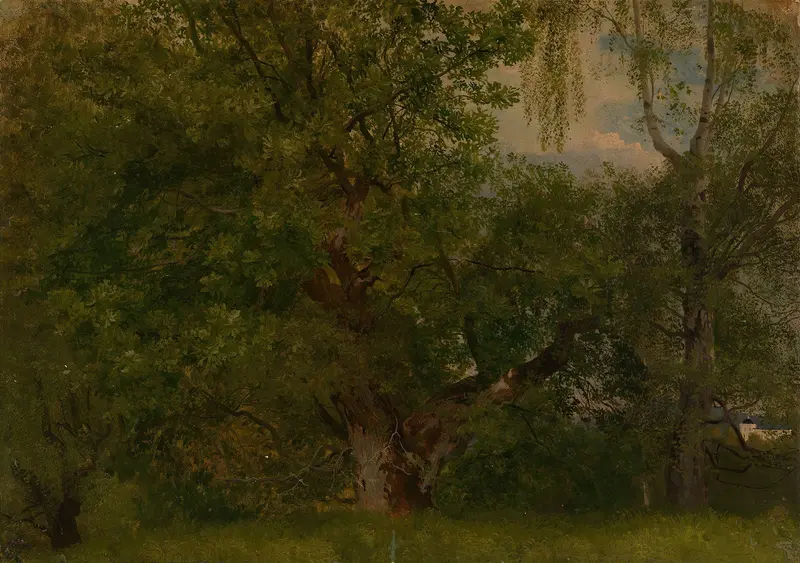
Wood near Ulefoss
August Cappelen
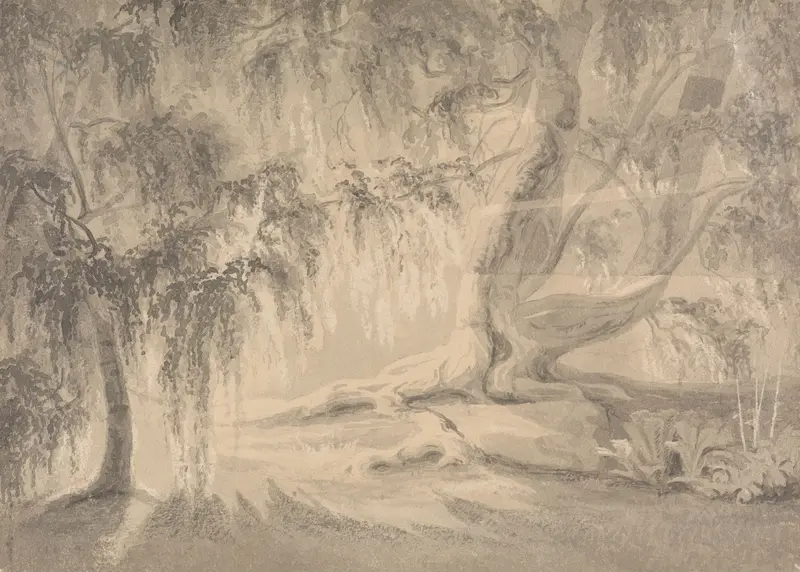
Forest Landscape with Sun Rays
August Cappelen
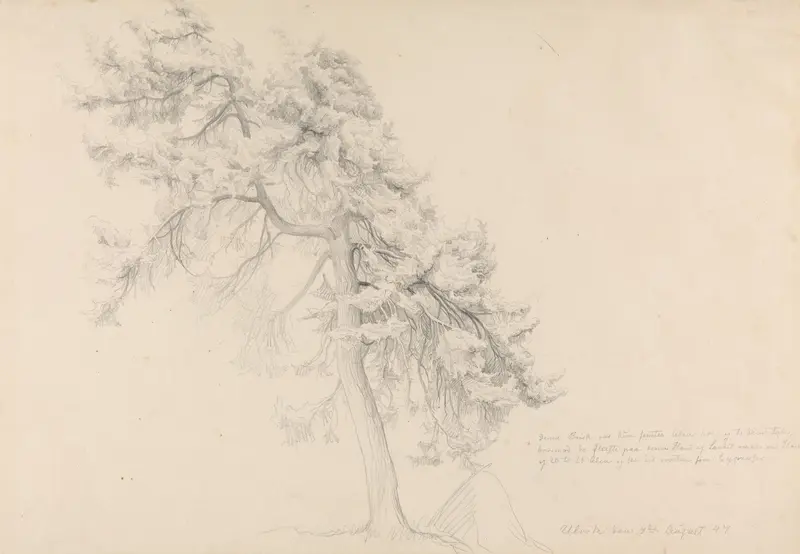
Juniper, Ulvik
August Cappelen
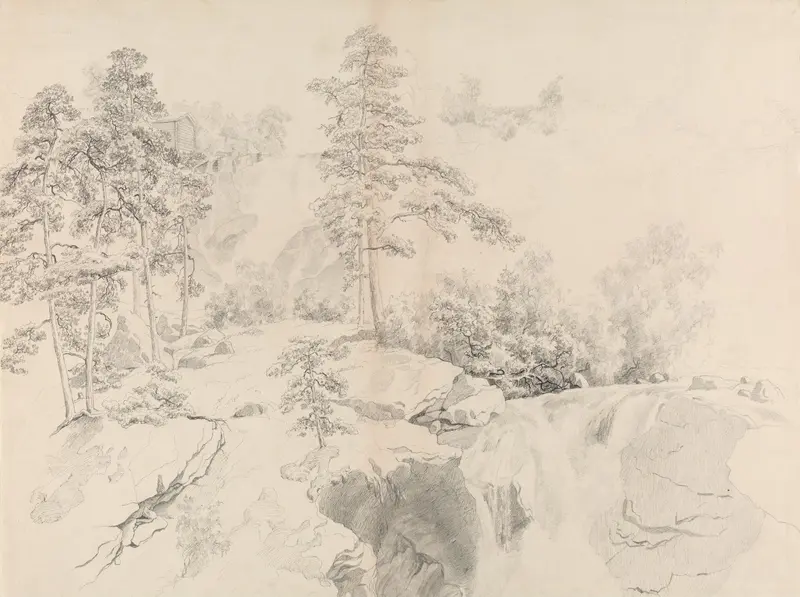
Landscape with Mill House and Waterfall
August Cappelen
More Landscape Art

The Starry Night
Vincent van Gogh

View of Delft
Johannes Vermeer

Water Lilies
Claude Monet

The Grand Canal, Venice, looking north-west from the Ca' Corner to the Ca' Contarini degli Scrigni, with the campanile of Santa Maria della Carità
Canaletto

Windsor Castle
Canaletto

The Grand Canal looking North-East from the Palazzo Dolfin-Manin to the Rialto Bridge
Canaletto