
Landscape V — History & Facts
Did the painter know this moment would outlive them? As time ebbs and flows, the yearning encapsulated in Landscape V invites us to linger in a serene yet melancholic expanse, where nature’s majesty and human ambition collide. Look to the foreground, where rich greens and vibrant ochres come alive under a luminous sky. The sweeping curves of the hills, gently rolling into the distance, guide your gaze towards a soft horizon kissed by the golden light of dusk. Notice how Church masterfully layers textures, from the smoothness of the water to the roughness of the foliage, creating a dynamic interplay between calmness and vitality.
The delicate blending of blues and yellows evokes an emotional depth, hinting at both beauty and transcendence. Yet within this tranquility lies a profound tension. The expansive sky, with its tumultuous clouds, suggests an impending storm, symbolizing the unpredictable nature of life itself. The juxtaposition of the serene landscape against a brewing chaos invites contemplation on humanity’s smallness within nature's vast embrace.
Each brushstroke is imbued with a sense of longing, revealing the artist’s desire to capture not just a place, but a feeling—a fleeting moment of connection between earth and spirit. In 1865, while living in a rapidly industrializing America, Church created this work amid the burgeoning Hudson River School movement. This era saw artists grappling with the dualities of progress and nature. Church, well-regarded for his grand landscapes, sought to reflect both the glorious beauty of the American wilderness and the complexities of human existence, endeavoring to leave a lasting impression through his art.
More Artworks by Frederic Edwin Church
Browse all →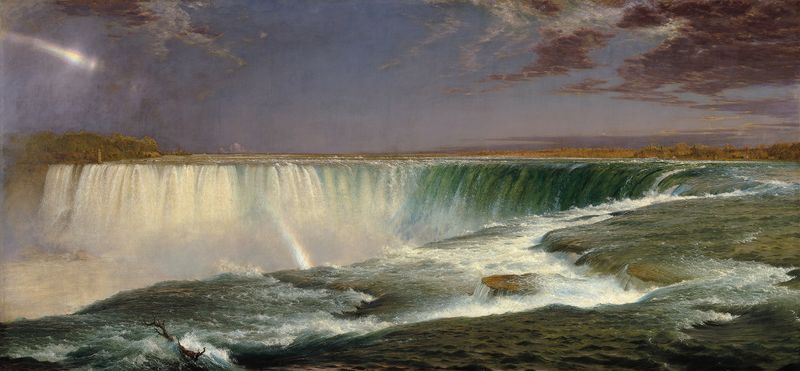
Niagara
Frederic Edwin Church
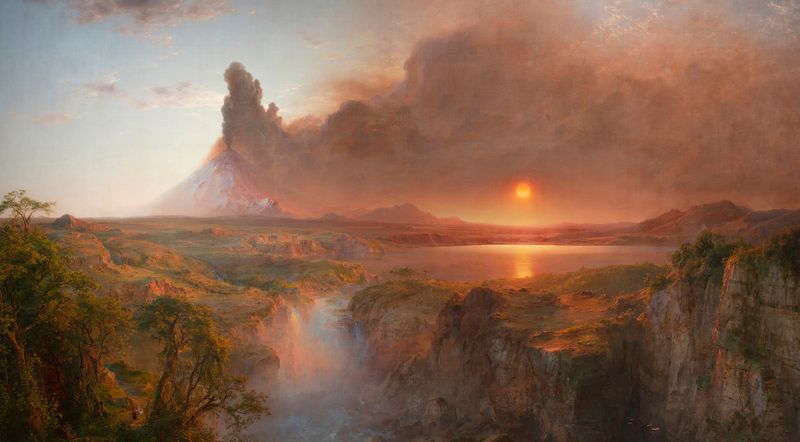
Cotopaxi
Frederic Edwin Church
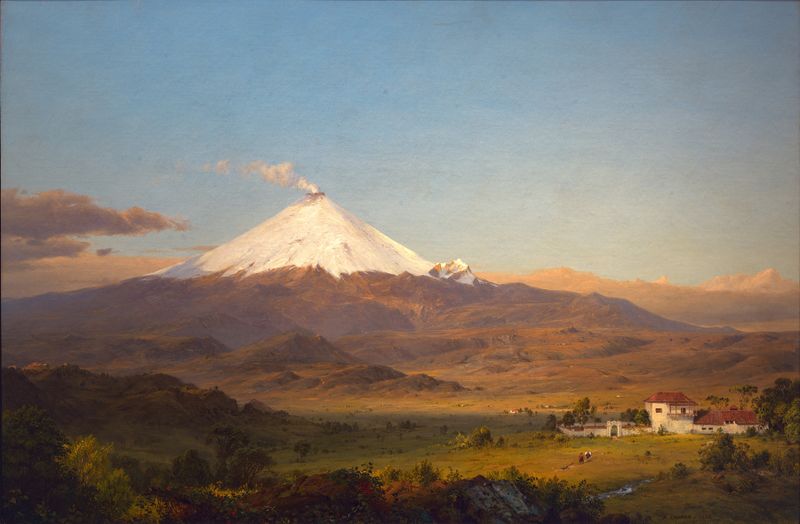
Cotopaxi
Frederic Edwin Church
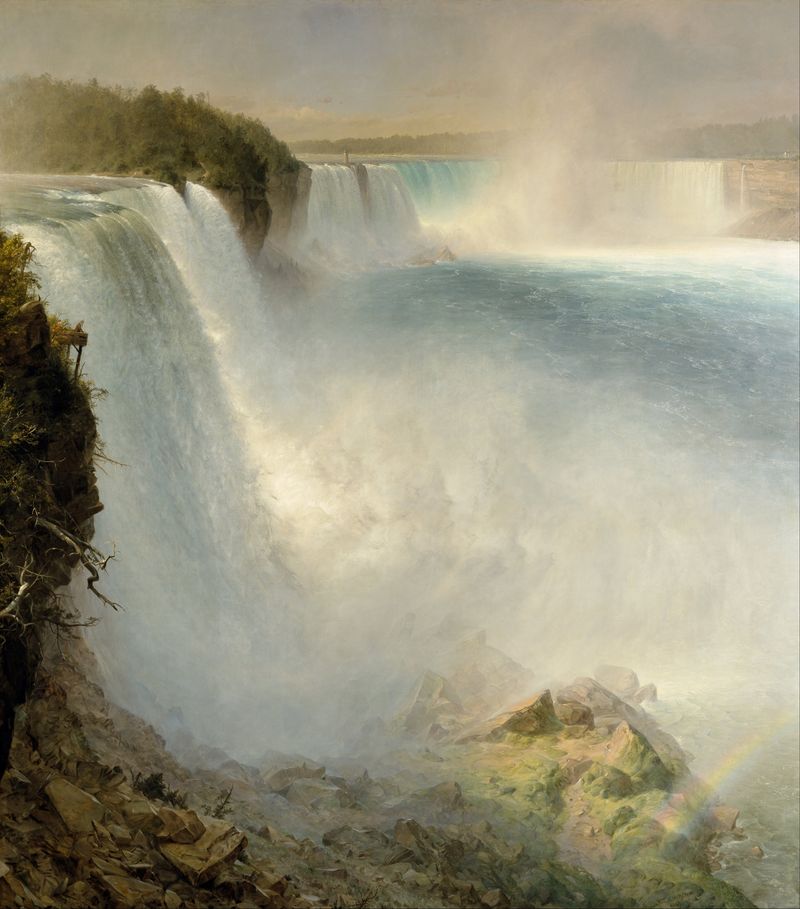
Niagara Falls, from the American Side
Frederic Edwin Church
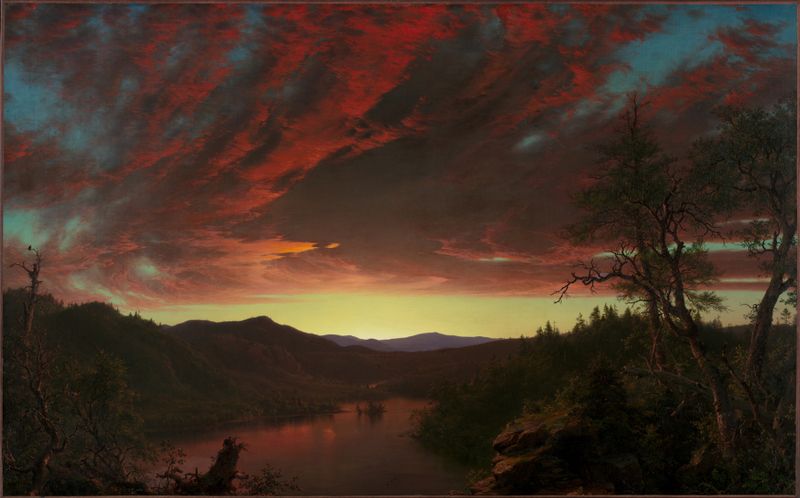
Twilight in the Wilderness
Frederic Edwin Church
Hudson Valley at Sunset
Frederic Edwin Church
The Hintersee, near Berchtesgaden, Bavaria
Frederic Edwin Church
Mountains near Baalbec
Frederic Edwin Church
Aurora Borealis
Frederic Edwin Church
Cotopaxi
Frederic Edwin Church





