
Landscape VI — History & Facts
What if silence could speak through light? In the hushed expanse of Landscape VI, an unspoken grief resonates, captured in the interplay of shadow and illumination. Look to the horizon, where a fading sun drapes its golden hues across the landscape. Focus on the gentle gradient of colors, from rich amber to deep indigo, as they blend seamlessly into one another. Notice how the lush, verdant valleys are framed by solitary trees, their forms stark against the twilight sky.
Each brushstroke reflects Church's mastery of atmospheric perspective, inviting the viewer to breathe in the stillness that permeates the scene. Here, the tension of loss is palpable. The vibrant landscape, though beautiful, suggests a world on the cusp of change, evoking a bittersweet nostalgia for what was. The trees stand as silent sentinels, perhaps mourning the day that has passed into darkness, while the open spaces convey both freedom and isolation.
The subtle interplay of light and shadow reveals an emotional landscape as much as a physical one, reflecting the artist's deep connection to nature and his awareness of its fleeting moments. In 1865, Church painted this work in a tumultuous period marked by personal and national upheaval. The aftermath of the Civil War loomed large, influencing not only the artist's sentiments but the broader artistic movement, which was shifting towards an exploration of the sublime in nature. During this time, Church was grappling with both his own feelings of loss and the transformation of America, which infused his landscapes with a profound sense of introspection and depth.
More Artworks by Frederic Edwin Church
Browse all →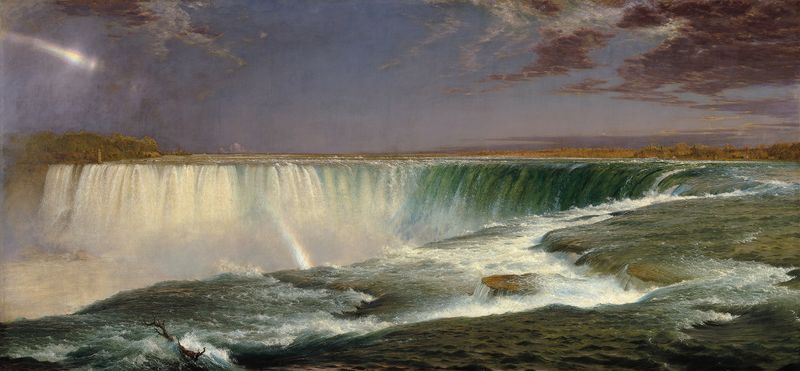
Niagara
Frederic Edwin Church
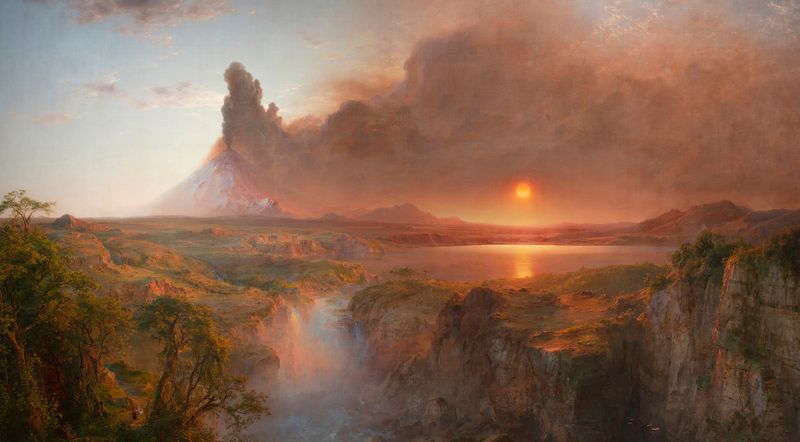
Cotopaxi
Frederic Edwin Church
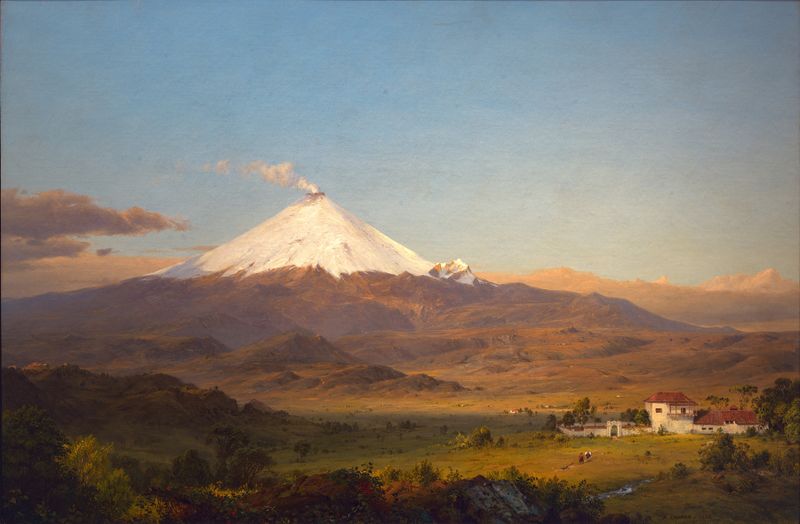
Cotopaxi
Frederic Edwin Church
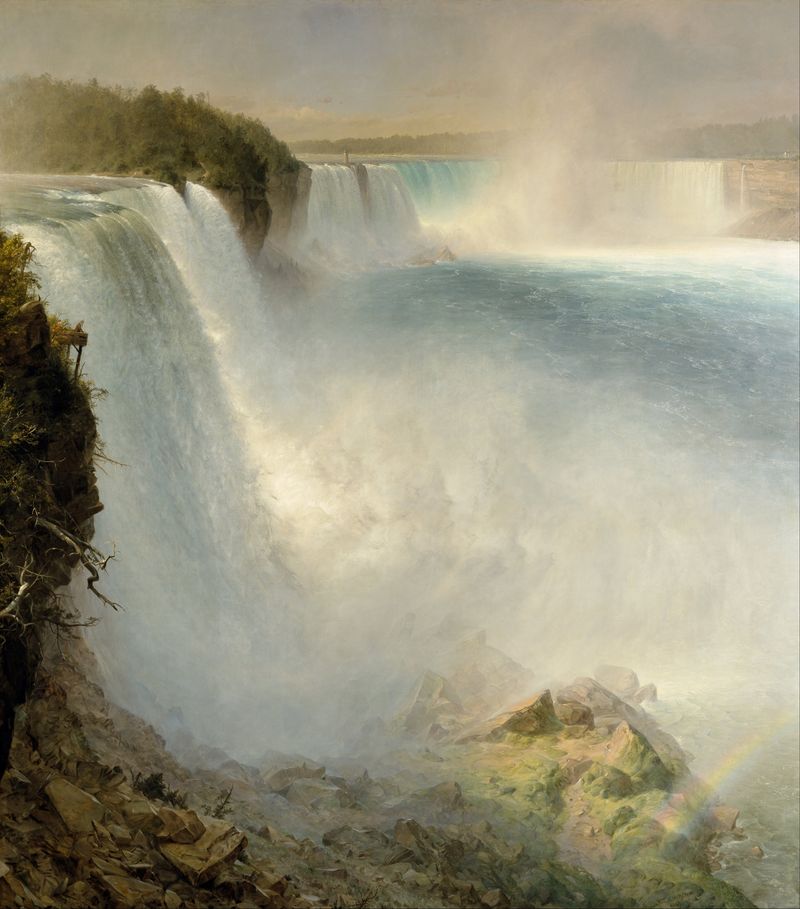
Niagara Falls, from the American Side
Frederic Edwin Church
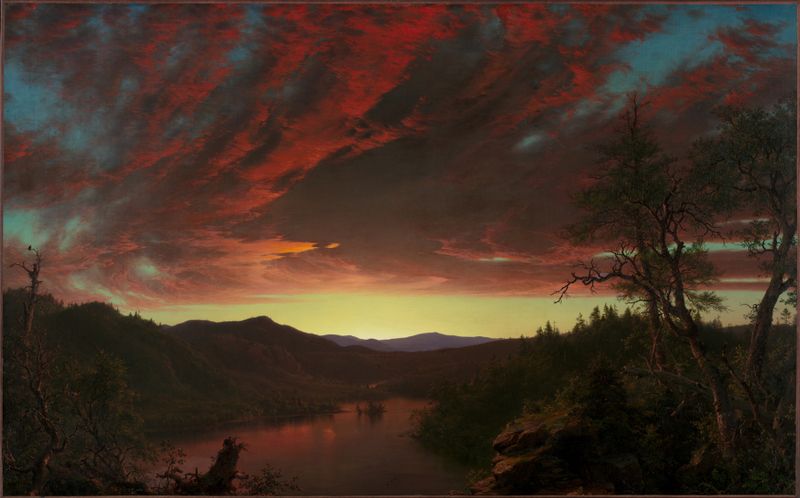
Twilight in the Wilderness
Frederic Edwin Church
Hudson Valley at Sunset
Frederic Edwin Church
The Hintersee, near Berchtesgaden, Bavaria
Frederic Edwin Church
Mountains near Baalbec
Frederic Edwin Church
Aurora Borealis
Frederic Edwin Church
Cotopaxi
Frederic Edwin Church





