
Landscape with a Horse — History & Facts
In Landscape with a Horse, the artist captures the profound act of creation, where nature and spirit intertwine in a vivid, pastoral harmony. Look to the center of the canvas, where the horse stands proudly, its form elegantly outlined against the lush green of the landscape. The vibrant colors, from the earthy browns of the soil to the bright greens of the foliage, evoke a sense of vitality. The way light filters through the trees casts gentle shadows, enhancing the horse's presence while drawing the eye across the canvas, inviting a journey beyond the immediate subject.
Gauguin’s bold brushwork and harmonious palette work together to create a scene that feels both intimate and expansive. Delve into the contrasts between the natural and the mythical in this piece. The horse, a symbol of freedom and strength, seems to embody the spirit of the land, yet its positioning suggests a fleeting moment caught between reality and imagination. The whimsical shapes of the trees cradling the figure enhance this duality, blending organic form with vibrant color, thus inviting contemplation of the relationship between man and nature.
Each detail is meticulously placed, revealing the delicate balance between chaos and tranquility. In 1899, Gauguin was living in Tahiti, seeking solace from the constraints of European society. Experiencing a transformative phase in his career, he was deeply immersed in exploring his artistic voice, which led him to blend the influences of Post-Impressionism with a more primitive aesthetic. This period marked a significant moment in the evolution of modern art, as the artist sought to transcend conventional beauty and delve into the emotional truths of existence.
More Artworks by Paul Gauguin
Browse all →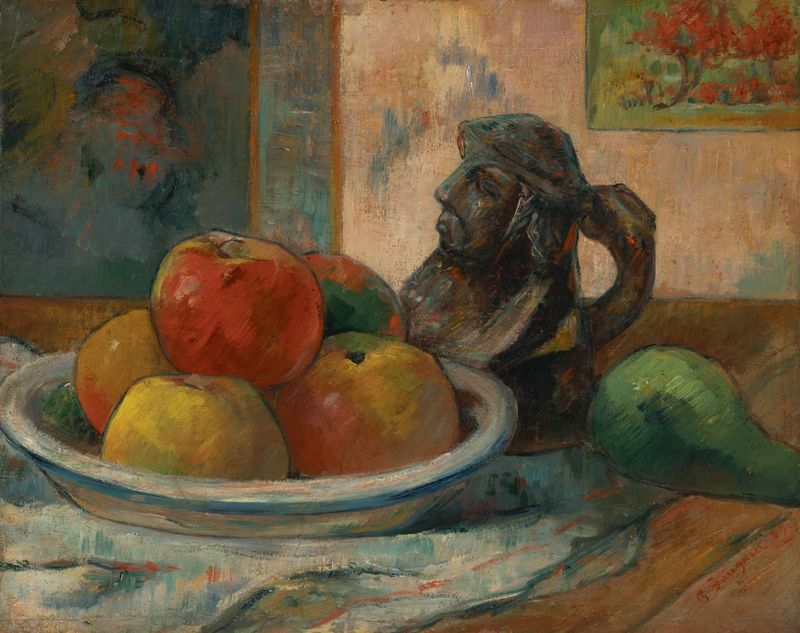
Still Life with Apples, a Pear, and a Ceramic Portrait Jug
Paul Gauguin
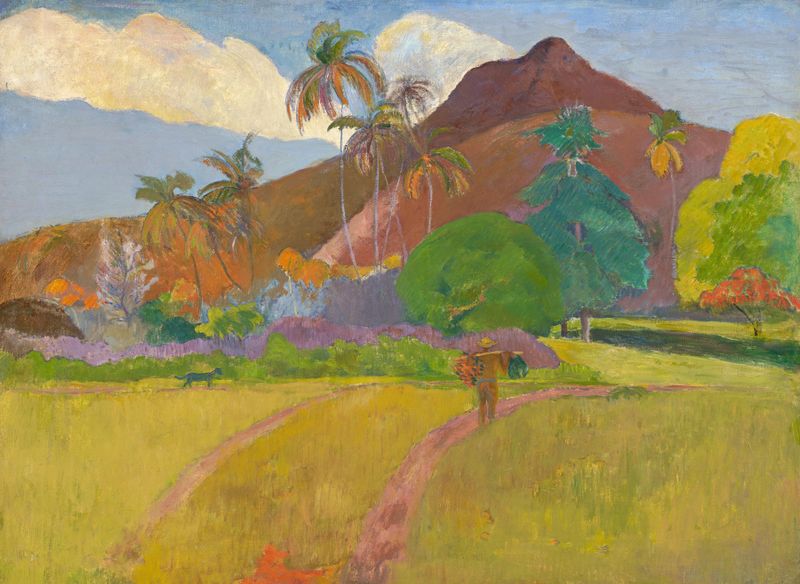
Tahitian Landscape
Paul Gauguin

Landscape near Pont-Aven
Paul Gauguin

No te aha oe riri (Why Are You Angry?)
Paul Gauguin
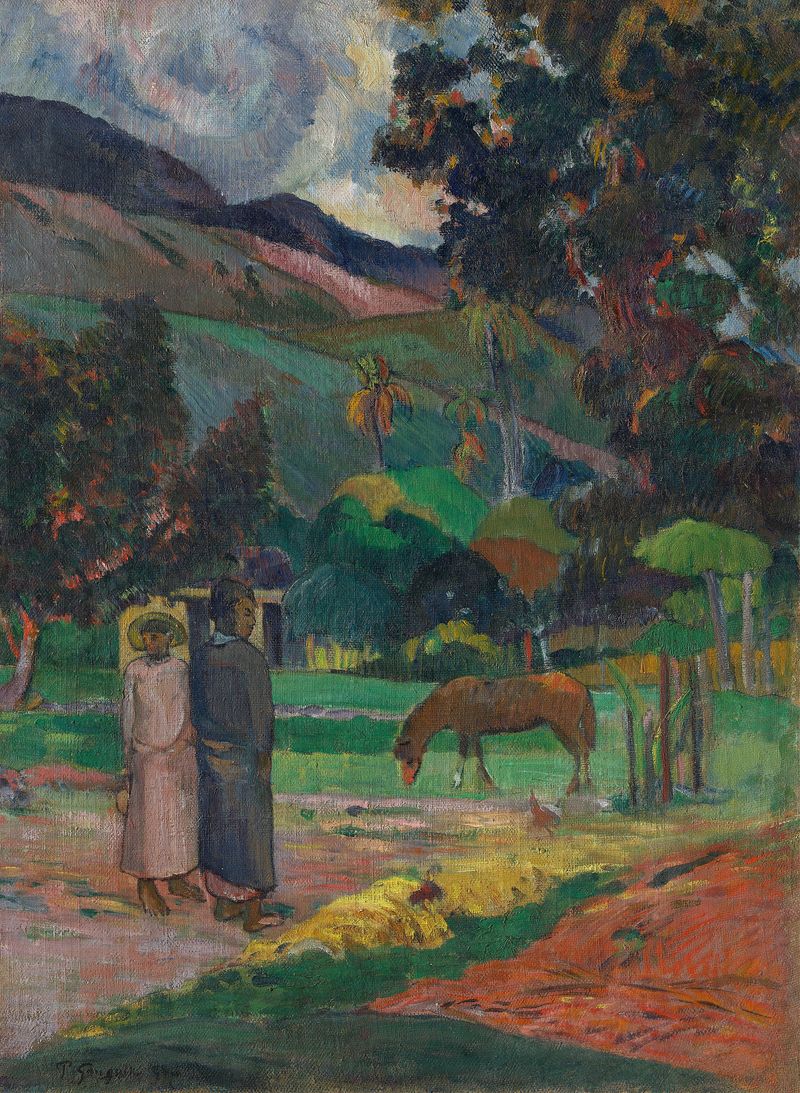
Tahitian Landscape
Paul Gauguin
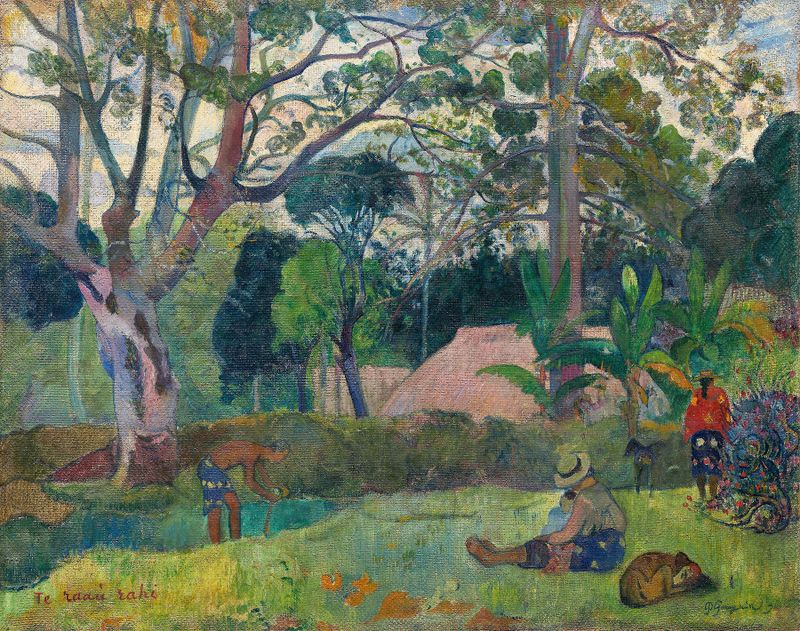
Te raau rahi (The Big Tree)
Paul Gauguin

Landscape at Le Pouldu
Paul Gauguin

Landscape of Brittany
Paul Gauguin

Poèmes Barbares
Paul Gauguin
Mahana no atua (Day of the God)
Paul Gauguin





