
Landscape with cattle — History & Facts
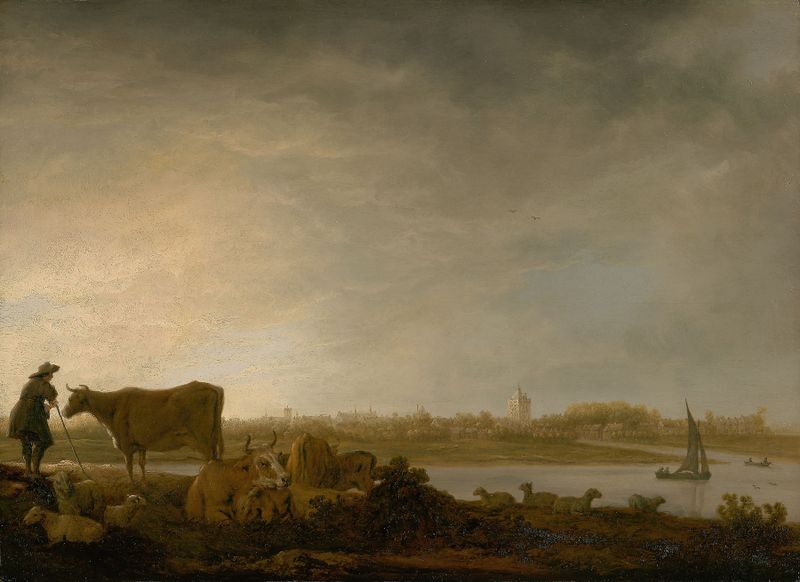
What if beauty was never meant to be finished? In the delicate embrace of nature, creation unfolds as a timeless journey rather than a destination. Look to the horizon, where warm golden hues blend seamlessly into soft blues, drawing your eye towards serene fields bathed in the gentle glow of twilight. Notice how the cattle, rendered with meticulous strokes, become part of the landscape, their forms grounded yet ethereal, as they graze quietly. Cuyp’s expert use of light reveals the texture of the grass and the folds of the animals’ coats, creating a depth that invites viewers to linger, to breathe in the pastoral calm. Beneath the tranquil surface lies a tension between the domestic and the wild, where the cattle symbolize not just pastoral life but the larger, cyclical rhythms of nature.
The interplay of light and shadow evokes feelings of solitude and peace, while the vastness of the landscape hints at humanity’s smallness within the grand tapestry of existence. Each brushstroke is a reminder that every moment of beauty is transient, echoing the ephemeral nature of life itself. Aelbert Cuyp created this work during the 17th century, a time when the Dutch Republic flourished in trade and art. Living in Dordrecht, Cuyp was deeply influenced by the natural beauty of his surroundings and the burgeoning interest in landscape painting.
As his contemporaries explored realism and everyday life, he captured the sublime essence of nature, establishing a legacy that would resonate for generations.
More Artworks by Aelbert Cuyp
Browse all →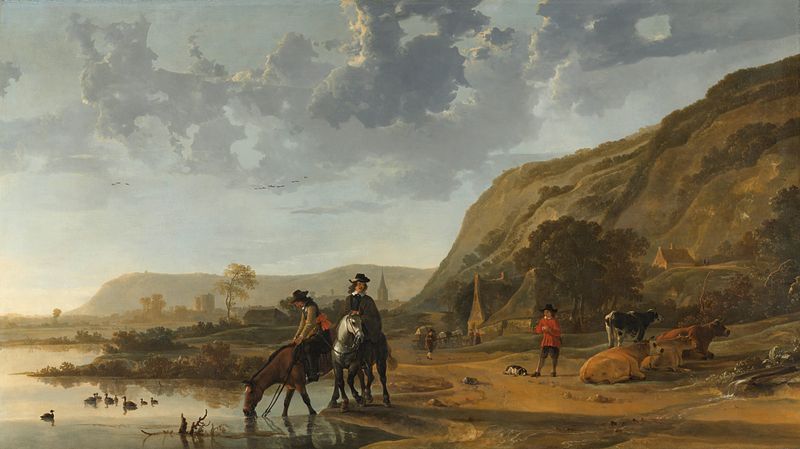
River Landscape with Riders
Aelbert Cuyp

Gezicht op Dordrecht
Aelbert Cuyp
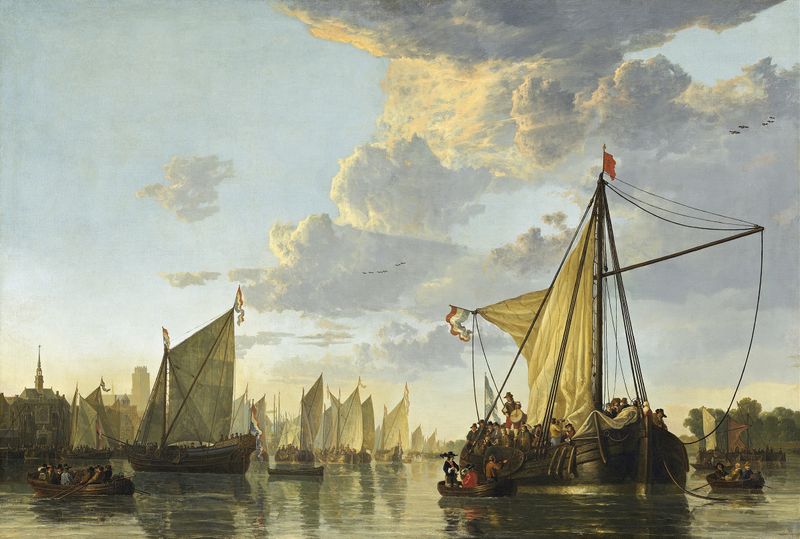
The Maas at Dordrecht
Aelbert Cuyp
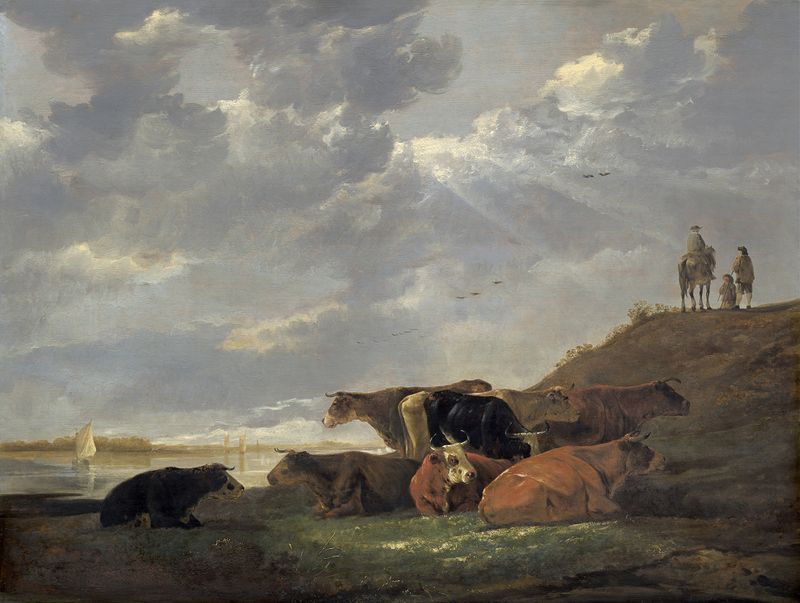
River Landscape with Cows
Aelbert Cuyp
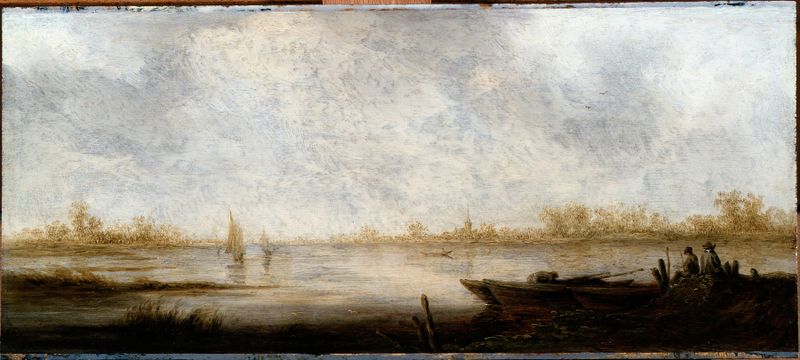
River Landscape
Aelbert Cuyp

Landscape near Dordrecht
Aelbert Cuyp
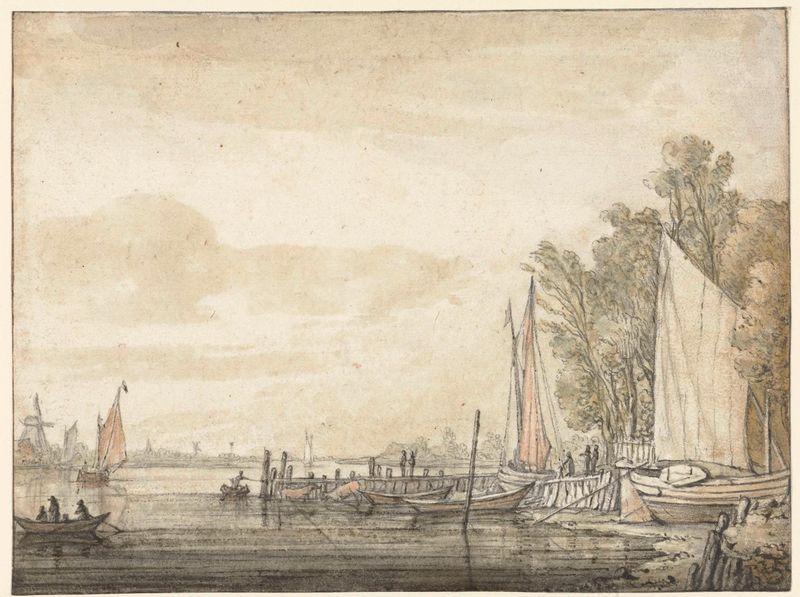
Boten bij een steiger in een rivier
Aelbert Cuyp

Bevroren rivier met schaatsers bij een kerk
Aelbert Cuyp
A View of Vianen with a Herdsman and Cattle by a River
Aelbert Cuyp

River Landscape with Cows
Aelbert Cuyp





