
Landscape with Cattle at Limousin — History & Facts
When did color learn to lie? The verdant greens and warm earth tones dance across the canvas, inviting viewers into a world of pastoral peace, yet beneath the surface lies an echo of sorrow. Focus first on the horizon, where the sun dips low, casting an amber glow over the rolling hills. Notice how the thick brushstrokes form both the lush grass and the heavy clouds that loom overhead, creating a tension between the vibrancy of nature and an unsettling stillness. The cattle, seemingly tranquil, are rendered with a softness that invites touch, yet their downturned eyes suggest a melancholic awareness of a world beyond their serene surroundings. The contrast of light and shadow throughout the painting evokes a sense of fleeting time, a reminder of life's impermanence.
Delve into the foreground, where a single cow stands apart from the herd, imbued with an emotional weight that hints at loss. This intentional separation speaks to themes of isolation and reflection, transforming the idyllic scene into a poignant exploration of grief woven into the fabric of life. In 1837, Jules Dupré painted this work while living in France during a period of shifting artistic movements. Embracing Romanticism, he sought to capture the emotional landscape of nature, mirroring the turmoil and transformation within society.
This was a time when artists were beginning to break away from rigid classical traditions, allowing themselves to infuse their work with personal feelings and narratives, which is poignantly reflected in this landscape.
More Artworks by Jules Dupré
Browse all →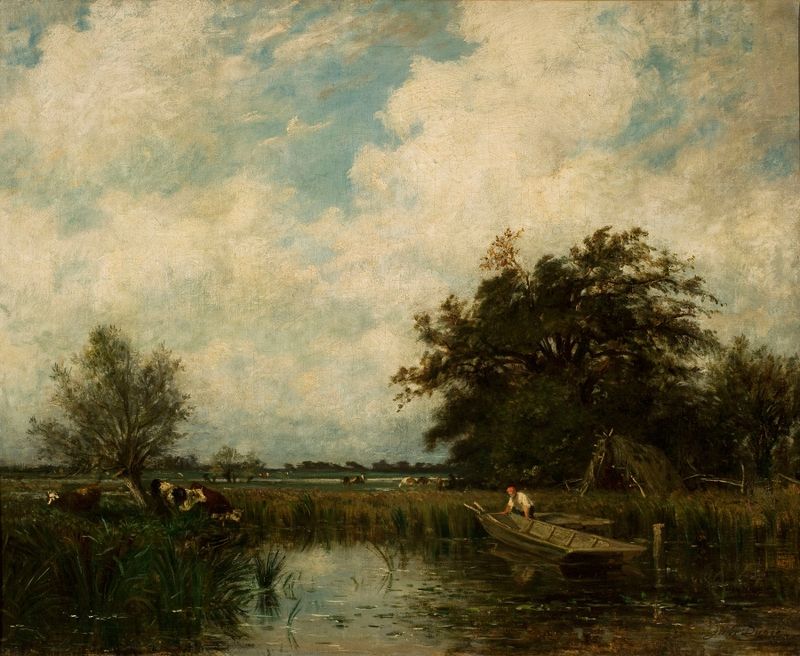
Landscape with a pond
Jules Dupré

The Cottage by the Roadside, Stormy Sky
Jules Dupré
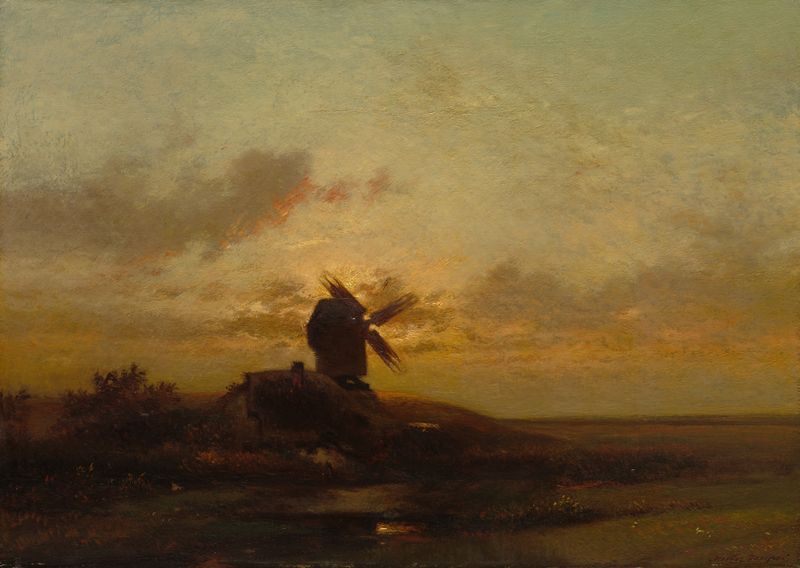
The Windmill
Jules Dupré

The Estuary Farm
Jules Dupré

Fontainebleau Oaks
Jules Dupré

Village Scene, Sunset
Jules Dupré

Barks Fleeing Before the Storm
Jules Dupré

Cows Crossing a Ford
Jules Dupré

The Old Oak
Jules Dupré

Weidelandschaft im Limousin
Jules Dupré





