
Landscape with Cow — History & Facts
In a world where nature breathes with a life of its own, how does one capture the awe that it inspires? Focus on the gentle undulations of the hills, where vibrant greens harmonize with the earth's browns and yellows. Notice how the light falls upon the cow grazing peacefully, its form rendered in soft, impressionistic strokes that evoke both presence and serenity. The sky above, splattered with wisps of clouds, casts a luminous glow, inviting the viewer to travel deeper into Dupré's meticulous landscape. Here, contrasts speak volumes—the tranquility of the pastoral scene juxtaposed with the vigor of nature itself.
The cow, a solitary figure, embodies both grace and simplicity, serving as a reminder of the interconnection between humanity and the natural world. Each element, from the airy sky to the sturdy earth, invites contemplation on the fleeting yet enduring beauty of rural life, revealing how art can encapsulate a moment in time. In 1872, while painting this serene landscape, the artist found himself in the midst of a significant evolution in the French art scene, as Impressionism began to challenge traditional norms. Dupré, an influential figure within this movement, sought to capture the raw beauty of nature, inspired by his surroundings in the countryside.
His works from this period reflect a deep appreciation for the world around him, one that resonates with both simplicity and grandeur.
More Artworks by Jules Dupré
Browse all →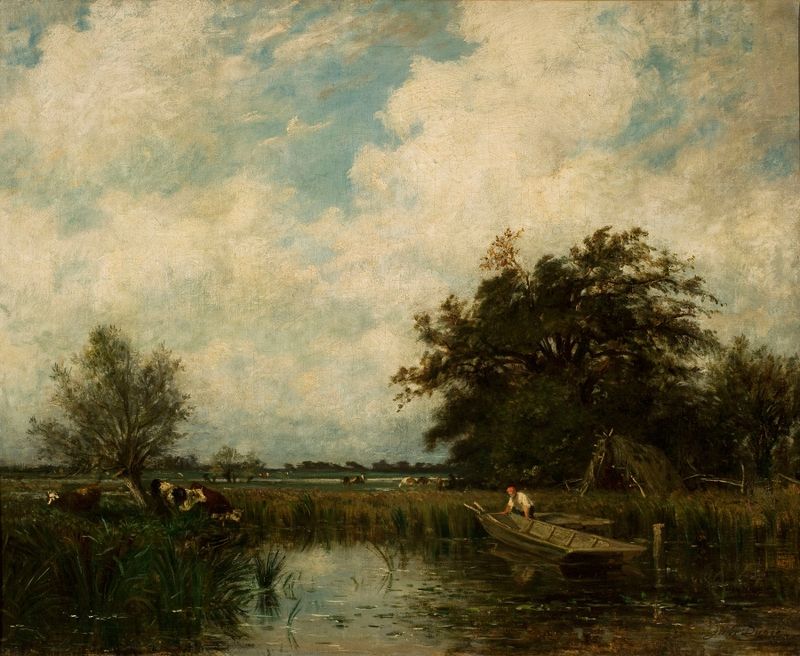
Landscape with a pond
Jules Dupré

The Cottage by the Roadside, Stormy Sky
Jules Dupré
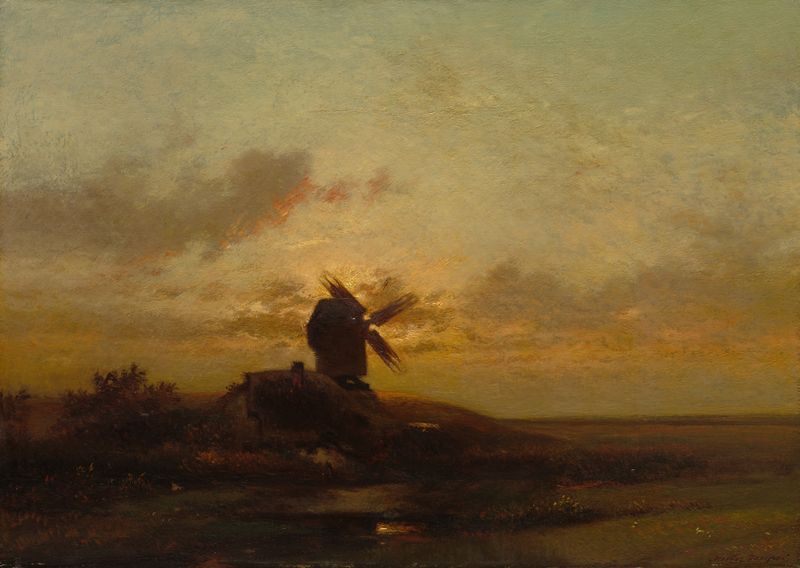
The Windmill
Jules Dupré

The Estuary Farm
Jules Dupré

Fontainebleau Oaks
Jules Dupré

Village Scene, Sunset
Jules Dupré

Barks Fleeing Before the Storm
Jules Dupré

Cows Crossing a Ford
Jules Dupré

The Old Oak
Jules Dupré

Weidelandschaft im Limousin
Jules Dupré





