
Landscape with Hunter — History & Facts
What first draws the eye in Landscape with Hunter is not the hunter himself, but the restless dance of trees and clouds across a low, watery plain. The painter, Aert van der Neer, guides us through a world where the sky seems to press down, heavy with the memory of recent rain, and every trunk and puddle catches a glint of uncertain light. The hunter steps forward at the very edge of the woods, his figure small against the broad sweep of land and water, his purpose quietly asserted by the gun he carries.
The church, half-hidden among trees to the right, stands as a silent witness to the day's work and the slow rhythms of rural life. Every detail—the muddy foreground, the distant cattle, the tangled branches—invites the viewer to linger, searching for meaning in the ordinary. Painted between 1625 and 1640, this landscape belongs to a moment when Dutch artists, freed from the demands of grand religious commissions, found new poetry in the everyday. The world of Aert van der Neer is one of subtle drama: not the heroic hunt, but the solitary figure moving through a landscape shaped by water, labor, and faith.
Works like this were often made for prosperous townspeople eager to see their homeland reflected with both honesty and affection. Though history has kept few traces of this particular painting’s journey, its quiet mood and careful observation place it firmly within the Dutch Golden Age’s love affair with land and light. Look again at the hunter—alone, almost swallowed by trees—and consider what it meant to find beauty in such a fleeting moment.
More Artworks by Aert van der Neer

A Moonlit River Landscape With Figures Standing By A Gate, A Village Beyond
Aert van der Neer
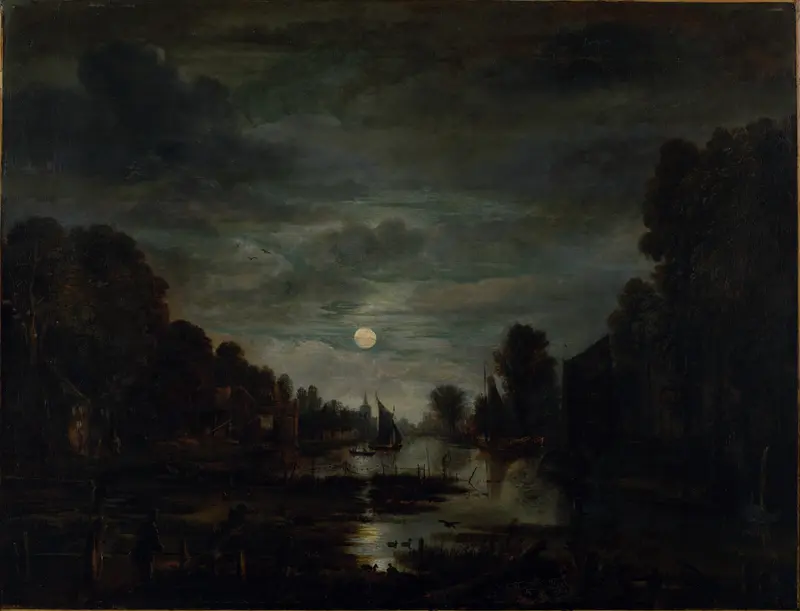
River Landscape in Moonlight
Aert van der Neer
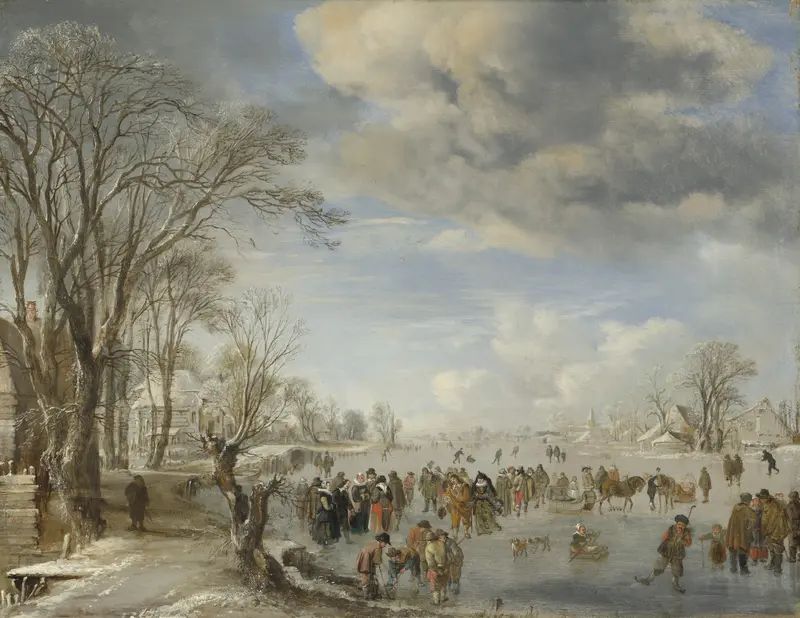
Winter in Holland – Skating Scene
Aert van der Neer

River Landscape
Aert van der Neer
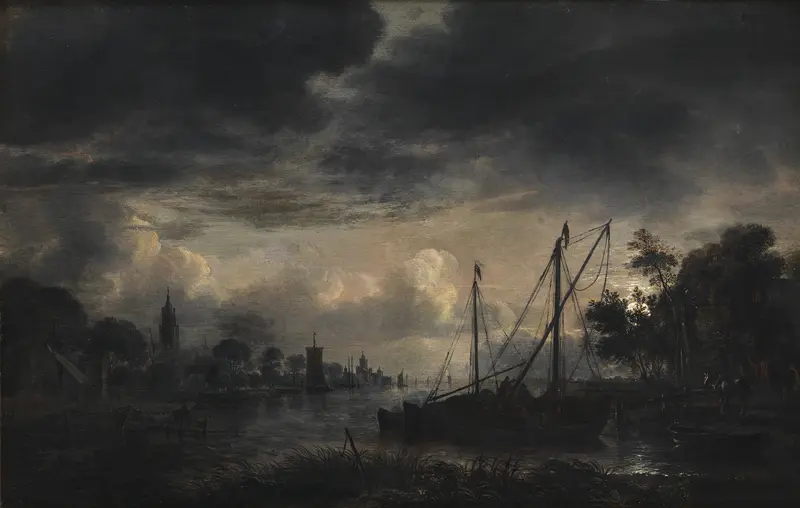
River Landscape in Moonlight
Aert van der Neer
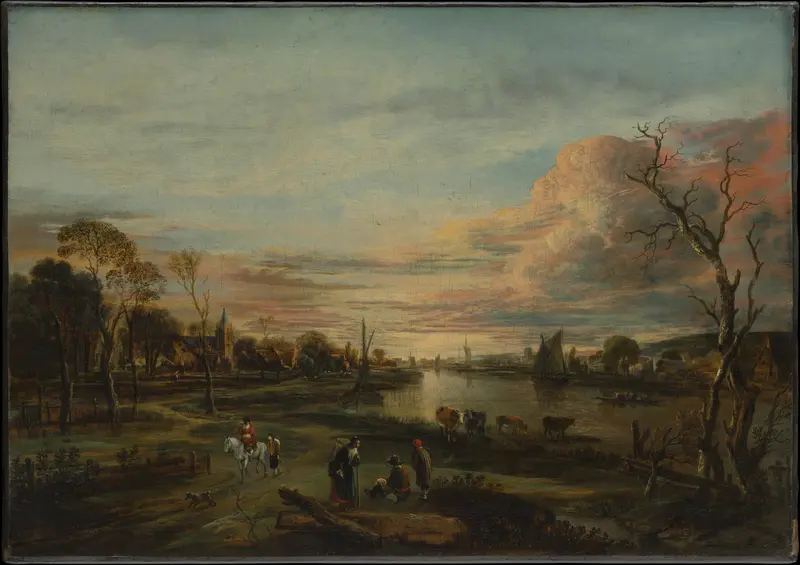
Landscape at Sunset
Aert van der Neer
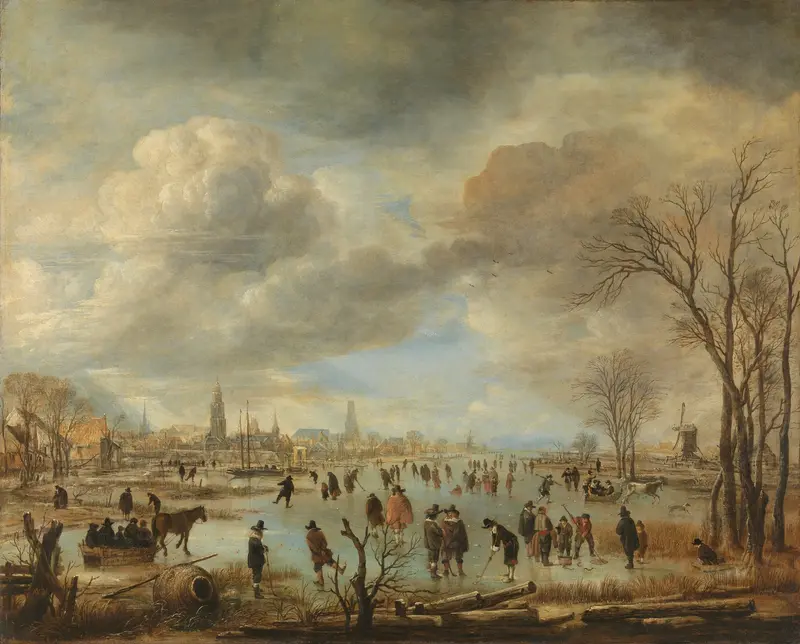
Winter Landscape near a Town with Kolf Players and Horse-Drawn Sleighs
Aert van der Neer

Winter Landscape with Skaters on a Frozen River
Aert van der Neer
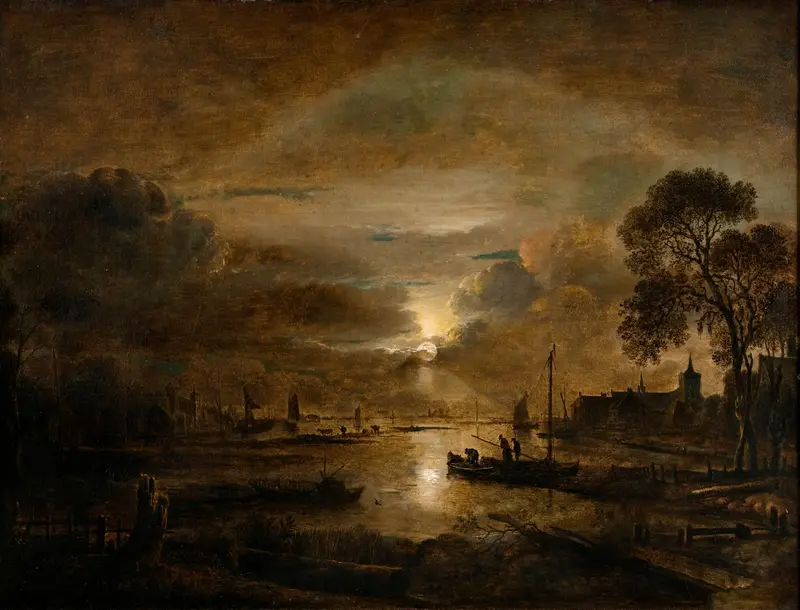
Moonlight at a Dutch River
Aert van der Neer
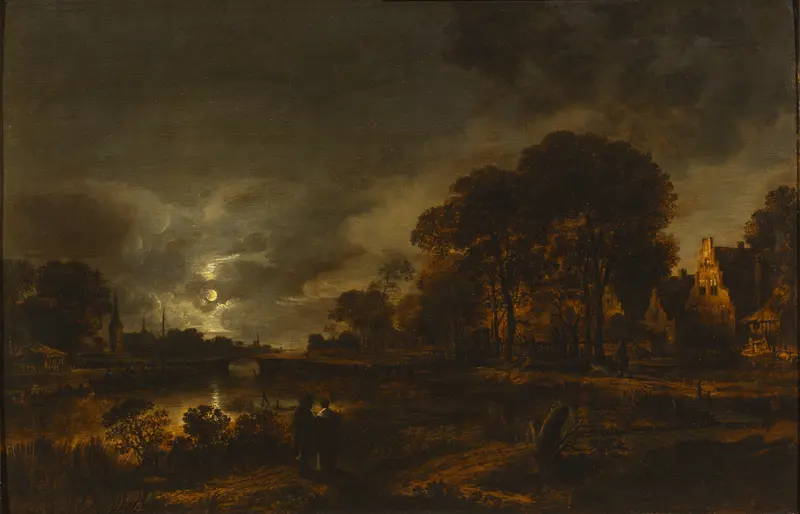
Moonlight Landscape
Aert van der Neer
More Landscape Art

The Starry Night
Vincent van Gogh

View of Delft
Johannes Vermeer

Water Lilies
Claude Monet

The Grand Canal, Venice, looking north-west from the Ca' Corner to the Ca' Contarini degli Scrigni, with the campanile of Santa Maria della Carità
Canaletto

Windsor Castle
Canaletto

The Grand Canal looking North-East from the Palazzo Dolfin-Manin to the Rialto Bridge
Canaletto