
Landscape with Poplars — History & Facts
In the delicate interplay of color and form, the truth of nature whispers softly, inviting us to pause and reflect. Look to the center of the canvas, where the vibrant green of the poplars slices through a radiant blue sky. The gentle curves of the land underscore a sense of tranquility, inviting the viewer's eye to wander along the horizon. Notice how Gauguin employs bold, thick brushstrokes and a palette dominated by warm, earthy tones, creating an almost tactile sensation of the landscape.
The contrast between the lush foliage and the soft, sunlit backdrop evokes a serene harmony, capturing a moment suspended in time. Yet, beneath this serene façade lies a deeper emotional resonance. The towering trees symbolize resilience and life, standing firm against the ephemeral qualities of the landscape around them. Each stroke seems to echo the longings of a simpler, pastoral existence, a stark contrast to the industrialization blossoming in Gauguin's contemporary world.
The composition reflects an inner dialogue about nature's transient beauty and humanity's search for truth amidst chaos. In 1875, Gauguin painted this piece during his early explorations of color and form while living in Paris. This period marked a pivotal moment in his development, as he began to forge his unique style, stepping away from traditional Impressionism to embrace more symbolic and imaginative interpretations of reality. The art world was undergoing significant transformations, and Gauguin’s work would later become a cornerstone for Post-Impressionism, challenging conventions and paving the way for future movements.
More Artworks by Paul Gauguin
Browse all →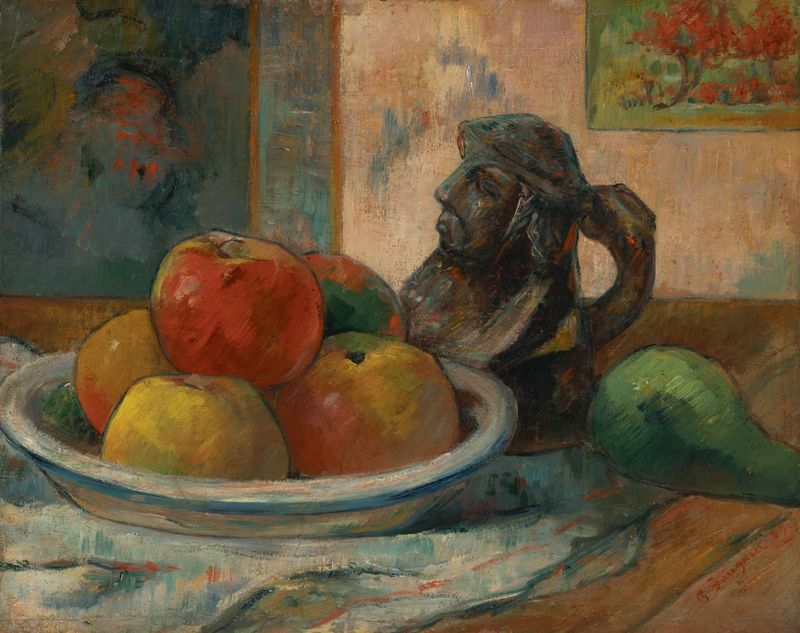
Still Life with Apples, a Pear, and a Ceramic Portrait Jug
Paul Gauguin
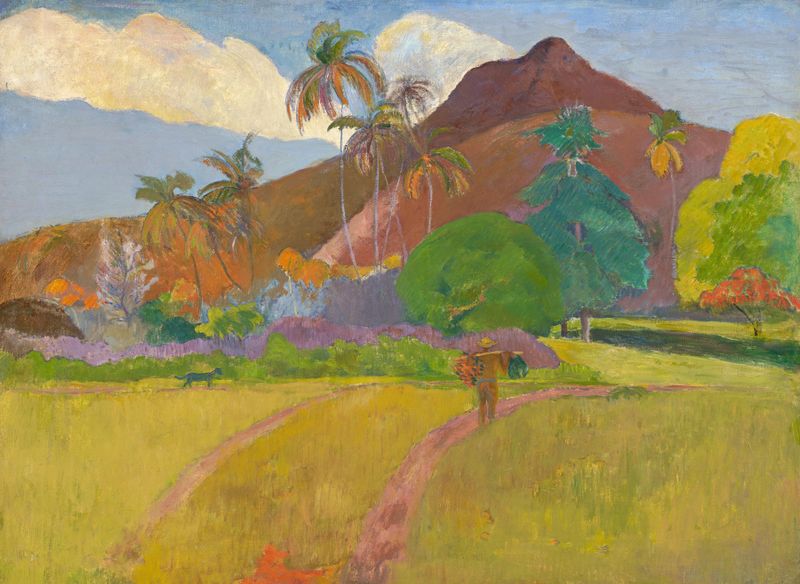
Tahitian Landscape
Paul Gauguin

Landscape near Pont-Aven
Paul Gauguin

No te aha oe riri (Why Are You Angry?)
Paul Gauguin
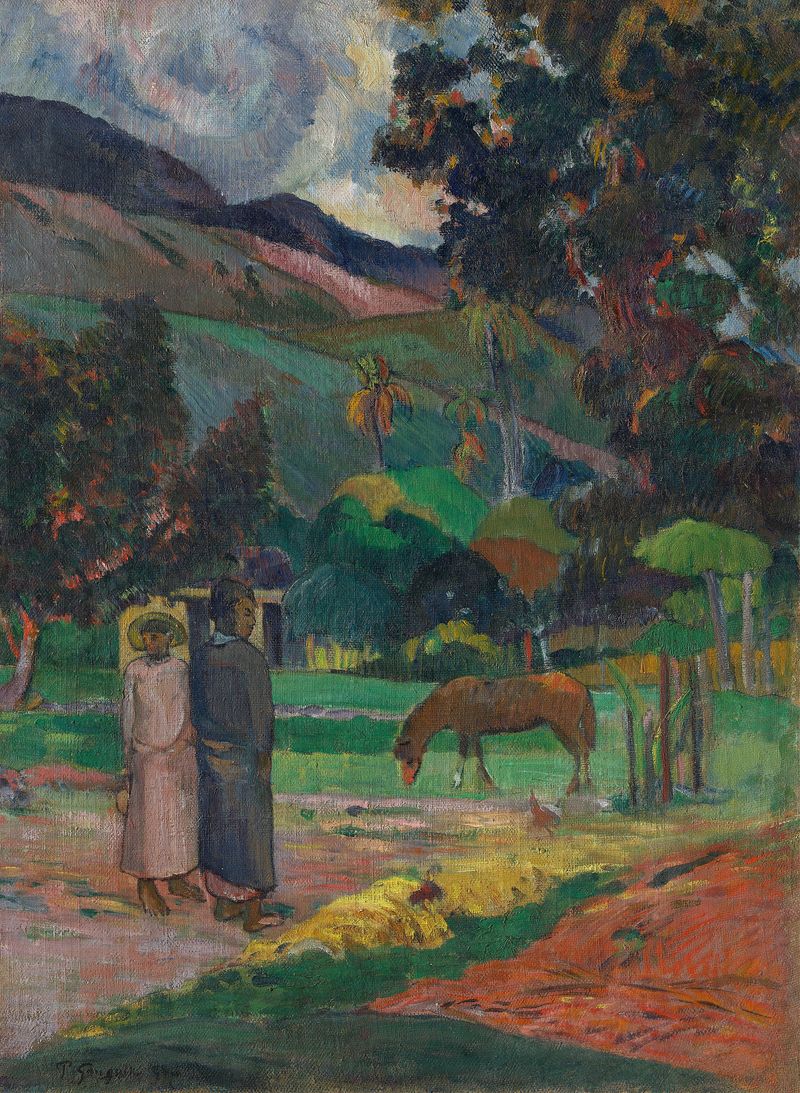
Tahitian Landscape
Paul Gauguin
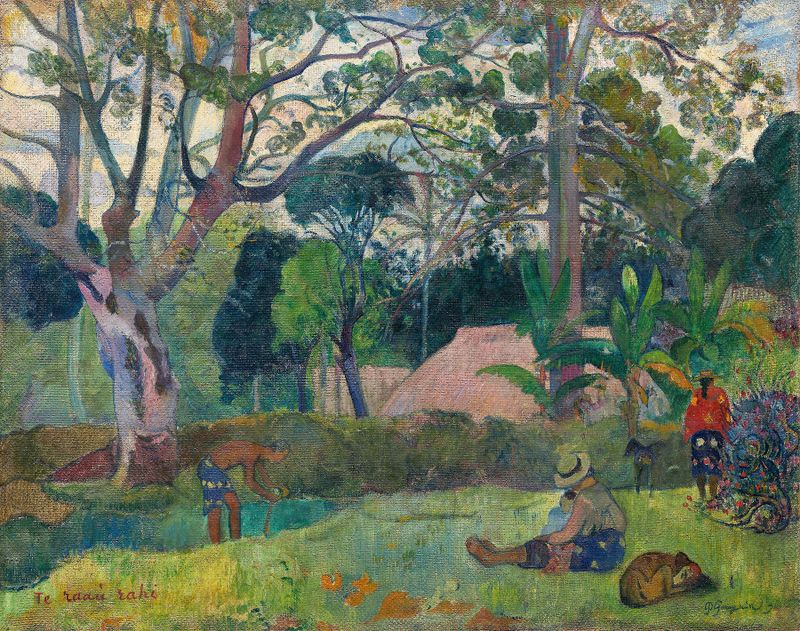
Te raau rahi (The Big Tree)
Paul Gauguin

Landscape at Le Pouldu
Paul Gauguin

Landscape of Brittany
Paul Gauguin

Poèmes Barbares
Paul Gauguin
Mahana no atua (Day of the God)
Paul Gauguin





