
Landscape with Ruins — History & Facts
This echoes through the hues and textures of a landscape that invites dreams yet whispers of loss. The ruins in the foreground, once vibrant, now stand solemnly as remnants of a bygone era, cradled by nature’s relentless embrace—a poignant reminder that beauty is often intertwined with vulnerability. Look to the left, where light filters through the trees, casting delicate shadows over the crumbling stone. The artist’s meticulous brushwork captures the intricate details of the architecture, revealing a world that once flourished.
The palette, rich with warm earth tones contrasted by cool blues, evokes a sense of nostalgia, urging the viewer to trace the paths of history that weave through the landscape. Notice the careful placement of the ruins against the lush background—each element carefully orchestrated to draw your eye deeper into this reflective scene. The emotional tension lies in the juxtaposition of decay against the vitality of nature. While the ruins signify a loss, they also symbolize the persistence of life, as vines creep over aged stones, suggesting renewal amidst the remnants of the past.
The horizon fades softly, hinting at dreams lost yet lingering, as if the landscape itself sighs in remembrance. Labruzzi captures the delicate balance between despair and hope, inviting viewers to ponder their own connections to what is left behind. In the 19th century, Labruzzi painted this work amidst a burgeoning interest in Romanticism, which emphasized emotion and the sublime aspects of nature. Working in Italy, he explored themes of nostalgia and the passage of time, influenced by the picturesque landscapes that surrounded him.
This painting reflects not only his personal vision but also the collective yearning for a deeper understanding of beauty amid decay during a transformative era in art history.
More Artworks by Carlo Labruzzi
Browse all →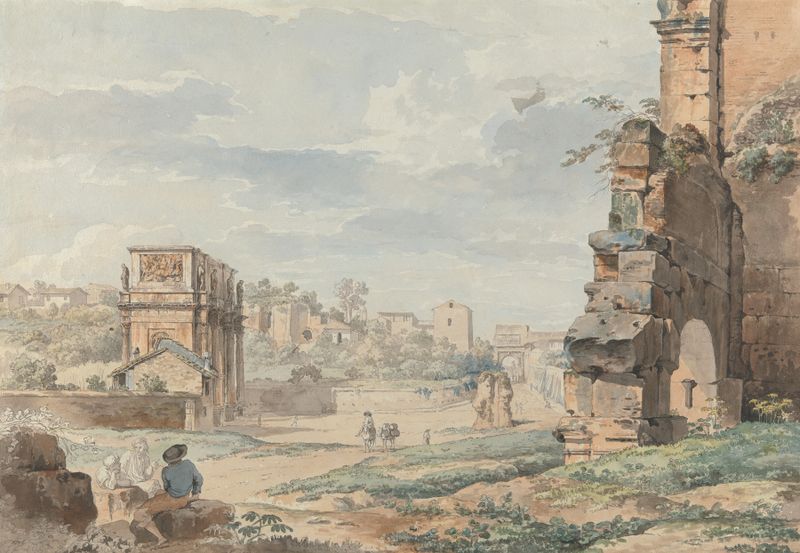
Part of the Colosseum with the Arch of Constantine and Arch of Titus in the Distance, Rome
Carlo Labruzzi
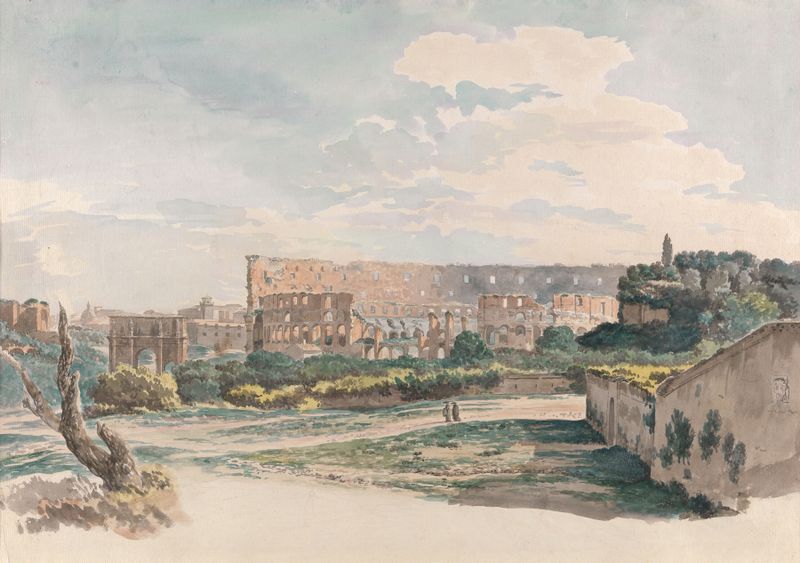
The Colosseum from the Caelian Mount, with the Arch of Constantine and a View of the Forum, Rome.
Carlo Labruzzi
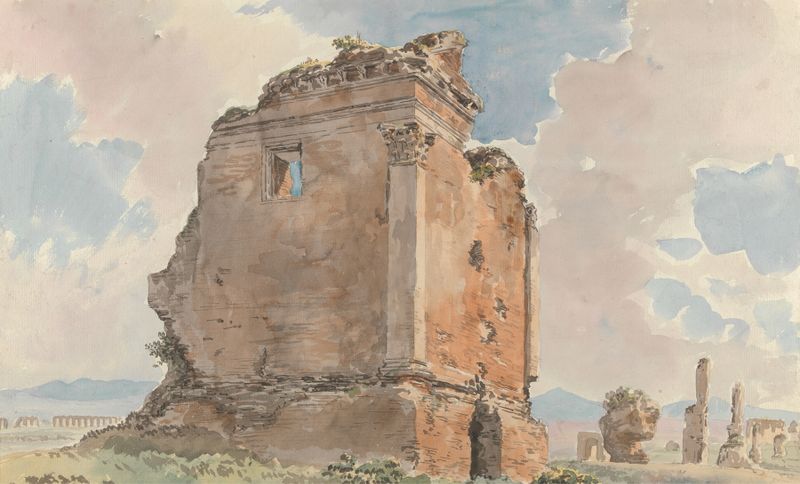
Sepulchre on the Via Nomentana in the Roman Campagna
Carlo Labruzzi
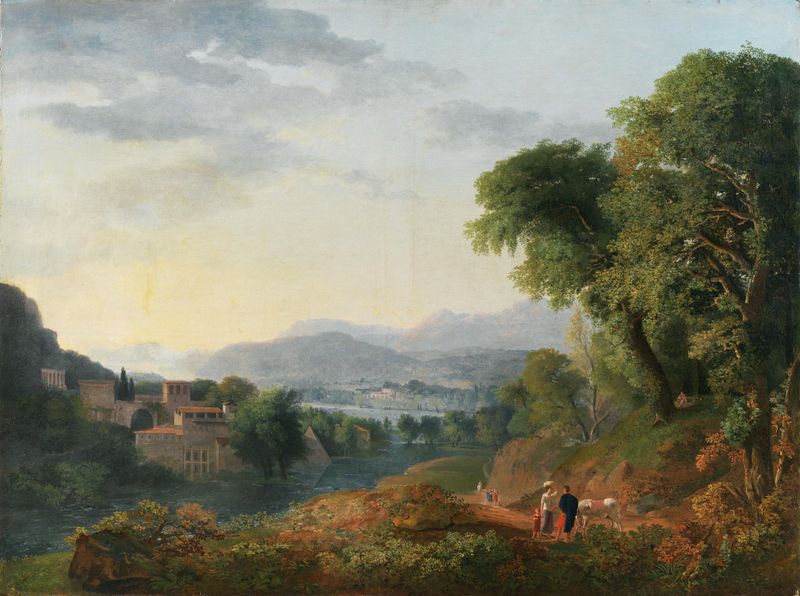
An Italianate landscape
Carlo Labruzzi
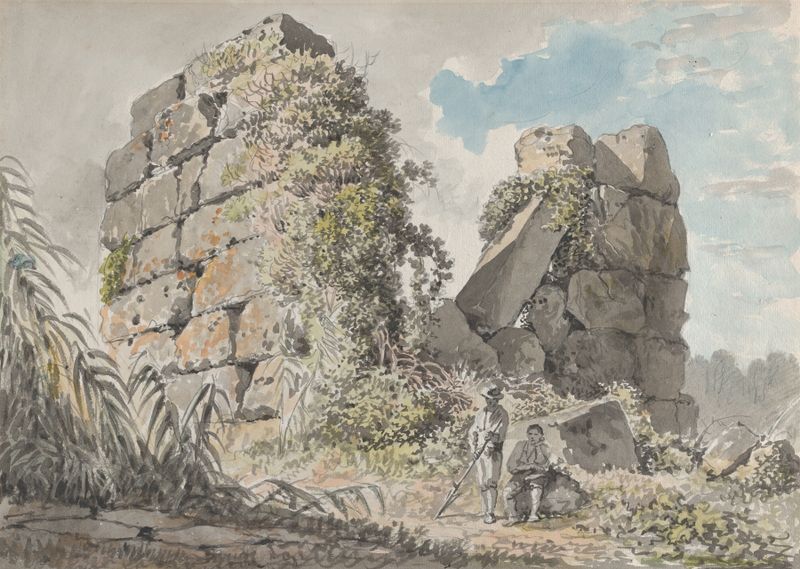
Ruins on the Right of the Via Appia
Carlo Labruzzi
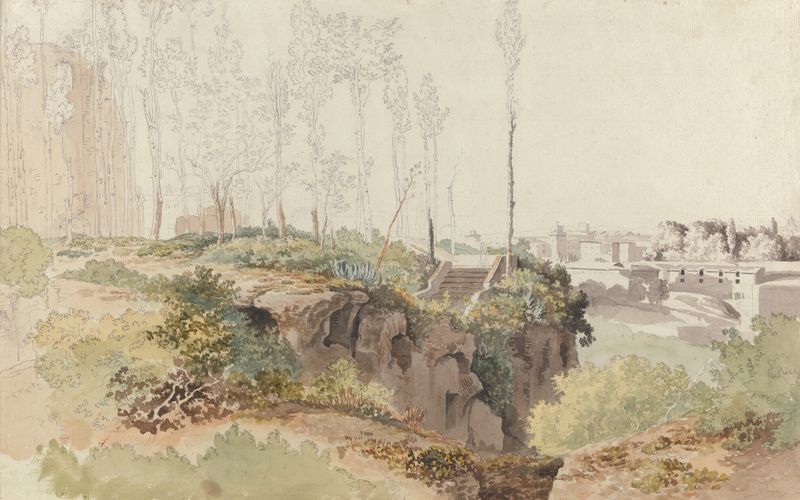
The Baths of Caracalla, Rome
Carlo Labruzzi
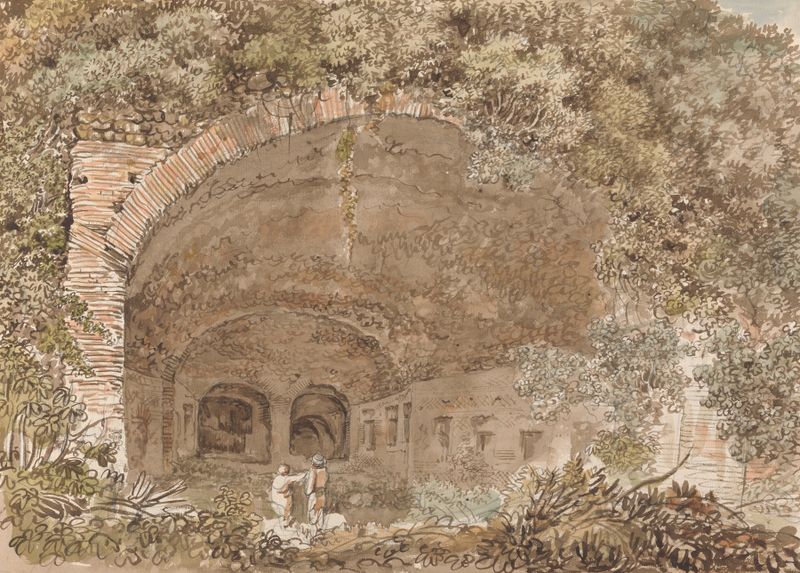
On the Appian Way
Carlo Labruzzi
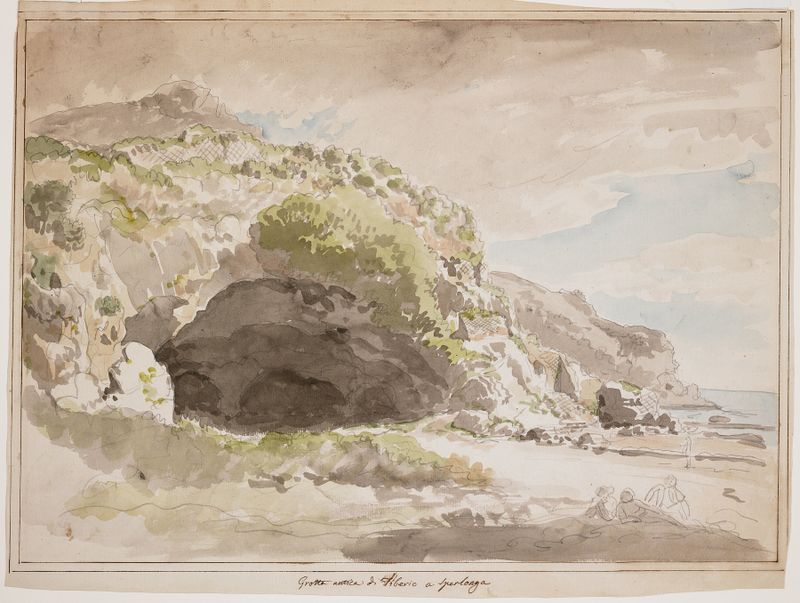
Grotto of Tiberius at Sperlonga
Carlo Labruzzi
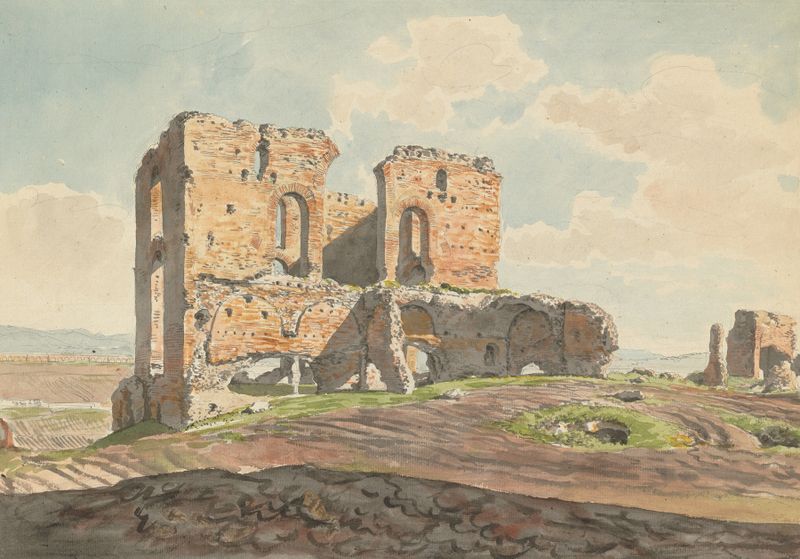
The Great Villa of the Quintilii on the Appian Way
Carlo Labruzzi
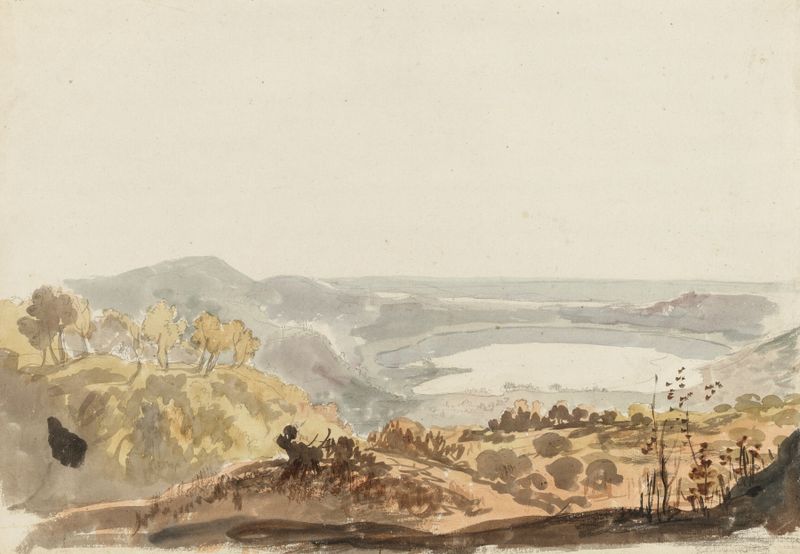
View of Lake Nemi looking towards Rome
Carlo Labruzzi





