
Landscape with the sea — History & Facts
What first draws the eye in Landscape with the sea is its vast, unhurried sky, stretching in gentle gradations over a world that feels both inhabited and hushed. The horizon is set low, giving the clouds and atmosphere a commanding presence, while the land below unfolds in subtle layers—rolling hills to the left, a patchwork of fields and waterways stretching into the distance. Small figures and cattle dot the foreground, their scale emphasizing the immensity of the landscape and the quiet rhythm of daily life.
The painter’s handling of light is restrained but deliberate: soft highlights pick out the contours of the land and the sails of distant ships, guiding the viewer’s gaze from earth to water to sky. This is not a scene of drama, but of patient observation, where every detail—fence posts, bare trees, winding paths—serves to anchor the viewer in a specific place and moment. Painted in 1628, this work belongs to a period when Dutch artists like Aert van der Neer were redefining landscape painting, shifting focus from grand historical narratives to the everyday beauty of their own countryside. Such paintings were often commissioned or purchased by the rising merchant class, eager to celebrate the land that underpinned their prosperity.
The restrained palette and panoramic format reflect the tastes of the era, when collectors prized scenes that balanced realism with a sense of order and calm. Now held in the Deutsches Historisches Museum, this painting stands as a quiet testament to a time when artists found meaning in the ordinary, inviting us to linger over the slow unfolding of land and sky. Look again at the distant sails and the tiny figures—each one a reminder of how much story can be found in the spaces between.
More Artworks by Aert van der Neer

A Moonlit River Landscape With Figures Standing By A Gate, A Village Beyond
Aert van der Neer
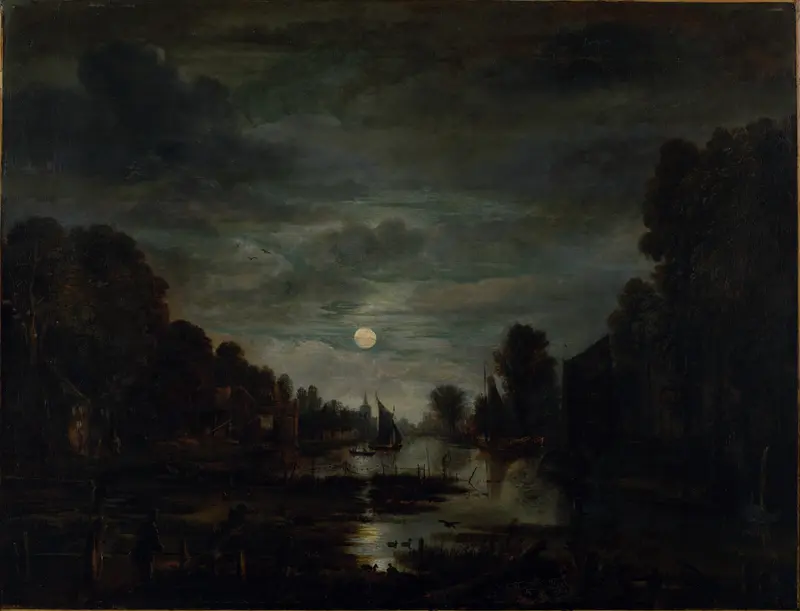
River Landscape in Moonlight
Aert van der Neer
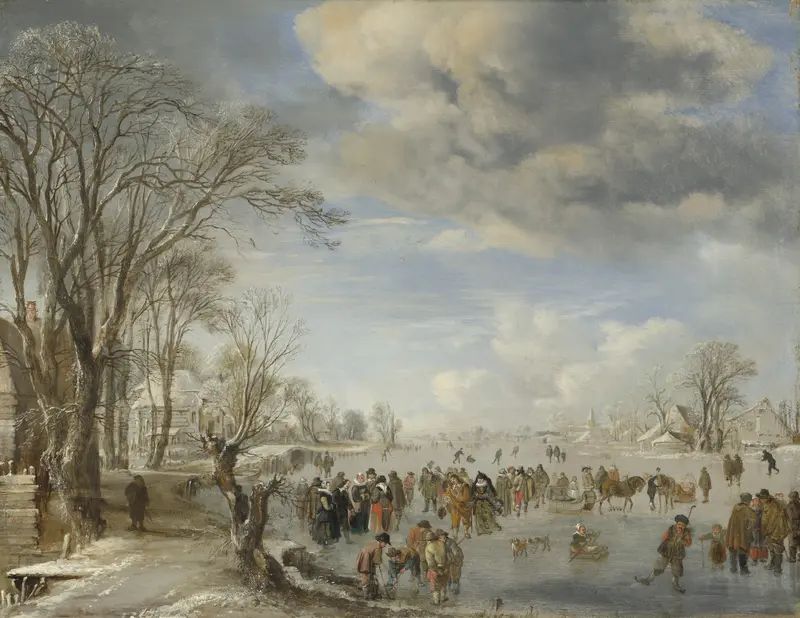
Winter in Holland – Skating Scene
Aert van der Neer

River Landscape
Aert van der Neer
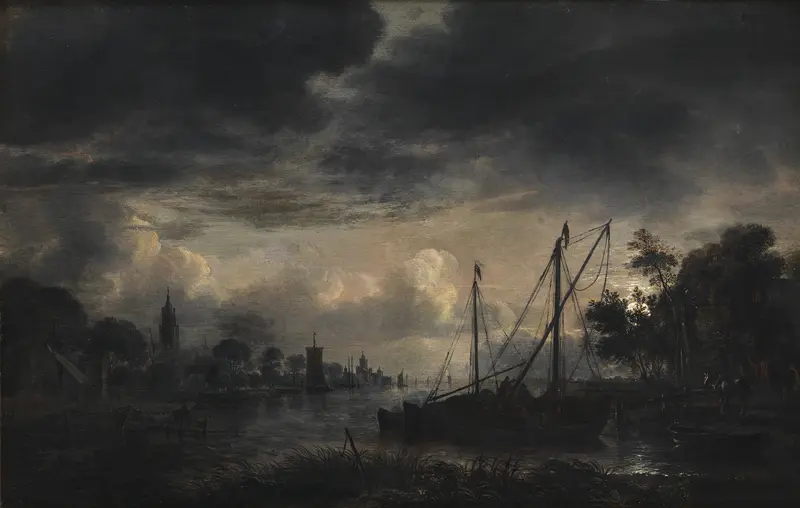
River Landscape in Moonlight
Aert van der Neer
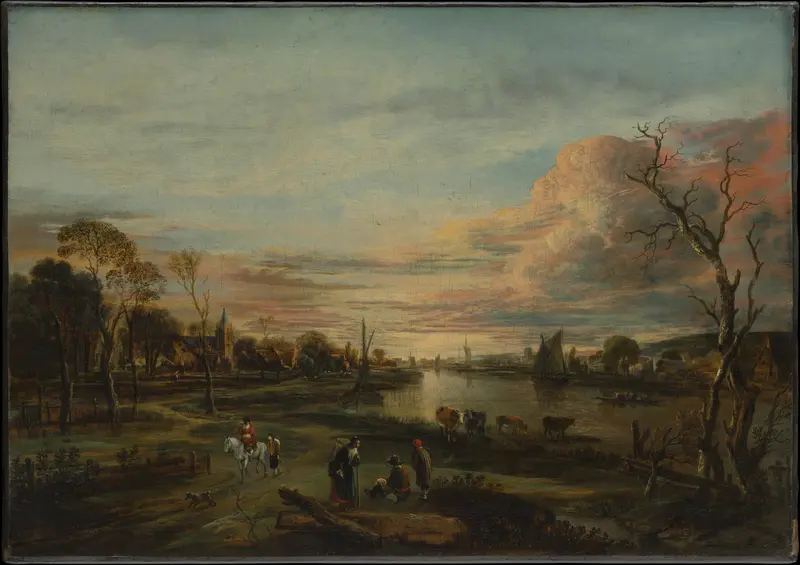
Landscape at Sunset
Aert van der Neer
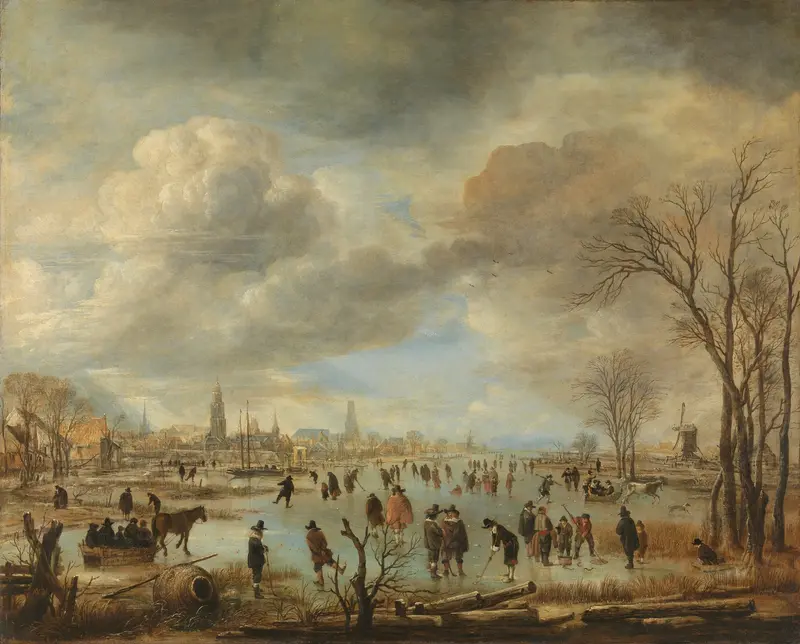
Winter Landscape near a Town with Kolf Players and Horse-Drawn Sleighs
Aert van der Neer

Winter Landscape with Skaters on a Frozen River
Aert van der Neer
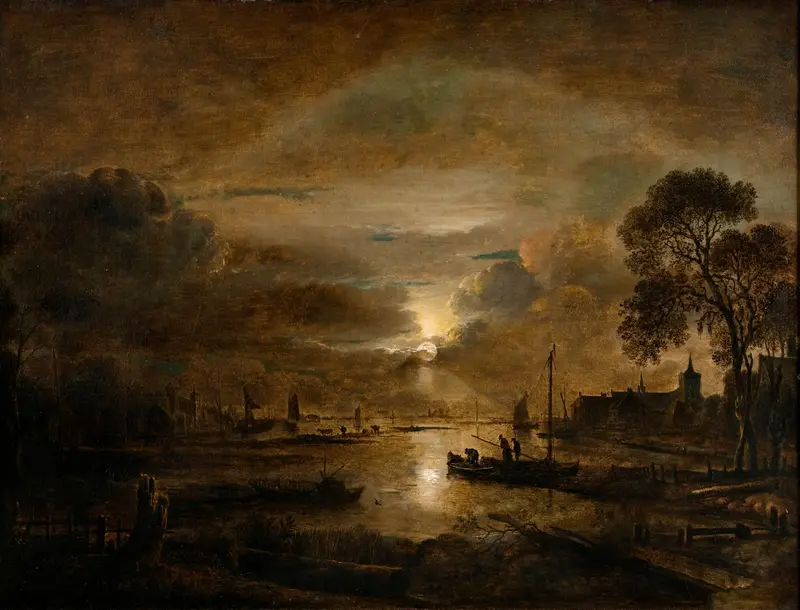
Moonlight at a Dutch River
Aert van der Neer
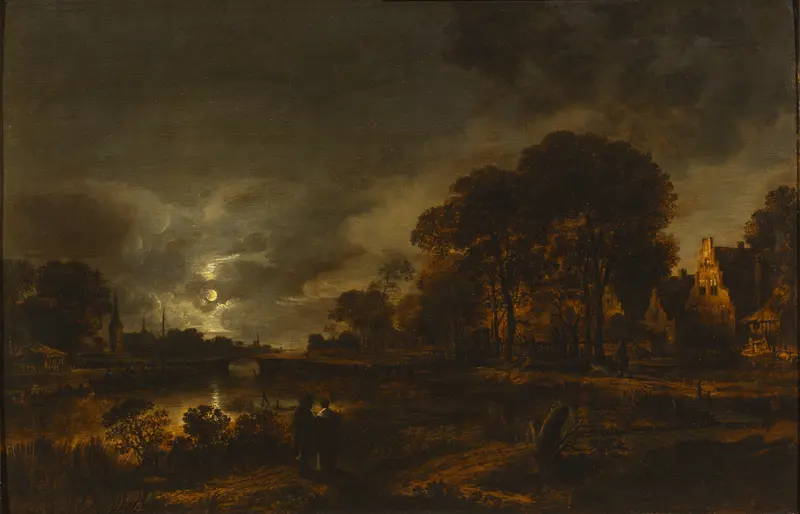
Moonlight Landscape
Aert van der Neer
More Landscape Art

The Starry Night
Vincent van Gogh

View of Delft
Johannes Vermeer

Water Lilies
Claude Monet

The Grand Canal, Venice, looking north-west from the Ca' Corner to the Ca' Contarini degli Scrigni, with the campanile of Santa Maria della Carità
Canaletto

Windsor Castle
Canaletto

The Grand Canal looking North-East from the Palazzo Dolfin-Manin to the Rialto Bridge
Canaletto