
Landscape with watering place — History & Facts
A single, towering tree anchors the eye in Landscape with watering place, its leafy crown casting a gentle shadow over a scene of quiet, everyday activity. Beneath its boughs, the world seems to pause: horses and carts rest by a rustic inn, while cows and ducks gather at the water’s edge in the foreground, their reflections barely disturbed. The play of light draws you from the sturdy, thatched rooftops—rendered in warm, earthy tones—out across the open road, where a rider and his dog pass a pair of travelers on foot.
This is not a moment of drama, but of gentle rhythm, where the comings and goings of rural life unfold with unhurried calm. Painted by Aert van der Neer in 1639, this work belongs to a world where the Dutch landscape was both subject and stage. In the seventeenth century, scenes like these were prized by a new class of collectors: prosperous merchants and city dwellers who sought reminders of the countryside’s order and abundance. The painting’s careful balance—inn, tree, and road each holding their place—reflects the Dutch taste for harmony and quiet observation.
Now part of the Rijksmuseum collection, Landscape with watering place invites us to linger, to follow the winding path, and to imagine the stories that begin and end beneath that sheltering tree.
More Artworks by Aert van der Neer

A Moonlit River Landscape With Figures Standing By A Gate, A Village Beyond
Aert van der Neer
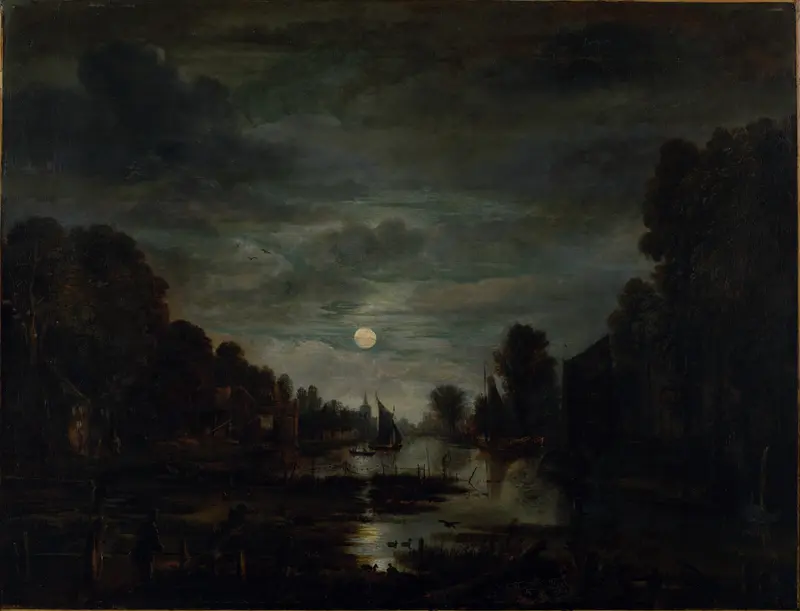
River Landscape in Moonlight
Aert van der Neer
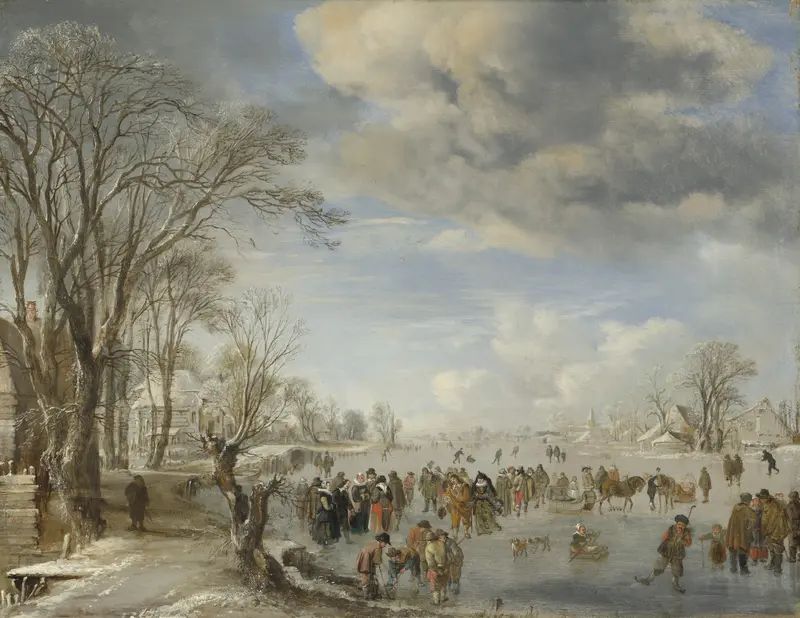
Winter in Holland – Skating Scene
Aert van der Neer

River Landscape
Aert van der Neer
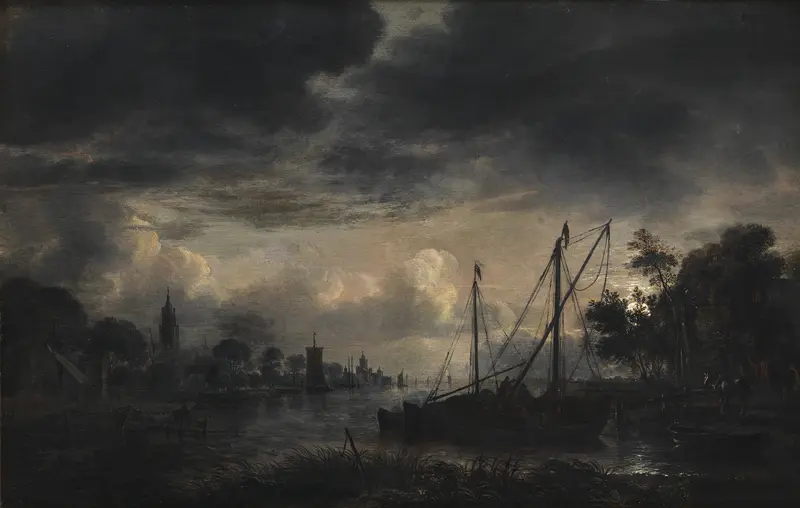
River Landscape in Moonlight
Aert van der Neer
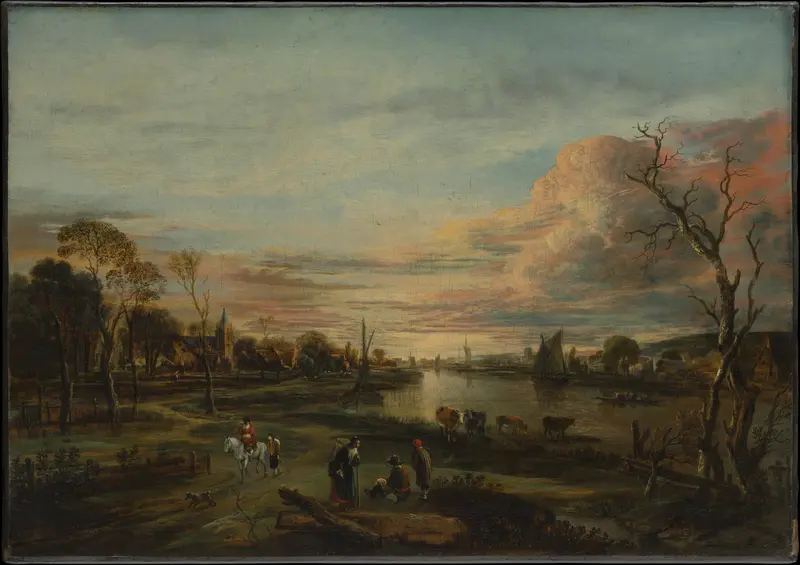
Landscape at Sunset
Aert van der Neer
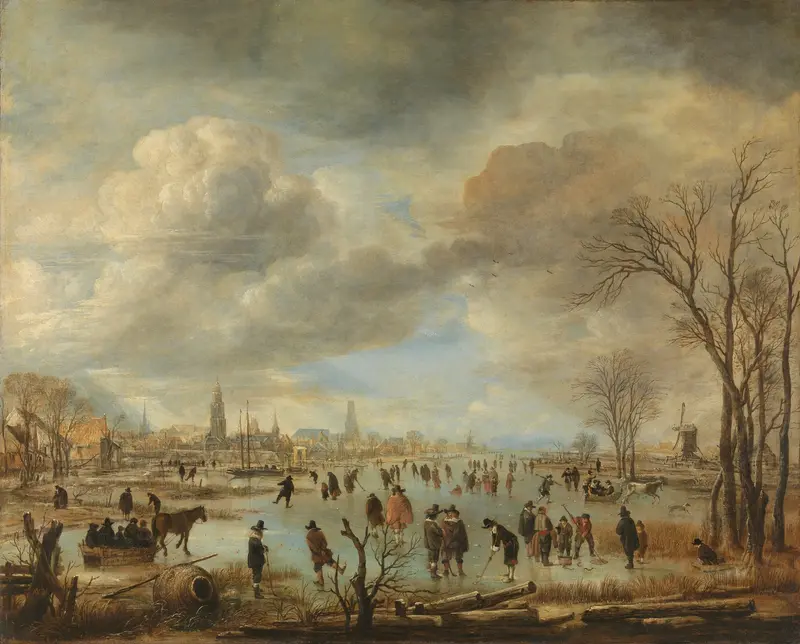
Winter Landscape near a Town with Kolf Players and Horse-Drawn Sleighs
Aert van der Neer

Winter Landscape with Skaters on a Frozen River
Aert van der Neer
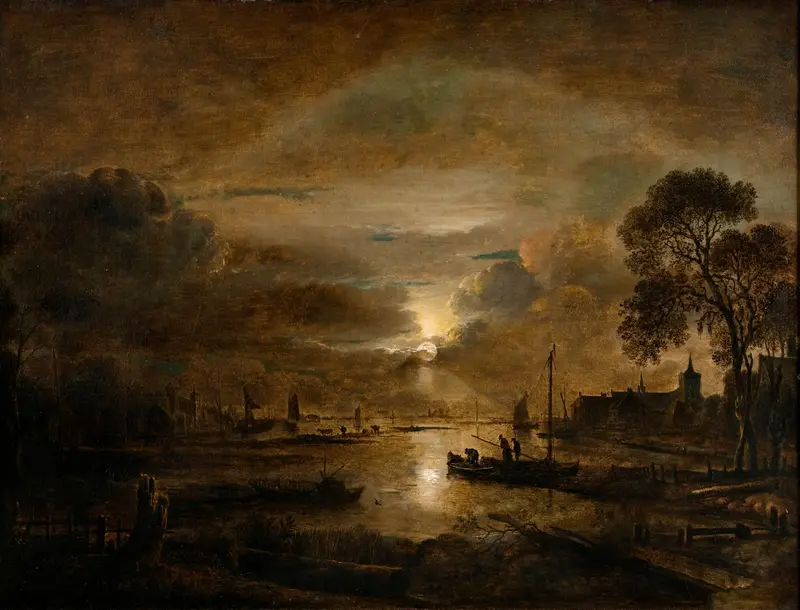
Moonlight at a Dutch River
Aert van der Neer
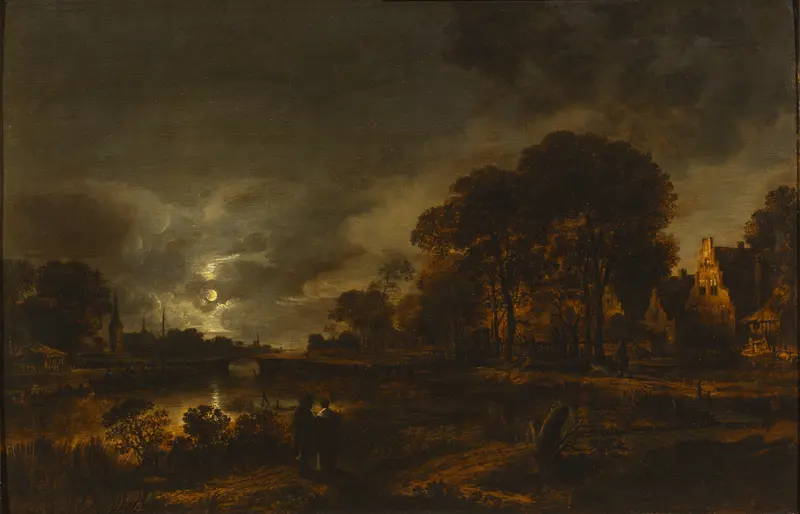
Moonlight Landscape
Aert van der Neer
More Landscape Art

The Starry Night
Vincent van Gogh

View of Delft
Johannes Vermeer

Water Lilies
Claude Monet

The Grand Canal, Venice, looking north-west from the Ca' Corner to the Ca' Contarini degli Scrigni, with the campanile of Santa Maria della Carità
Canaletto

Windsor Castle
Canaletto

The Grand Canal looking North-East from the Palazzo Dolfin-Manin to the Rialto Bridge
Canaletto