Landschap — History & Facts
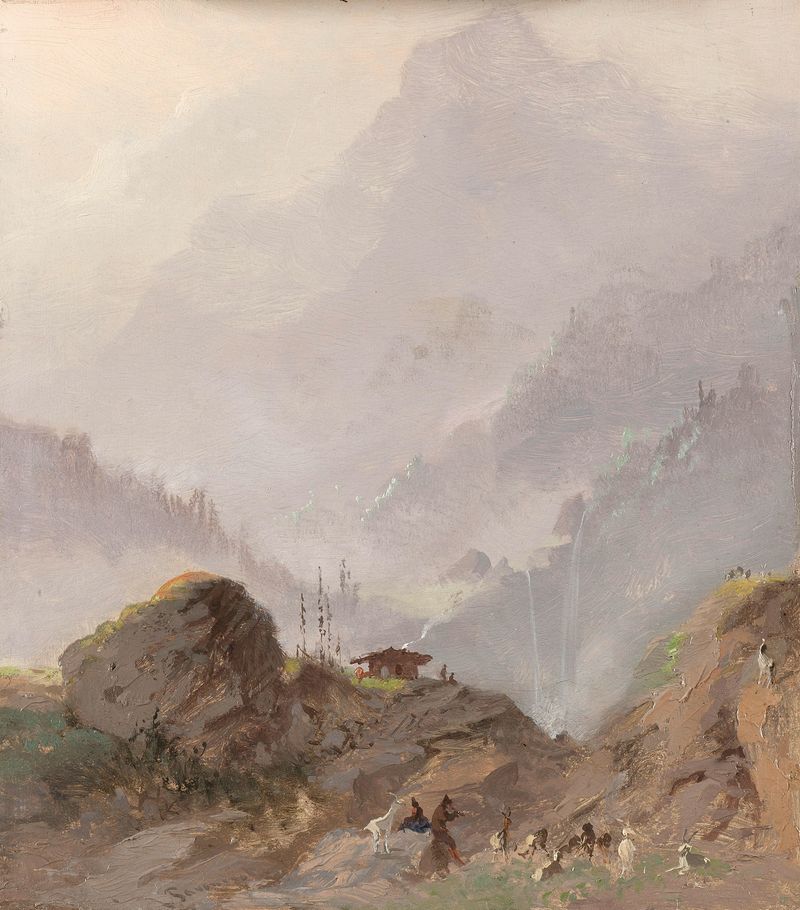
Did the painter know this moment would outlive them? In a world where temporal beauty often fades, Landschap captures the divine essence of nature, inviting contemplation on the eternal. Look to the left at the gentle curve of the river, winding gracefully through verdant fields. Notice how the warm golden hues of the setting sun bathe the landscape, casting soft shadows that dance upon the rolling hills. The delicate brushwork creates a sense of movement, as if the wind whispers through the trees, and the clouds above appear to drift lazily in contemplation.
The composition draws the eye along the river, leading to the distant horizon where earth meets sky, evoking a sense of peace and continuity. Yet, beneath this serene façade lies a tension between the natural and the ephemeral. The vibrant colors pulse with life, yet the tranquility carries an undercurrent of fleeting moments; dusk inevitably gives way to night, much like life itself. The distant mountains stand as silent witnesses, embodying the divine permanence against the transience of human experience.
Each brushstroke reverberates with the understanding that beauty can be both a gift and a reminder of our impermanence. Johannes Tavenraat painted Landschap between 1840 and 1880, during a period when Romanticism flourished in the art world, emphasizing nature's grandeur and emotional resonance. The artist was engaged in exploring the landscape genre in the Netherlands, reflecting both personal expression and broader societal shifts as industrialization began to reshape the environment. This work encapsulates Tavenraat's longing for connection with the natural world amidst those changing tides, a quiet rebellion against the encroaching modernity.