
Landschap bij maneschijn Musea Brugge 1 — History & Facts
A hush falls over the riverbank as the moon’s glow struggles through thick clouds, casting silvery highlights across still water and the clustered rooftops of a Dutch village. The eye is drawn first to the luminous break in the sky, where moonlight seeps through, touching the sails of distant boats and the slow-turning windmills. Figures linger on the low bridge and along the shore—small, almost swallowed by the dusk—suggesting quiet conversation or the end of a day’s work.
Every detail, from the clustered trees to the angled gables, is chosen to lead the viewer into the scene’s depths, where the interplay of shadow and reflection creates a sense of anticipation, as if the night itself is about to reveal a secret. Painted by Aert van der Neer between circa 1640 and 1659, this landscape belongs to a world where Dutch artists found endless fascination in the drama of light and the poetry of ordinary places. Scenes like this, often commissioned for prosperous homes, celebrated both the beauty of the local countryside and the technical skill of the painter in rendering atmosphere. In van der Neer’s hands, the moonlit landscape becomes a stage for subtle narrative: the viewer is invited to imagine the lives unfolding in the half-light, the quiet industry of river and village.
Today, Landschap bij maneschijn is housed in the collection of Musea Brugge, a silent witness to an age when the night was not merely darkness, but a world alive with possibility.
More Artworks by Aert van der Neer

A Moonlit River Landscape With Figures Standing By A Gate, A Village Beyond
Aert van der Neer
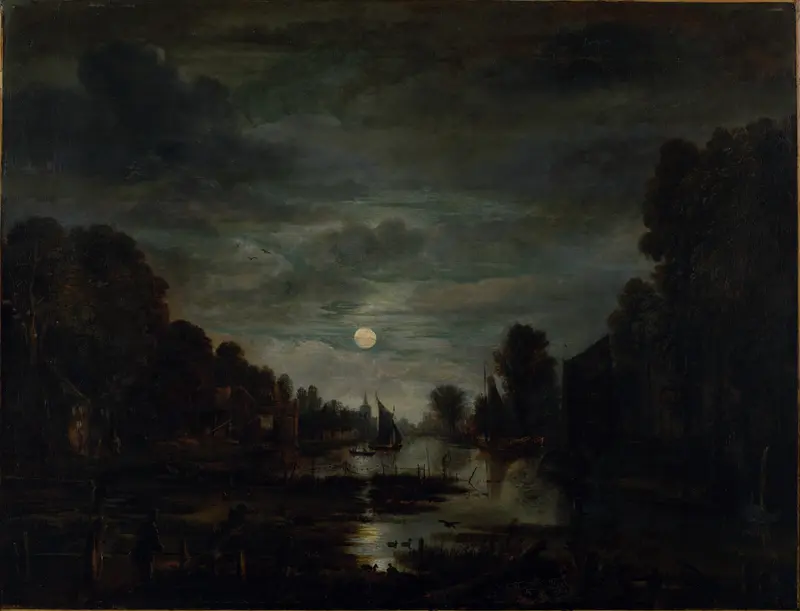
River Landscape in Moonlight
Aert van der Neer
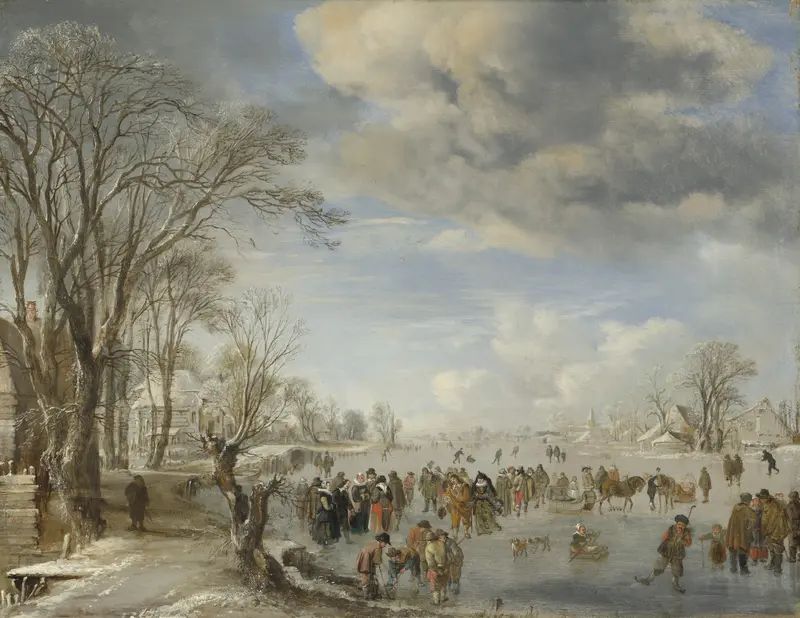
Winter in Holland – Skating Scene
Aert van der Neer

River Landscape
Aert van der Neer
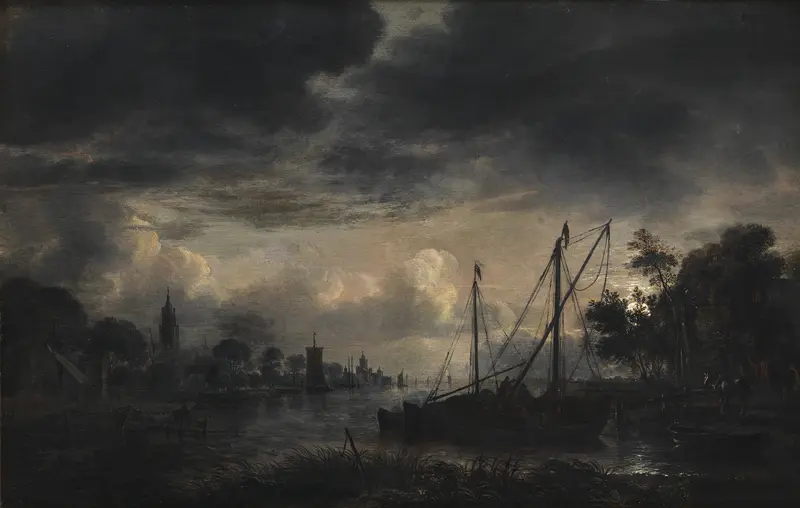
River Landscape in Moonlight
Aert van der Neer
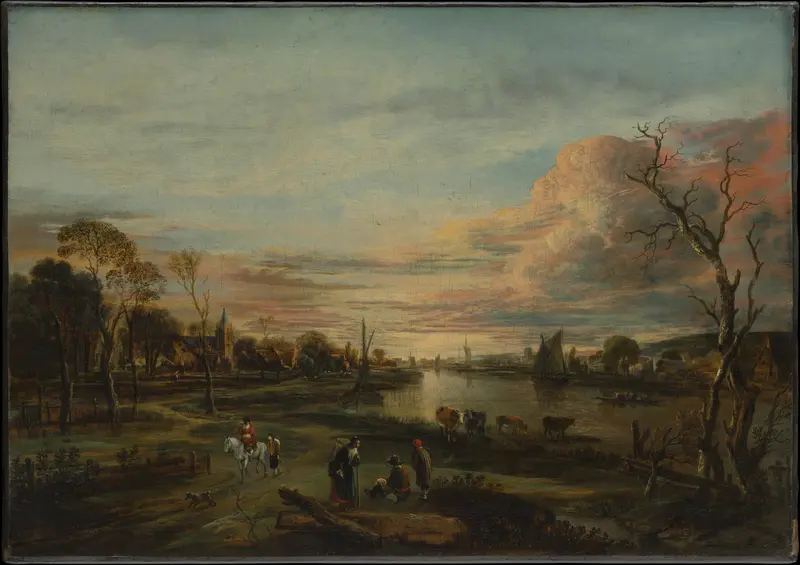
Landscape at Sunset
Aert van der Neer
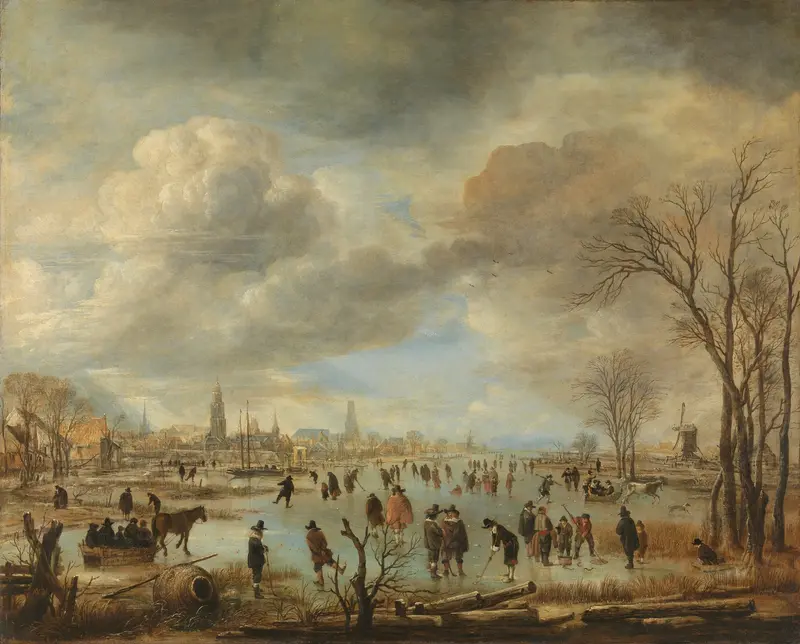
Winter Landscape near a Town with Kolf Players and Horse-Drawn Sleighs
Aert van der Neer

Winter Landscape with Skaters on a Frozen River
Aert van der Neer
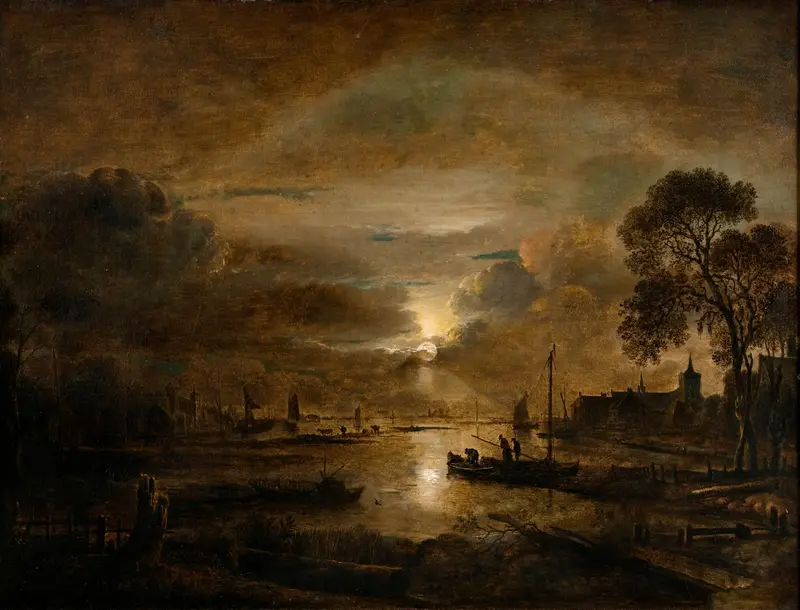
Moonlight at a Dutch River
Aert van der Neer
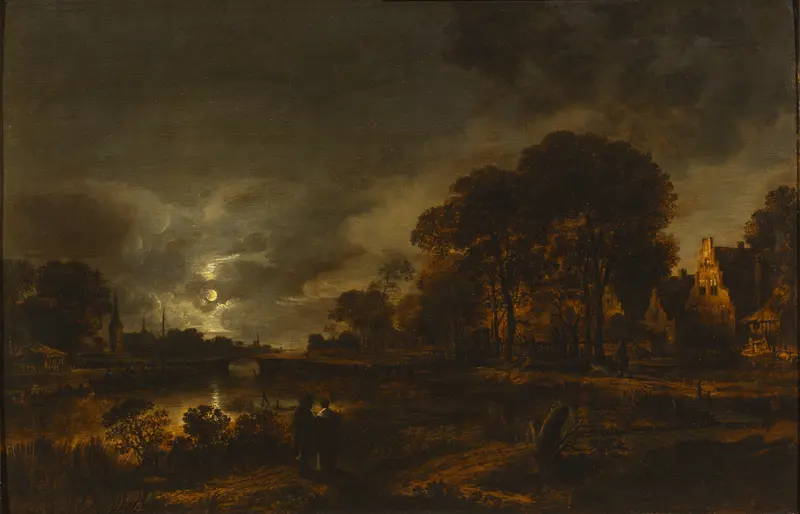
Moonlight Landscape
Aert van der Neer
More Landscape Art

The Starry Night
Vincent van Gogh

View of Delft
Johannes Vermeer

Water Lilies
Claude Monet

The Grand Canal, Venice, looking north-west from the Ca' Corner to the Ca' Contarini degli Scrigni, with the campanile of Santa Maria della Carità
Canaletto

Windsor Castle
Canaletto

The Grand Canal looking North-East from the Palazzo Dolfin-Manin to the Rialto Bridge
Canaletto