
Landschap met bomen — History & Facts
In the delicate brushstrokes of a tranquil landscape, the weight of absence resonates deeply. Look to the lower left corner, where the soft greens of the grass meet the undulating shapes of the trees, each trunk etched with a sense of history. The composition guides your gaze through the serene scene, leading toward the distant horizon where a gentle sky embraces the earth. Notice how the muted palette—earthy browns and cool blues—evokes a stillness that feels almost meditative, inviting contemplation over the fleeting nature of life. Yet, amidst this calm, a haunting undercurrent stirs.
The bare branches of the trees speak of loss, their twisted forms echoing the absence of summer's vitality. Shadows dance softly along the ground, suggesting memories that linger just out of reach, compelling the viewer to ponder what remains when beauty fades. This contrast between the vibrancy of nature and the spectral silence of decay creates an emotional tension that reverberates through the canvas. Created during a period of personal reflection, the artist rendered this piece in the late 17th century, a time when he was grappling with both the changing world around him and his own artistic identity.
Living amidst the Dutch Golden Age's decline, he sought to capture the essence of nature in a way that transformed the ordinary into the extraordinary. This landscape, thus, becomes not just a visual experience but a profound commentary on the inevitability of change and the quiet resignation that follows.
More Artworks by Esaias van de Velde
Browse all →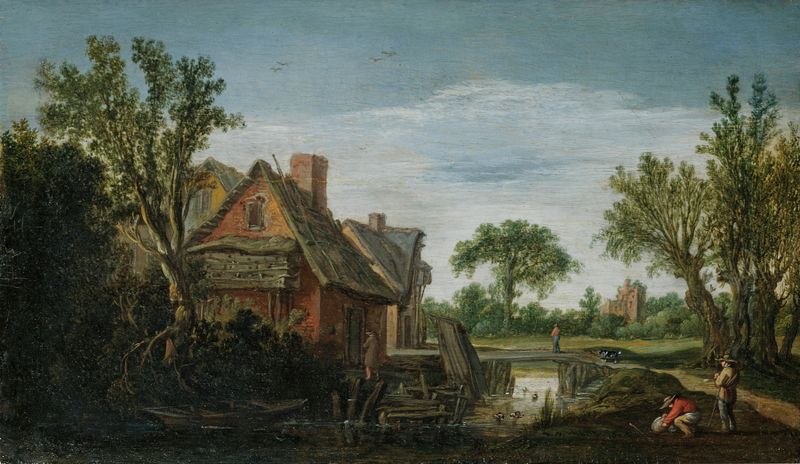
The Hague A Wooded River Landscape With Figures On A Path On A River Bank Beside A Village, A Bridge Beyond
Esaias van de Velde
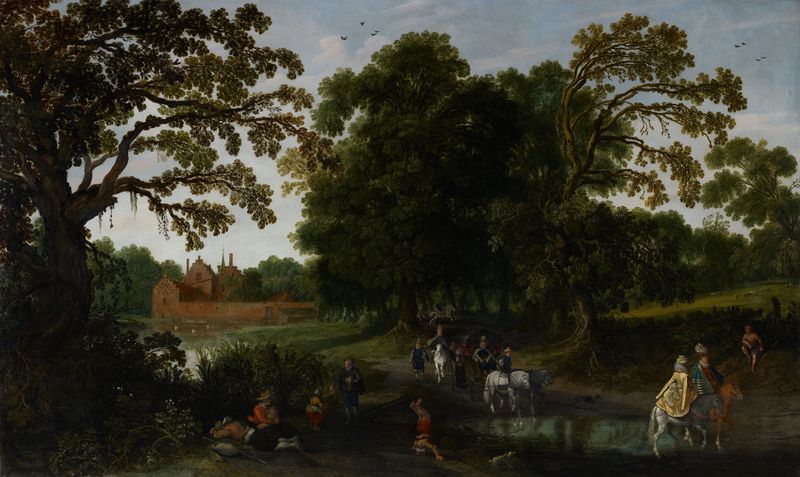
Courtly Procession before Abstpoel Castle
Esaias van de Velde
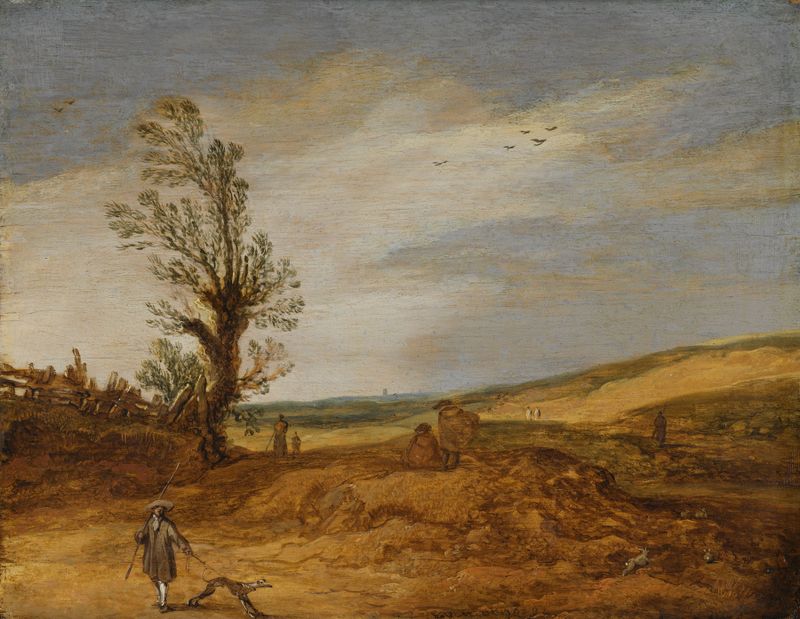
A View in the Dunes
Esaias van de Velde
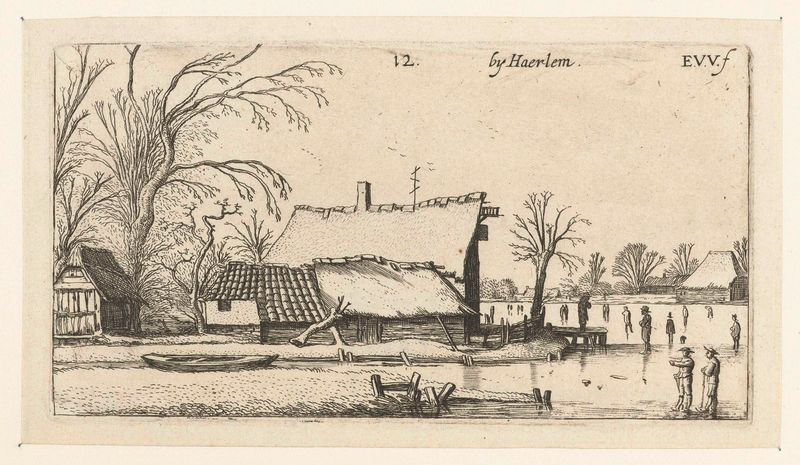
Boerderij bij een bevroren rivier met schaatsers
Esaias van de Velde
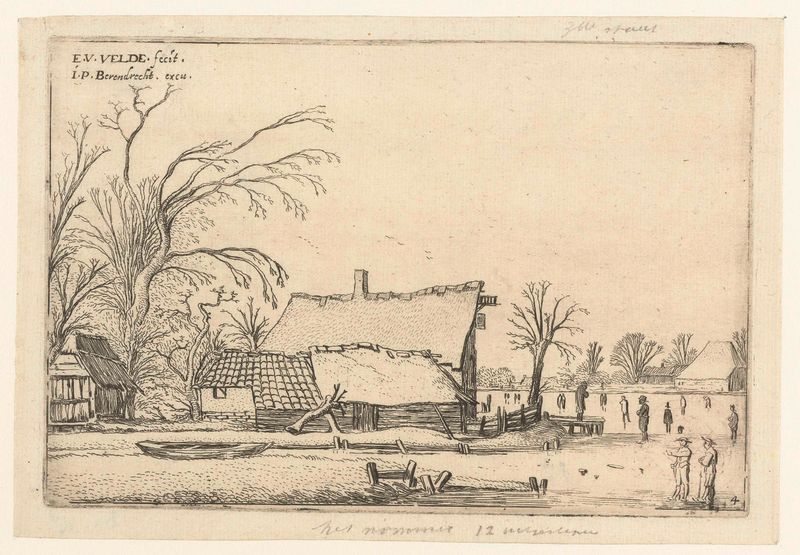
Boerderij bij een bevroren rivier met schaatsers
Esaias van de Velde
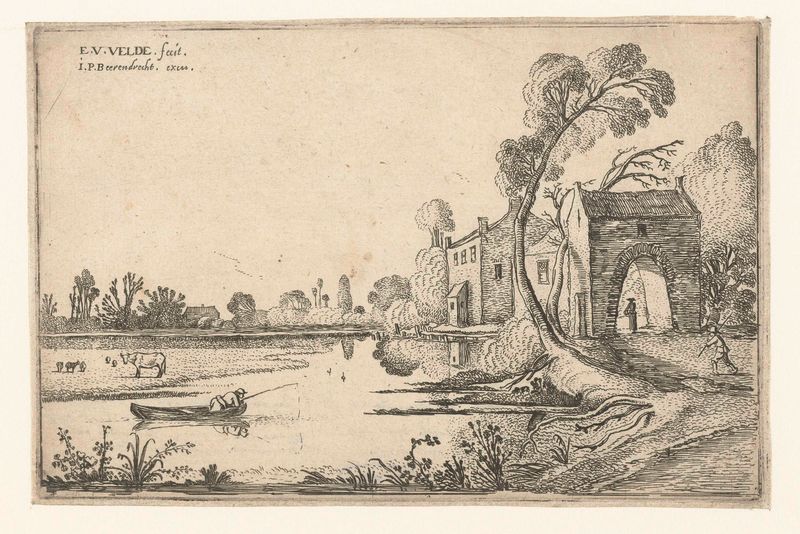
Landschap met rivier en poortgebouw
Esaias van de Velde
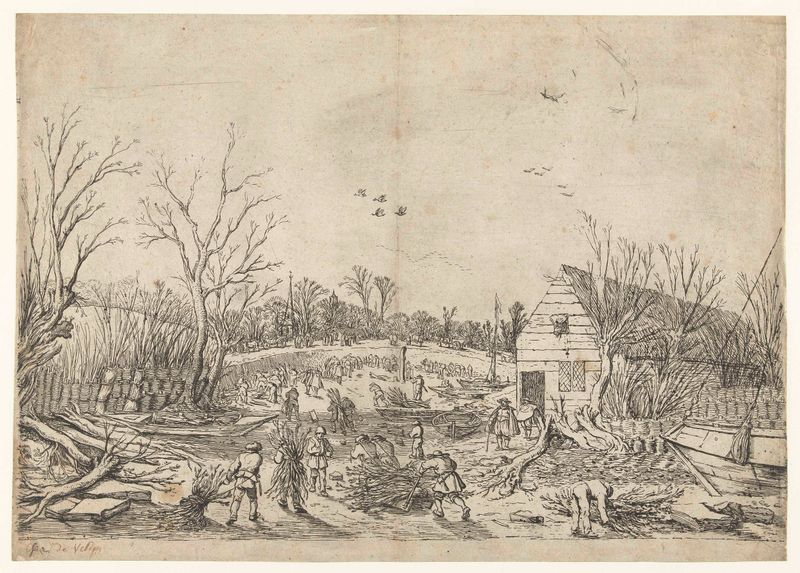
Herstelwerkzaamheden aan de doorgebroken Lekdijk bij 't Waal
Esaias van de Velde
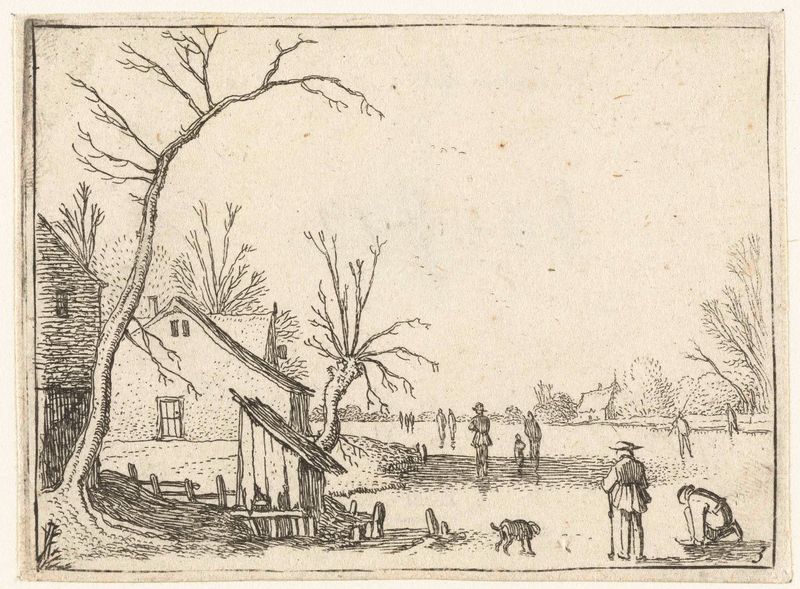
Boerderij bij bevroren rivier en schaatsers op het ijs
Esaias van de Velde
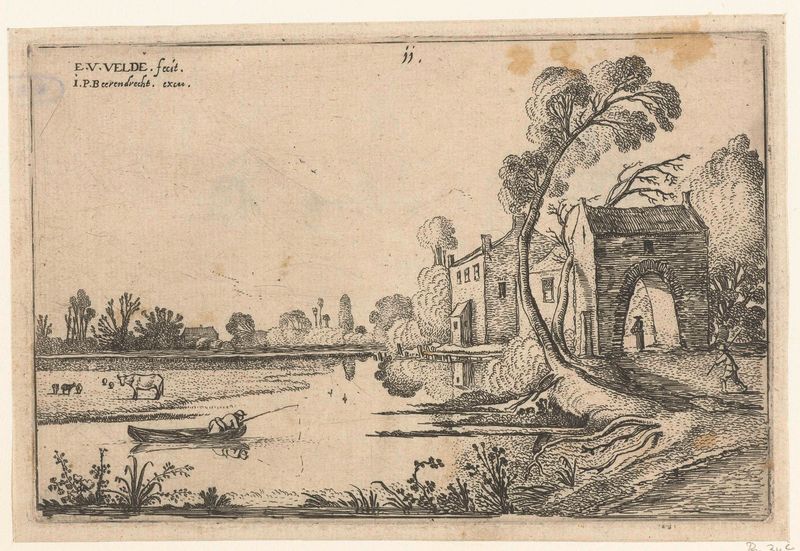
Landschap met een rivier en poortgebouw
Esaias van de Velde
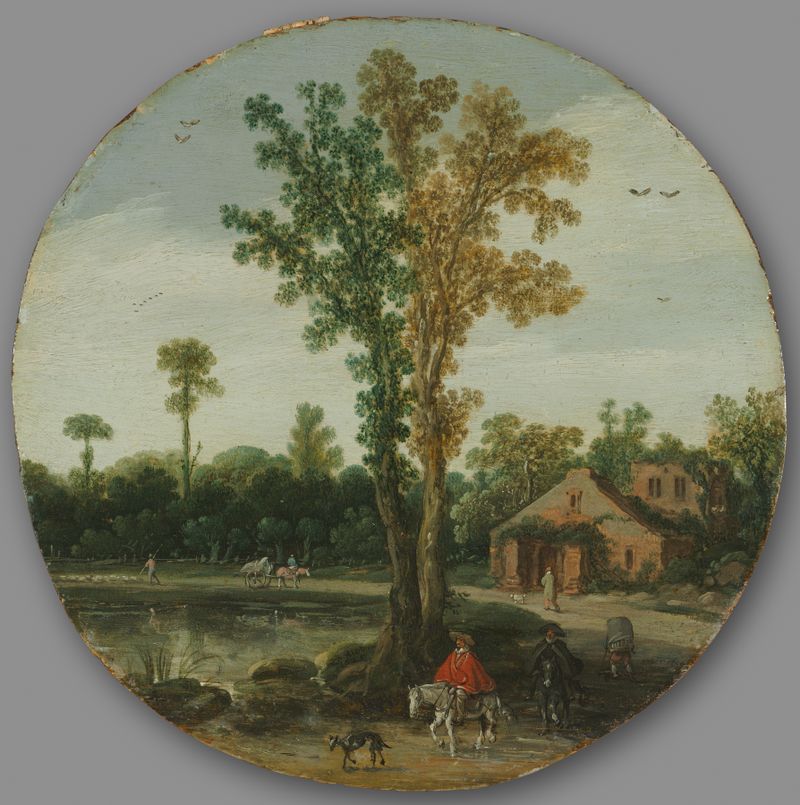
Travelers by a Lake
Esaias van de Velde





