
Landschap met galgenveld bij Haarlem — History & Facts
In this poignant landscape, the artist captures an unsettling juxtaposition of life and death, evoking a deep sense of yearning for the fleeting nature of existence. Look to the foreground, where a desolate gallows looms, its stark silhouette cutting against the soft hues of a fading sky. The muted tones of the earth and the delicate brushwork convey an air of melancholy, inviting the viewer to linger. Notice how the distant Haarlem skyline introduces a contrast between the vibrancy of human civilization and the haunting reminder of mortality just steps away.
The composition guides the eye from the somber gallows to the expansive horizon, suggesting a dialogue between despair and the promise of a new day. Hidden within this seemingly serene landscape are layers of emotional tension. The presence of the gallows, usually a symbol of fear and punishment, contrasts sharply with the tranquil beauty of the scene. This duality stirs an introspection about societal justice and the quiet suffering that often goes unnoticed.
The gentle play of light casts shadows that evoke a sense of fleeting time — a reminder that even the most beautiful moments are tinged with sorrow. Created during a period of great artistic development in the Netherlands, this work emerged between 1615 and 1616 when Esaias van de Velde was honing his skills in landscape painting. Living in a time marked by the transition to the Dutch Golden Age, he was influenced by both the natural world and the social realities of his era. The incorporation of somber themes within serene settings reveals a nuanced understanding of the complexities of life, encapsulating the spirit of his time.
More Artworks by Esaias van de Velde
Browse all →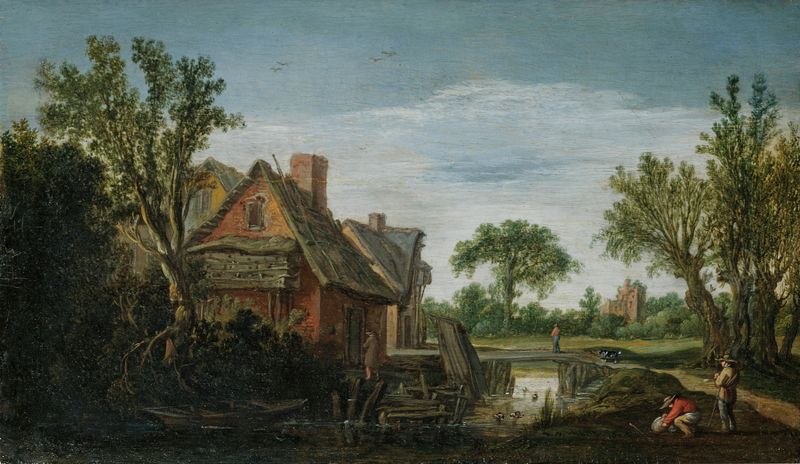
The Hague A Wooded River Landscape With Figures On A Path On A River Bank Beside A Village, A Bridge Beyond
Esaias van de Velde
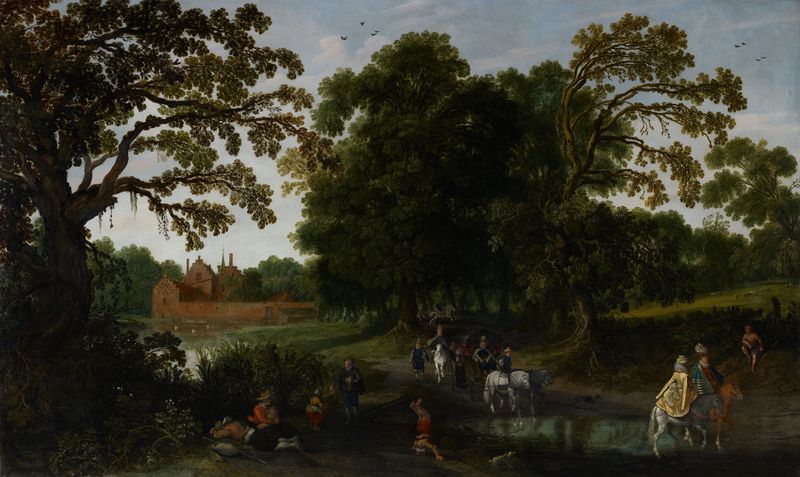
Courtly Procession before Abstpoel Castle
Esaias van de Velde
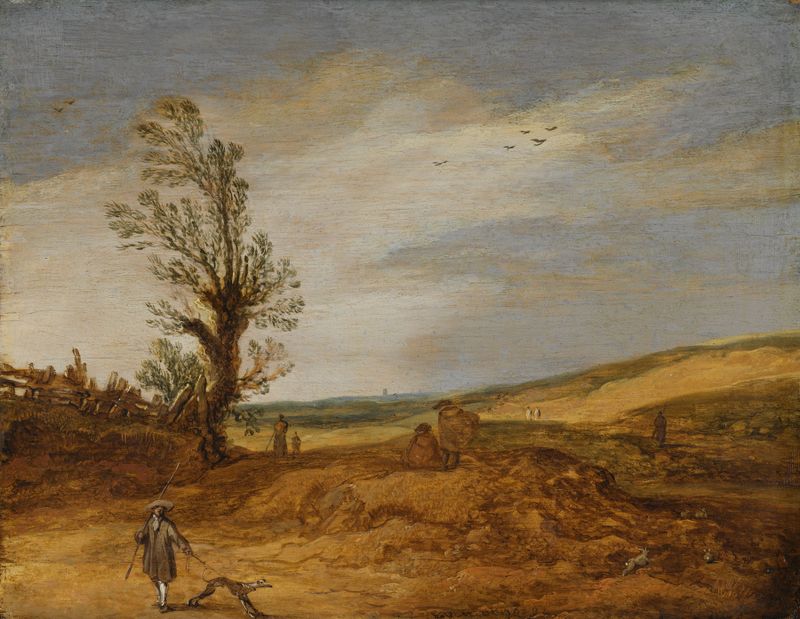
A View in the Dunes
Esaias van de Velde
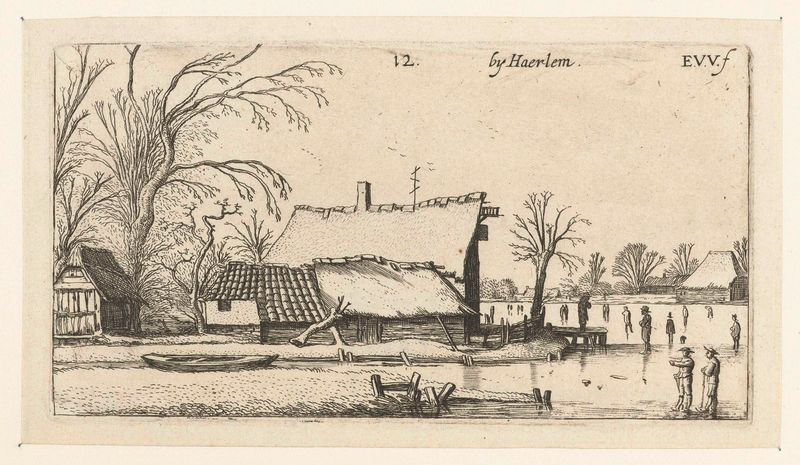
Boerderij bij een bevroren rivier met schaatsers
Esaias van de Velde
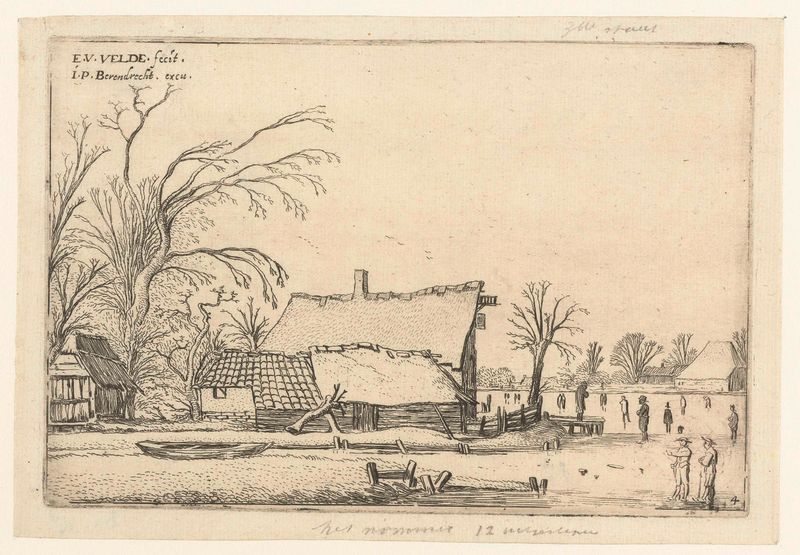
Boerderij bij een bevroren rivier met schaatsers
Esaias van de Velde
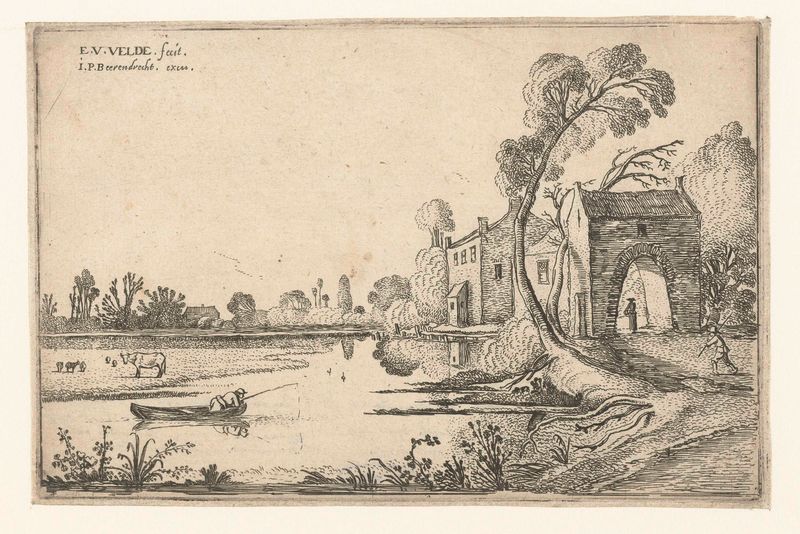
Landschap met rivier en poortgebouw
Esaias van de Velde
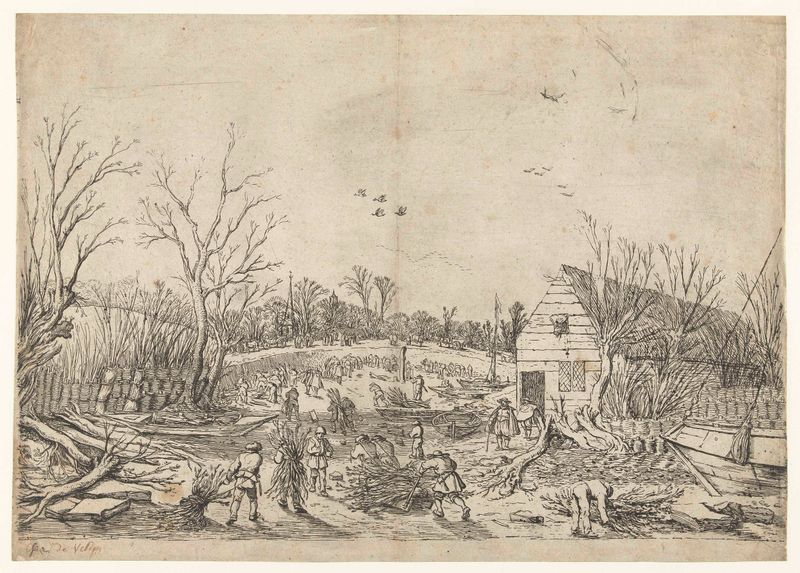
Herstelwerkzaamheden aan de doorgebroken Lekdijk bij 't Waal
Esaias van de Velde
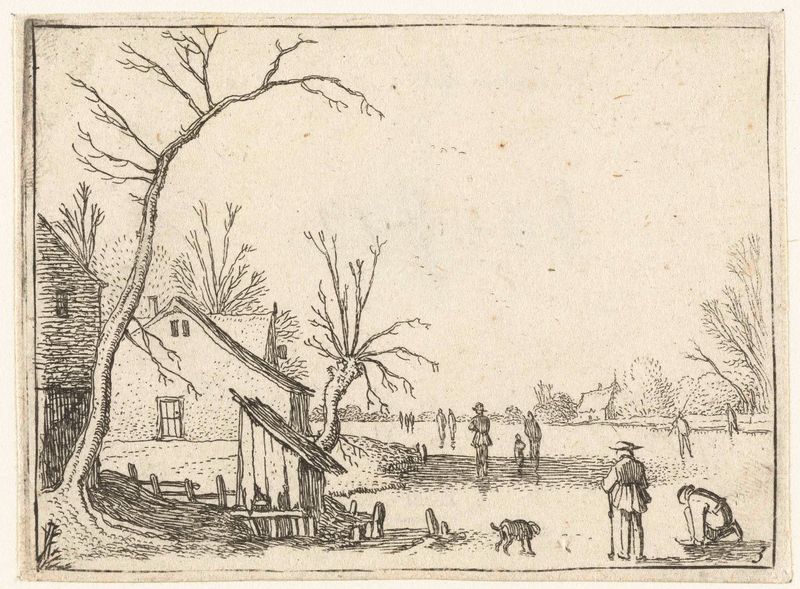
Boerderij bij bevroren rivier en schaatsers op het ijs
Esaias van de Velde
Landschap met een rivier en poortgebouw
Esaias van de Velde
Travelers by a Lake
Esaias van de Velde





