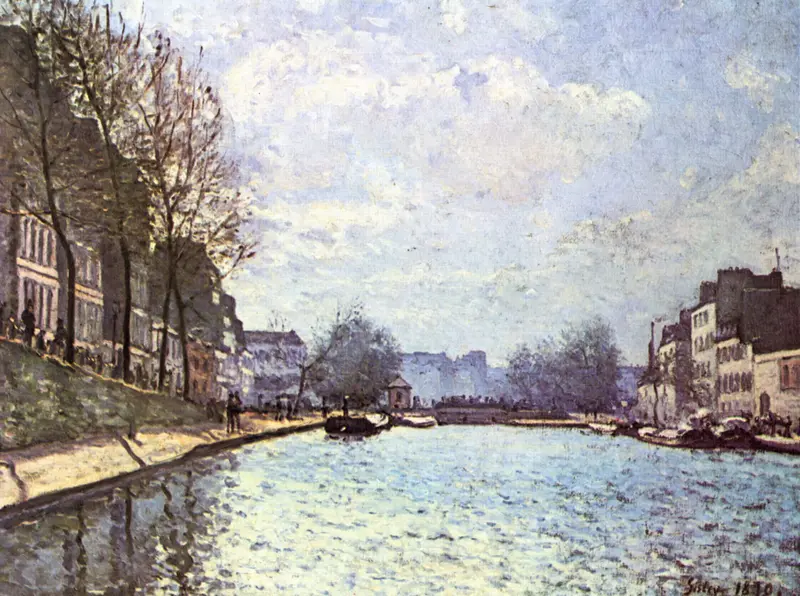
L’assemblée Nationale Et Le Pont De La Concorde — History & Facts
Begin your exploration by looking to the left, where the imposing façade of the National Assembly rises against a muted sky. The artist expertly contrasts the cool, stone hues of the building with the warm, inviting glow of the surrounding light. Notice how the soft brushwork blurs the boundaries between architecture and atmosphere, drawing your eye to the intertwining elements of nature and civilization.
The river, with its gentle ripples, reflects not just the structures but also the emotions woven into this landscape. In this work, the artist captures a moment steeped in nostalgia and melancholy. The stillness of the water contrasts starkly with the bustling life portrayed on the bridge, illustrating the tension between progress and remembrance. The figures, seemingly oblivious to the weight of the buildings behind them, embody a fleeting joy that masks an undercurrent of grief—a reminder of what once was.
This duality invites reflection on the passage of time and its inevitable erasure of memories. Galien-Laloue painted this piece during a time of great change in France, likely in the late 19th to early 20th century, a period marked by rapid urbanization and industrialization. He sought to capture the essence of Paris, both its beauty and its evolving identity. As the city transformed, the artist’s work served as a poignant reminder of the past, preserving fleeting moments for generations to come.
More Artworks by Eugène Galien-Laloue

Boulevard Bonne – Nouvelle sous la neige
Eugène Galien-Laloue

Notre Dame De Paris
Eugène Galien-Laloue
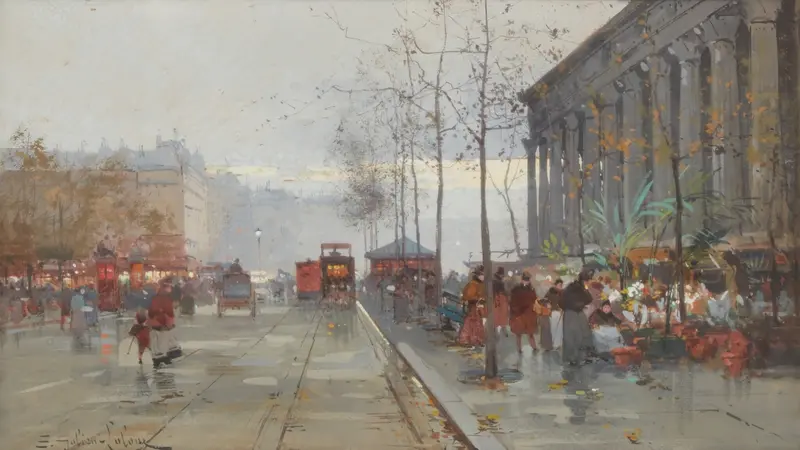
Le Marché aux fleurs de la Madeleine
Eugène Galien-Laloue
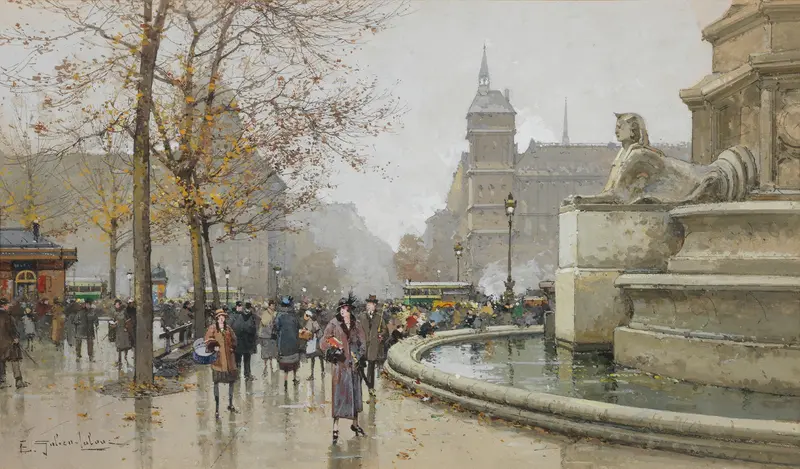
La fontaine du Palmier, place du Châtelet
Eugène Galien-Laloue
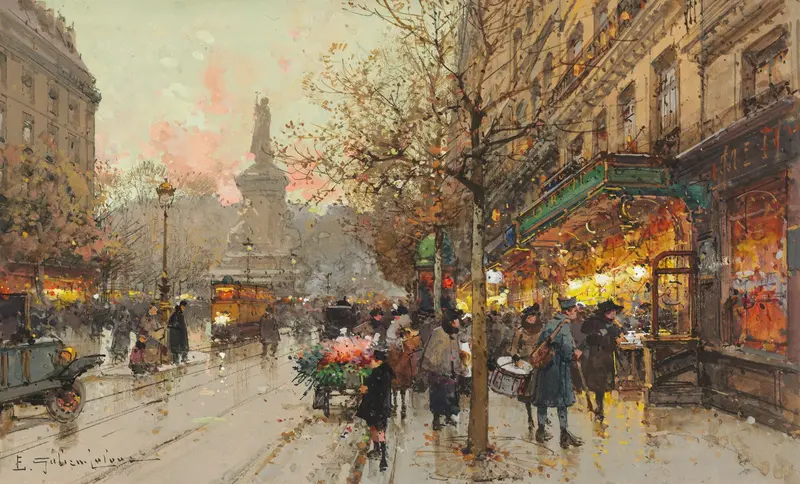
Place De La République
Eugène Galien-Laloue
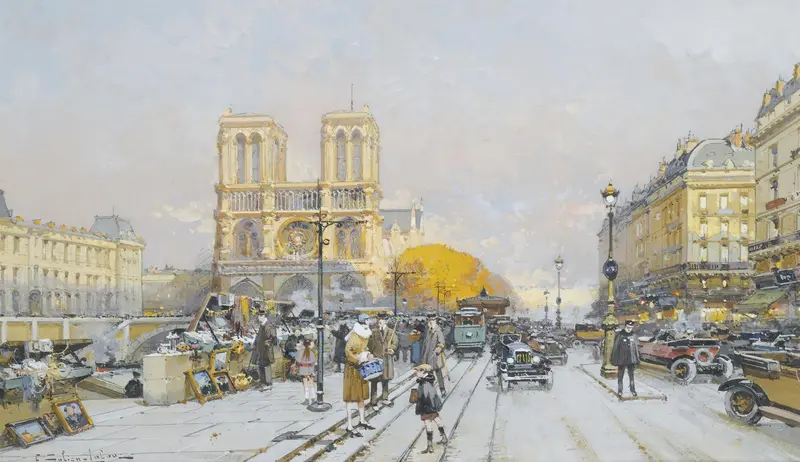
Notre Dame
Eugène Galien-Laloue
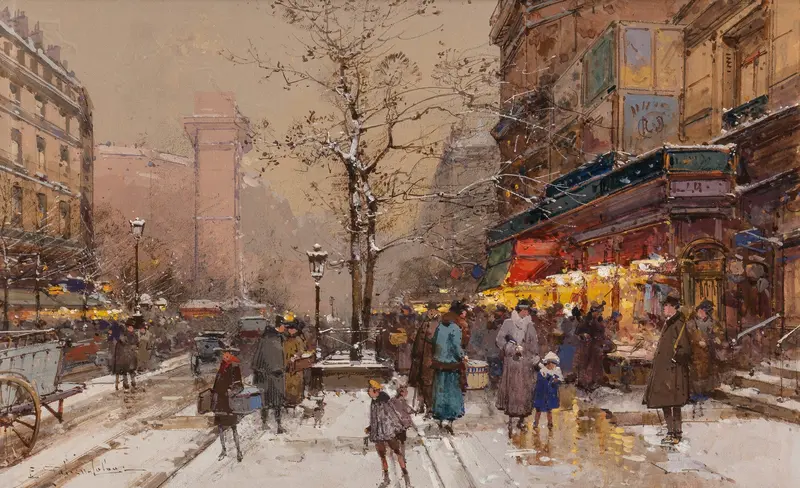
Porte Saint-Denis
Eugène Galien-Laloue
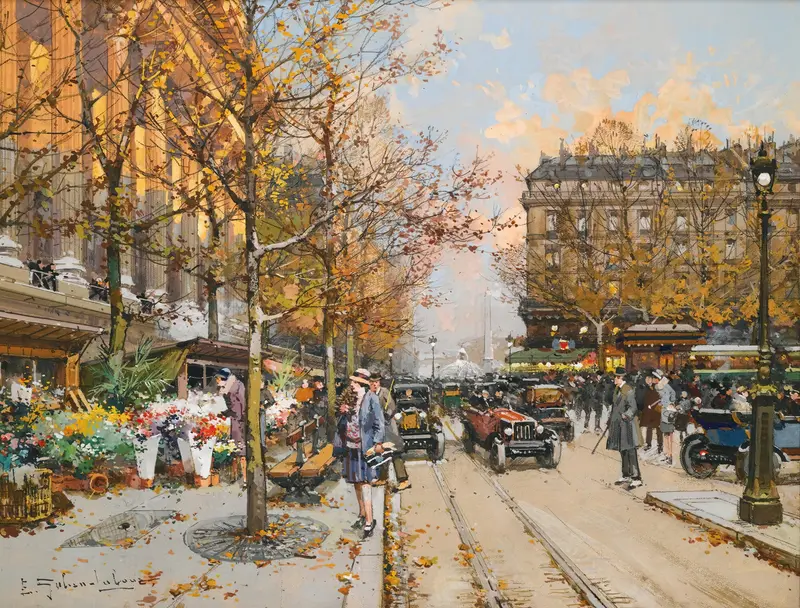
Place De La Madeleine
Eugène Galien-Laloue
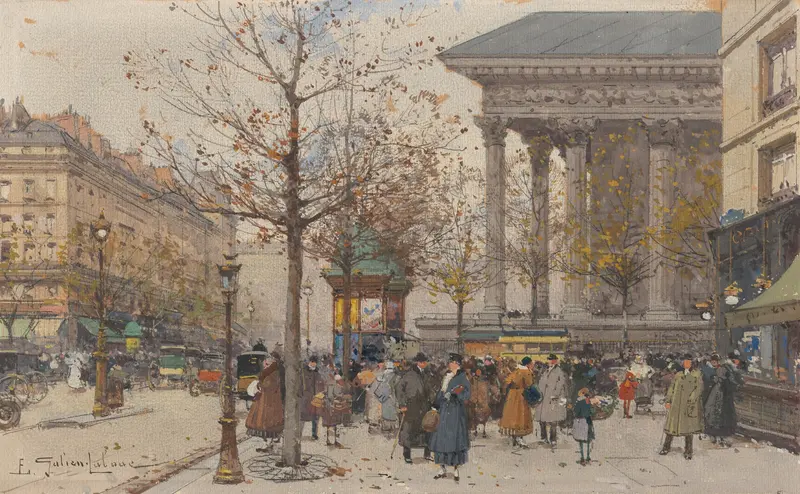
Vue animée de la Madeleine
Eugène Galien-Laloue
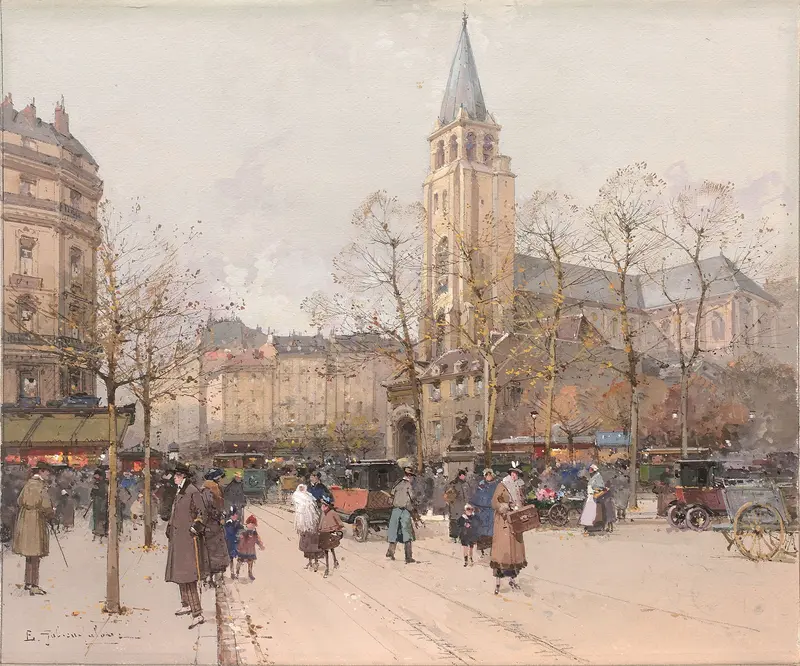
Vue des boulevards à Saint-Germain-des-Prés
Eugène Galien-Laloue