
Lauffenburg on the Rhine — History & Facts
In moments of deep loss, art often serves as a bridge between the past and the present, capturing the echoes of what once was while inviting us to reflect on our own emotions. Look to the foreground, where the gentle curves of the Rhine River meander, their reflections shimmering like memories upon the water's surface. The soft interplay of greens and blues draws one’s eye towards the distant fortress, a stoic presence atop the cliffs, draped in a warm golden light that signifies the setting sun. Ruskin’s meticulous attention to detail is evident in the textures of the foliage and the fluidity of the water, inviting the viewer into a scene that feels both tranquil and melancholic. Delve deeper into the painting’s composition, where the contrast between the vibrant landscape and the imposing structure of the fortress reveals a tension between nature and man-made creations.
This duality suggests a narrative of resilience amidst the passage of time—while landscapes evolve with each season, human constructs endure, bearing witness to the joys and sorrows of existence. The juxtaposition of vibrant colors against the somber gray of the rocks elicits a sense of grief, as if the scenery itself mourns the stories lost to history. In 1863, Ruskin created this work during a period of significant introspection, grappling with personal losses and the changing landscapes of art and society. At this time, he was deeply engaged with the ideas of beauty and nature, often reflecting on how industrialization was altering the world around him.
Lauffenburg on the Rhine emerged from a desire to capture the enduring beauty of a landscape fraught with history, serving both as a personal elegy and a broader commentary on the human experience.
More Artworks by John Ruskin
Browse all →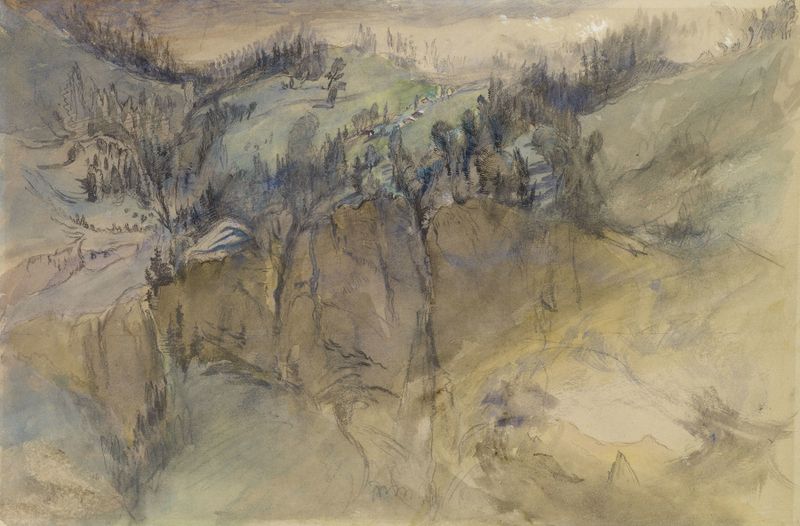
Alpine Scene
John Ruskin

An Alpine Valley, the Matterhorn in the Distance
John Ruskin
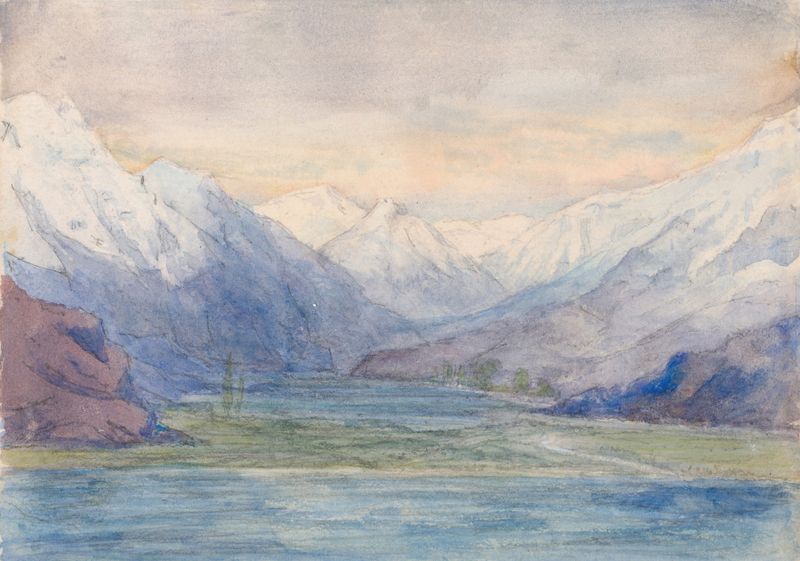
Mountain Landscape
John Ruskin

The Château of Amboise
John Ruskin

The Garden of San Miniato near Florence
John Ruskin

Dumbarton Castle
John Ruskin

View of the Bay of Naples and Vesuvius
John Ruskin
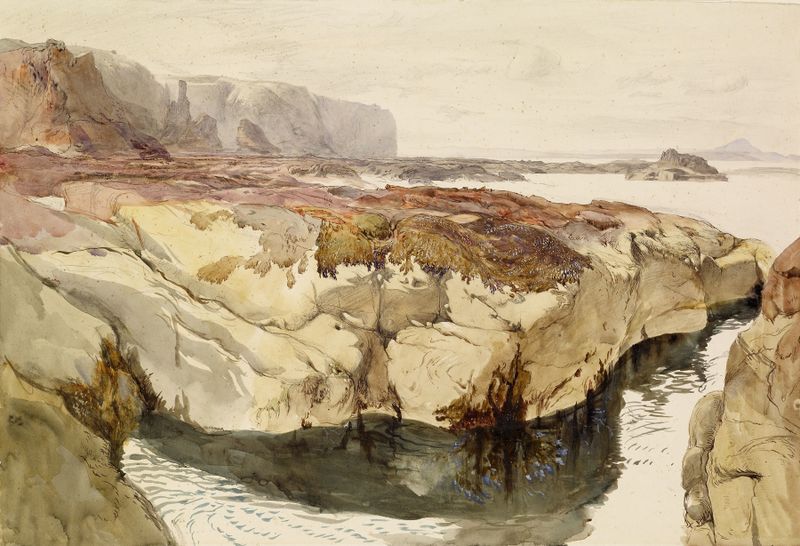
Coast Scene near Dunbar
John Ruskin

Gezicht op S. Anastasia te Verona, over de Adige
John Ruskin
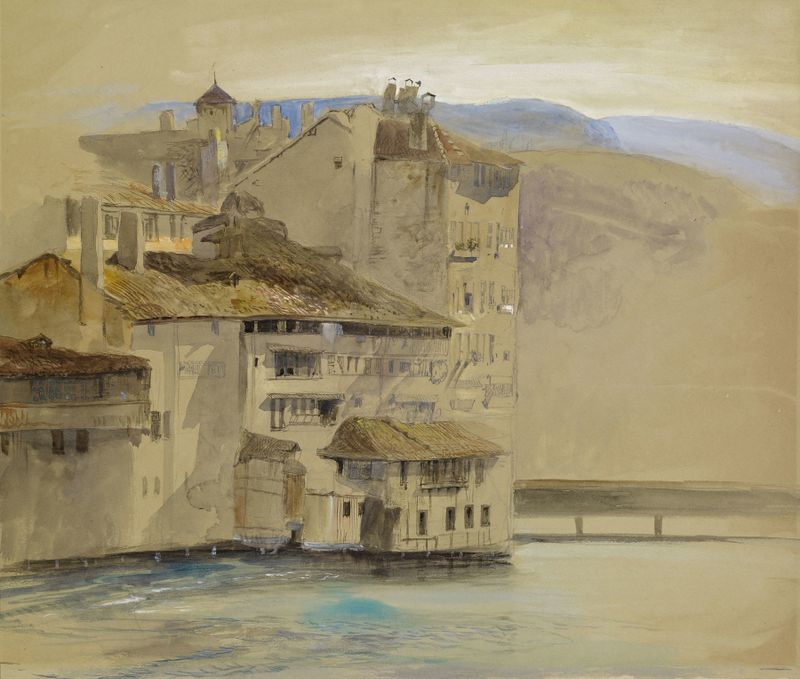
Old Houses on the Rhône Island, Geneva
John Ruskin





