
Le Boulevard près du Vaudeville — History & Facts
Each brushstroke invites us to linger in the past, to feel the weight of memories resting upon the vibrant streets. In this moment captured by a keen observer, nostalgia dances through the air, evoking a longing for a lost time. Look to the center of the artwork, where a bustling Parisian street unfolds. The figures, clad in period clothing, seem to move with purpose, their expressions a blend of joy and contemplation.
Colors pulse with life: warm browns and vivid greens harmonize, while dappled light filters through the trees, creating pockets of shadow that add depth to the scene. The diagonal lines of the pavement draw the eye, inviting you into the urban tapestry of 19th-century France. But beneath the surface lies a deeper narrative. The juxtaposition of lively pedestrians against the stillness of the buildings hints at the fleeting nature of human experience.
Each passerby is a silent witness to the transformations of time, a reminder that moments, once lived, become mere echoes. The trees, with their sturdy trunks and flickering leaves, symbolize both stability and change, emphasizing the tension between progress and memory. In 1889, while Léon Gambetta advocated for a more democratic France, Auguste Louis Lepère captured this vibrant essence of Paris as an active participant in the Impressionist movement. Living in a time of rapid industrialization and artistic revolution, he infused his work with both personal and collective memories, painting not just a street, but the spirit of a city in transition.
More Artworks by Auguste Louis Lepère
Browse all →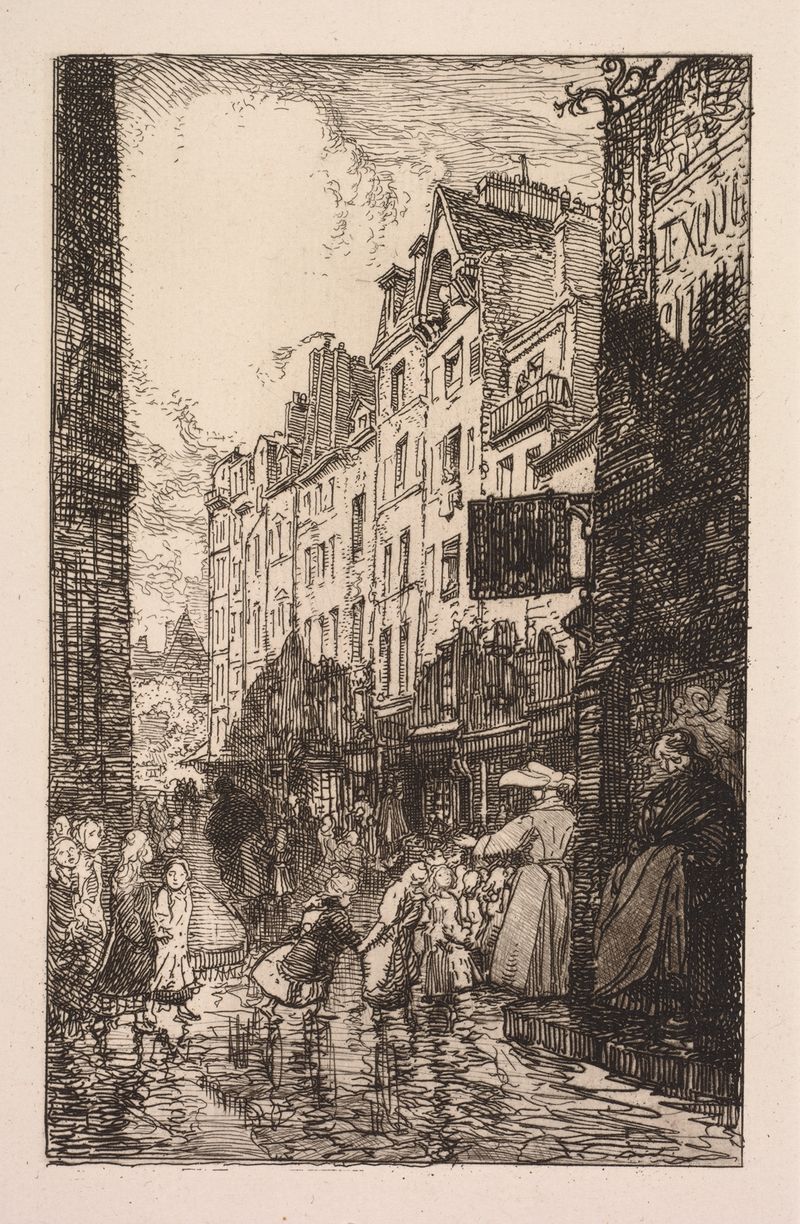
La Rue des Prêtres Saint-Séverin
Auguste Louis Lepère
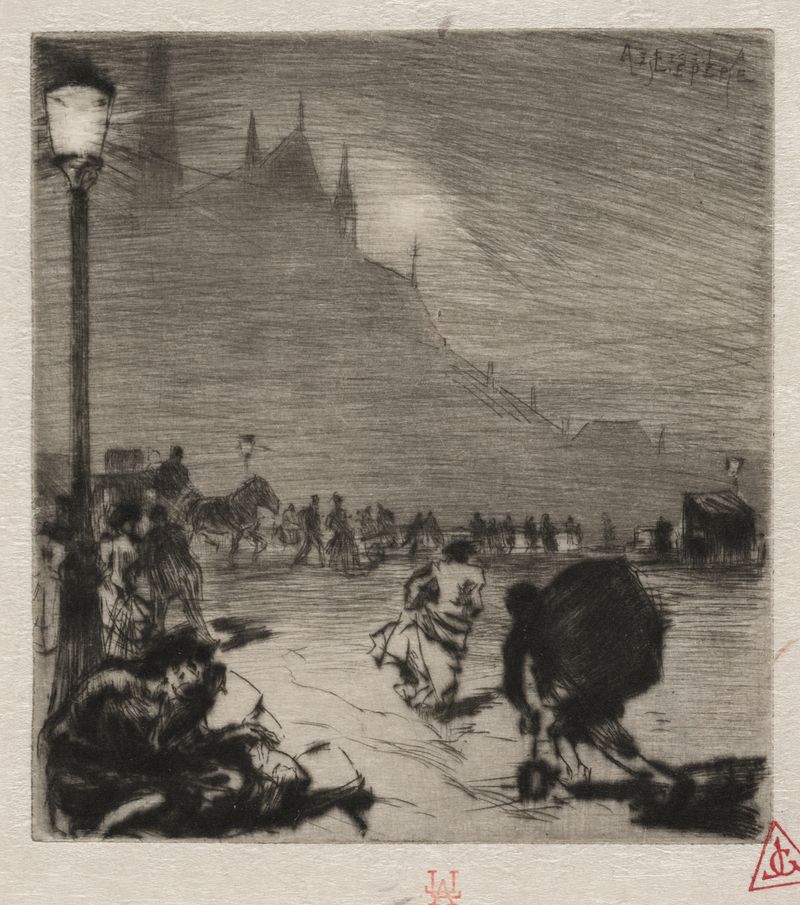
Au Coin du Pont-aux-Doubles
Auguste Louis Lepère
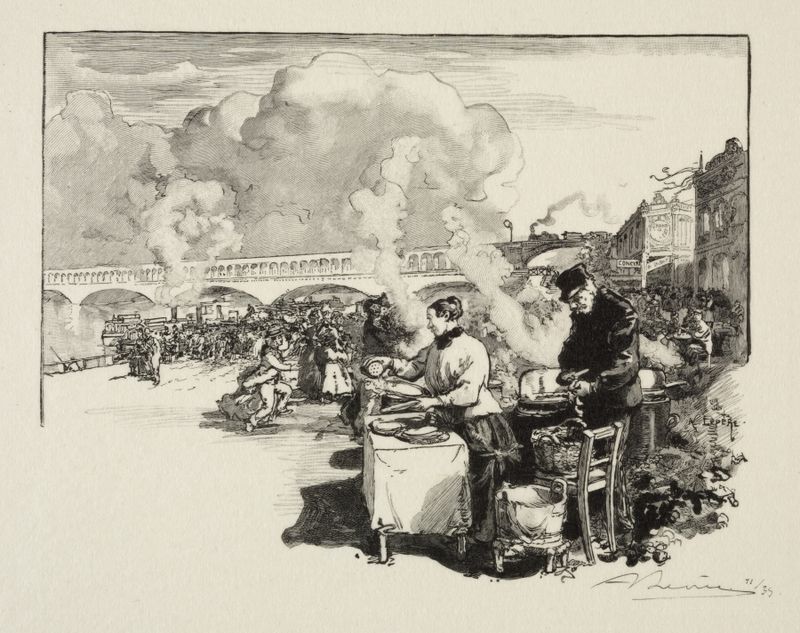
Debarcadère des bateaux-omnibus
Auguste Louis Lepère

La Seine, au quai de la Rapée
Auguste Louis Lepère
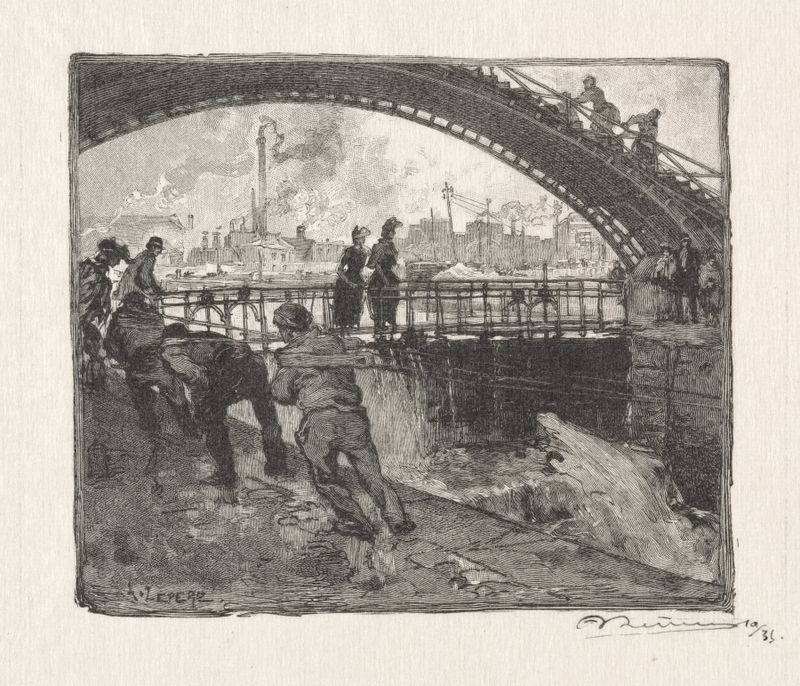
L’Ecluse du Canal St. Martin
Auguste Louis Lepère

Le Boulevard Montmartre, le Soir
Auguste Louis Lepère

Une Chasse au Mont Gérard
Auguste Louis Lepère
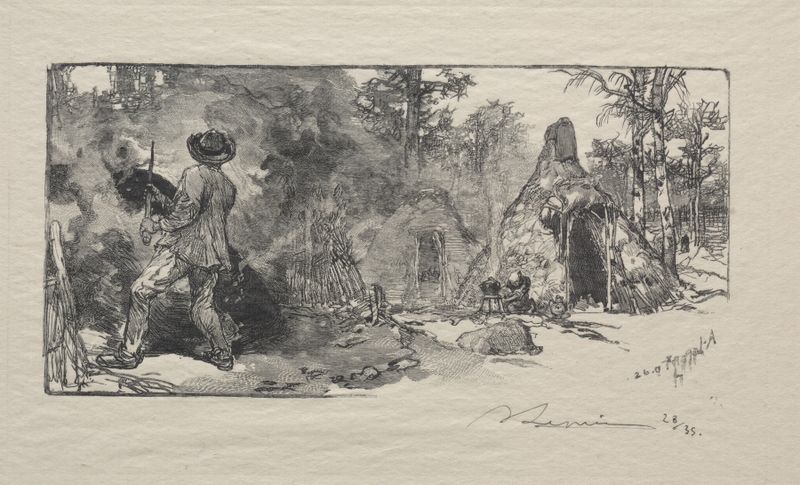
Les Charbonniere
Auguste Louis Lepère
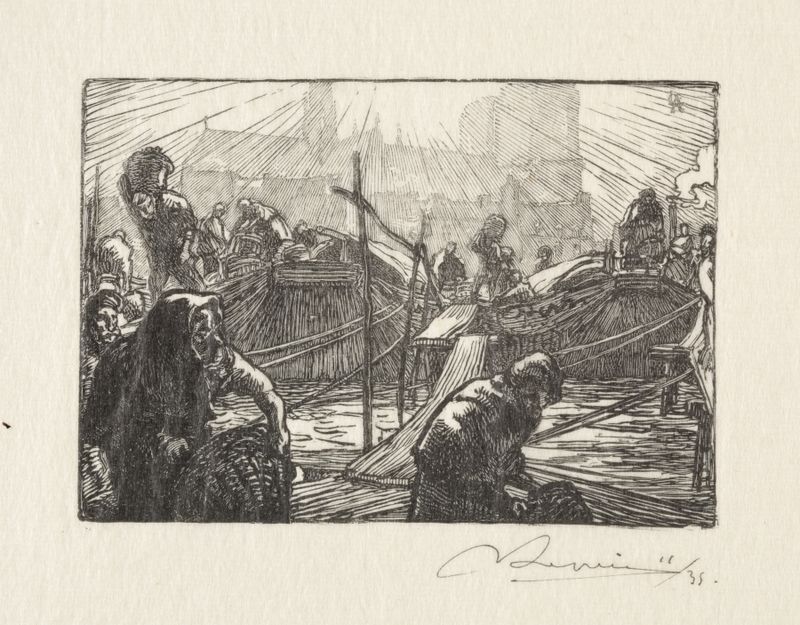
Notre Dame vue du Marché aux pommes
Auguste Louis Lepère

Le Palais des Arts Liberaux, Intèrieur
Auguste Louis Lepère





