
Le chemin de la Machine, Louveciennes — History & Facts
A road stretches away under a wide, pale sky, drawing the viewer’s gaze into the heart of Le chemin de la Machine, Louveciennes. The quiet drama here is the way the avenue of pollarded trees, their branches freshly shorn, creates a rhythm that pulls you forward. Houses cluster to the left, their white facades catching the soft light, while the right side is anchored by a long wall and a row of golden autumn trees.
A few small figures—almost lost in the geometry of the scene—hint at daily life, but the real subject is the gentle order of nature and settlement, the way the morning air seems to settle over everything. Sisley’s palette is cool and clear, the brushwork brisk but tender, giving the whole scene a sense of stillness just before something stirs. Painted in 1873, this work belongs to the world of early Impressionism, when artists like Sisley turned their attention to the changing suburbs of Paris. Louveciennes, a village on the outskirts, was a favored haunt for painters seeking to capture the fleeting effects of light and season on the modern landscape.
Such scenes were not grand commissions for palaces, but rather intimate views for a new class of collectors—urbanites who wanted reminders of the countryside’s calm. The painting’s journey, as recorded by The Yorck Project’s 2002 collection, is largely obscure, but its quiet clarity speaks to a moment when artists and viewers alike were learning to find beauty in the ordinary. Let your eye travel down that empty road, and imagine where it might lead.
More Artworks by Alfred Sisley
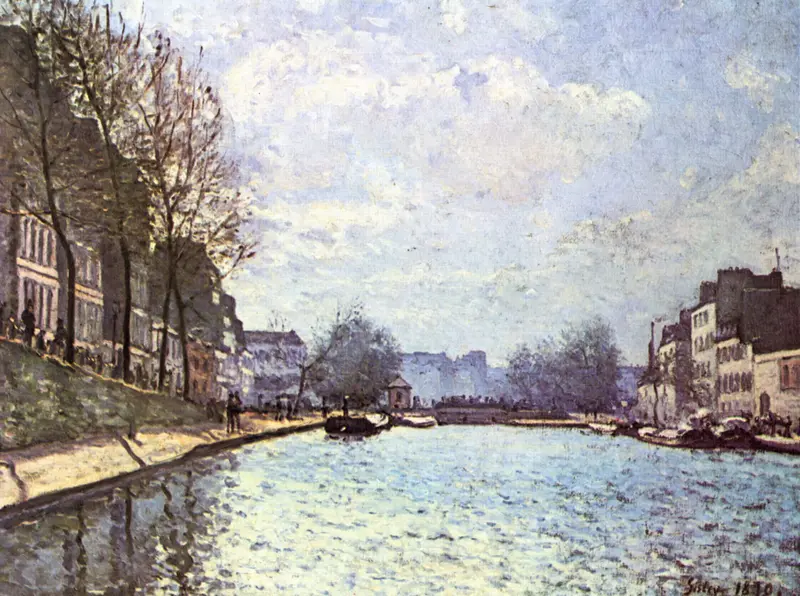
View of the Canal Saint-Martin
Alfred Sisley

Le Loing à Saint-Mammès
Alfred Sisley
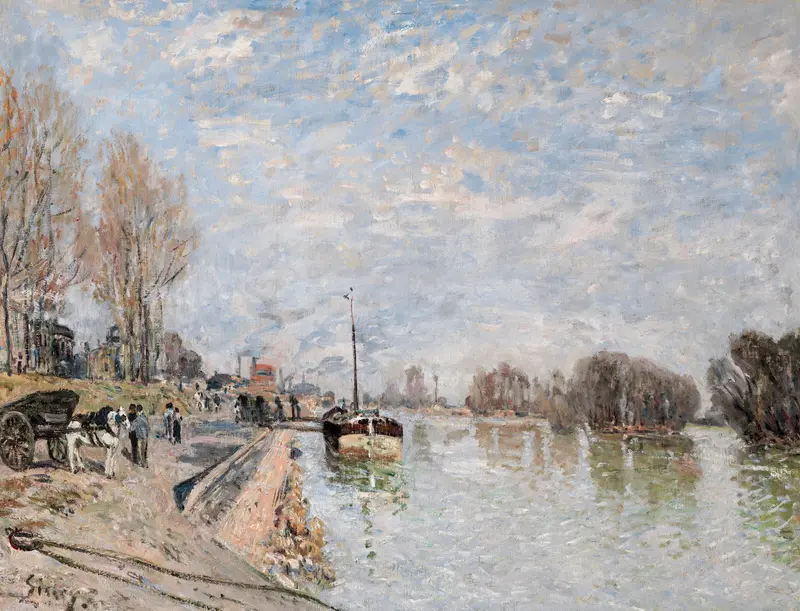
La Seine à Suresnes
Alfred Sisley
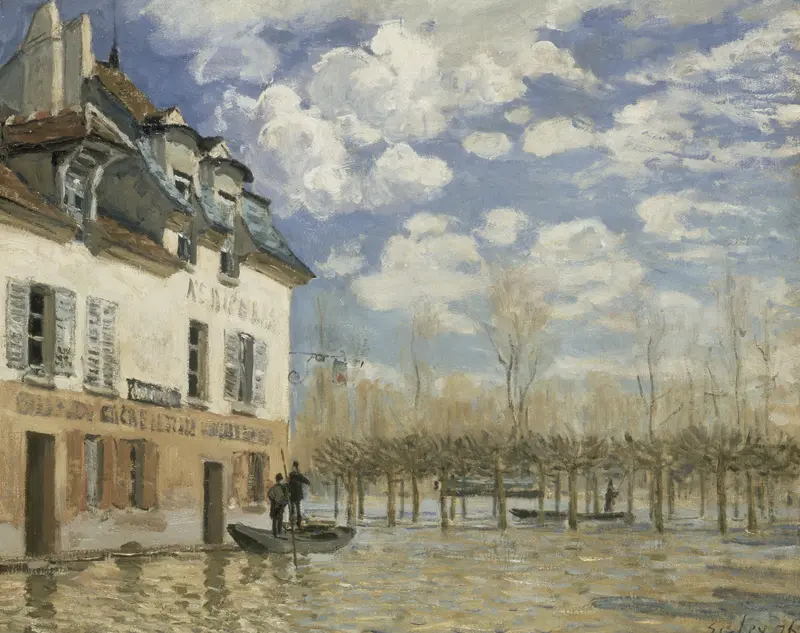
Boat in the Flood at Port Marly
Alfred Sisley
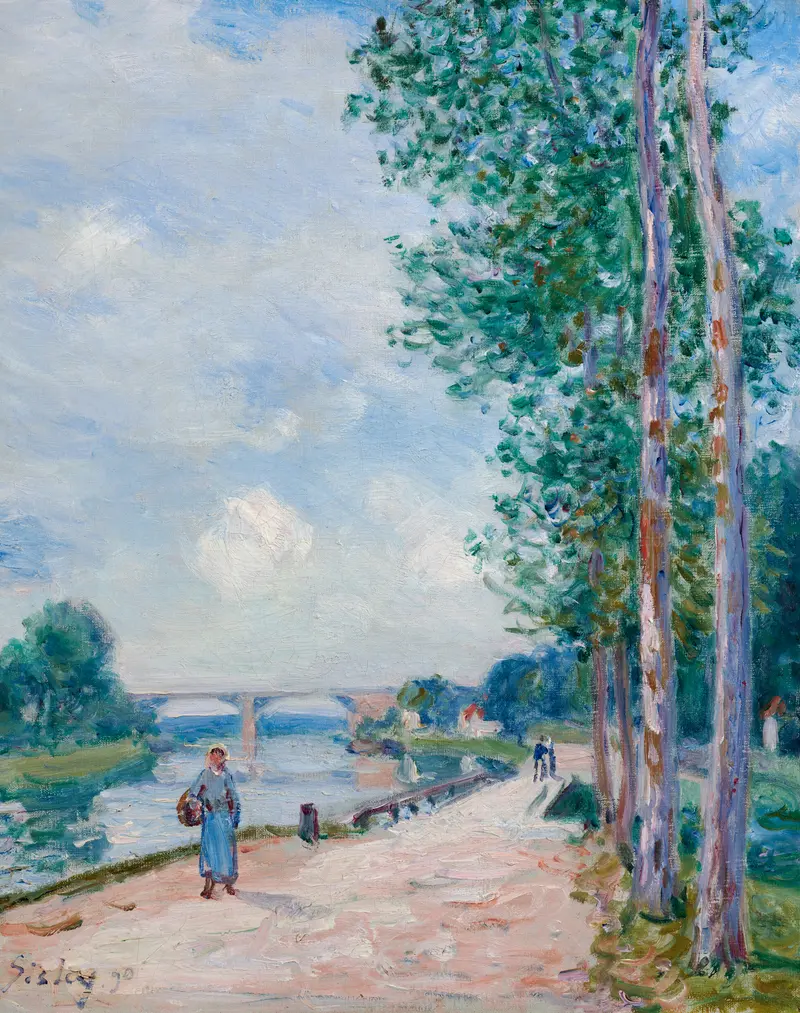
Les bords du Loing près de Moret
Alfred Sisley
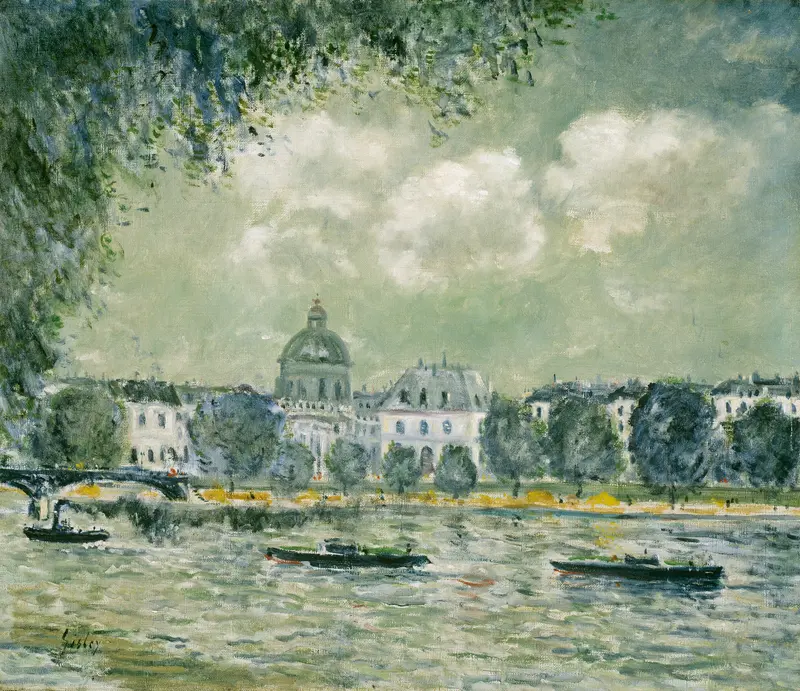
Landscape along the Seine with the Institut de France and the Pont des Arts
Alfred Sisley

Printemps au bord du Loing
Alfred Sisley
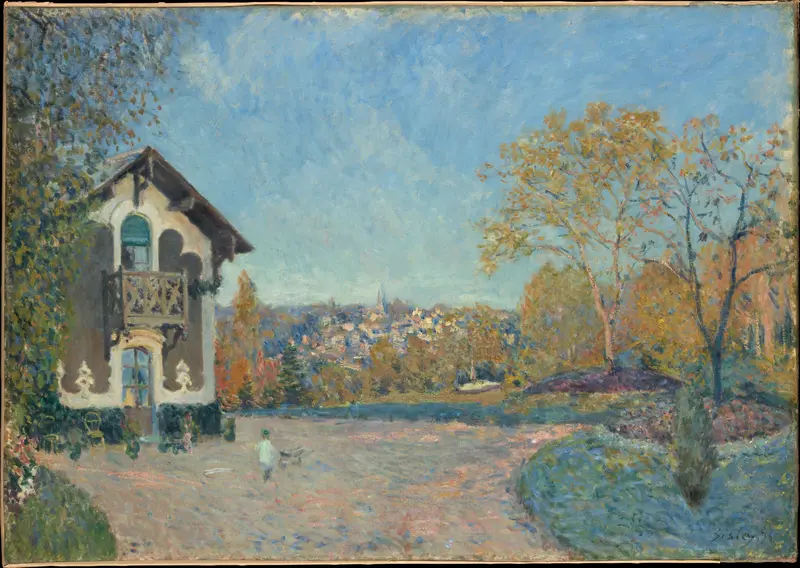
View of Marly-le-Roi from Coeur-Volant
Alfred Sisley
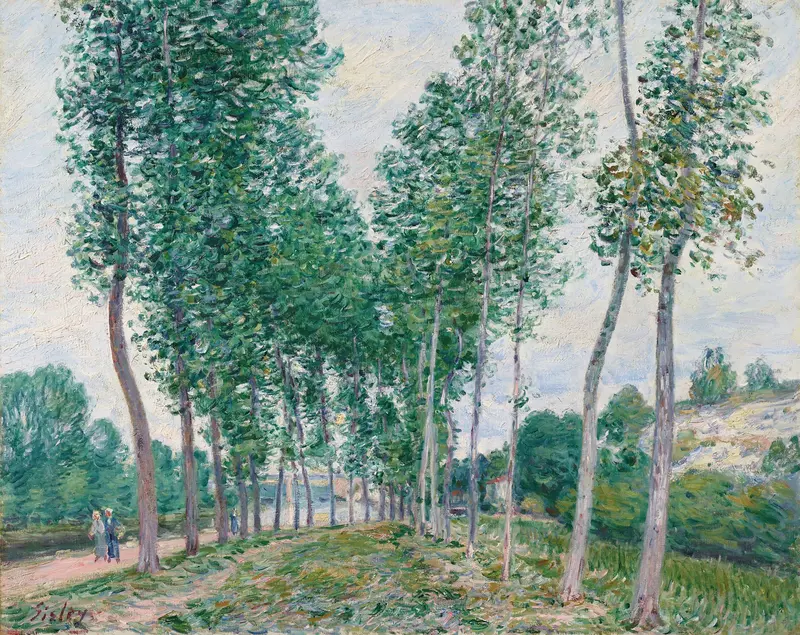
L’allée des peupliers au bord du Loing
Alfred Sisley
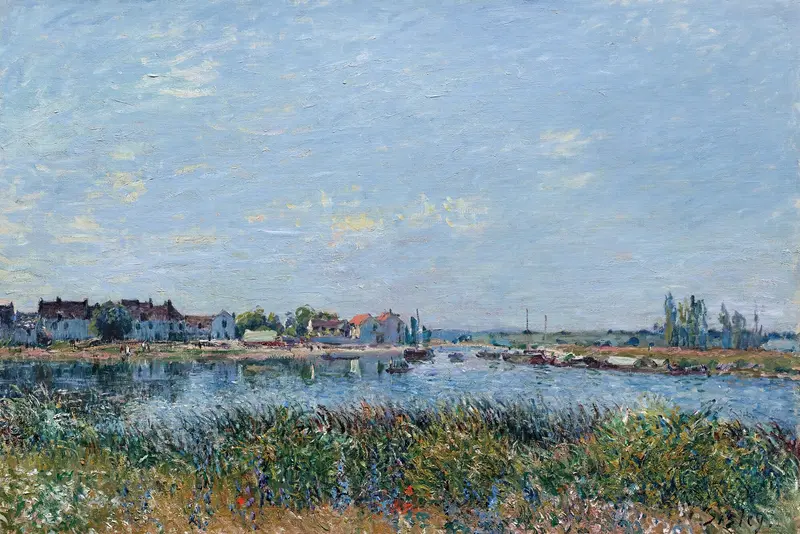
Saint-Mammès, Le Matin
Alfred Sisley
More Landscape Art

The Starry Night
Vincent van Gogh

View of Delft
Johannes Vermeer

Water Lilies
Claude Monet

The Grand Canal, Venice, looking north-west from the Ca' Corner to the Ca' Contarini degli Scrigni, with the campanile of Santa Maria della Carità
Canaletto

Windsor Castle
Canaletto

The Grand Canal looking North-East from the Palazzo Dolfin-Manin to the Rialto Bridge
Canaletto