
Le Chemin derrière l’Oustalet, Saint-Tropez — History & Facts
In Le Chemin derrière l’Oustalet, Saint-Tropez, the ecstasy of color and light dances through the canvas, inviting the viewer into a world of vibrant sensations where every moment feels alive. Look to the left at the warm, sun-drenched pathway that beckons the eye into the depths of the composition. The winding road, lined with lush greenery, appears to pulse with vitality, as if the landscape itself is breathing. Notice how Manguin's use of thick, expressive brushstrokes creates an almost tangible texture, while the dappled sunlight casts playful shadows, enhancing the sense of depth and movement.
The lively palette of greens, yellows, and blues harmonizes with the rhythm of the scene, evoking the serenity and joy of a summer's day in the south of France. Delve deeper into the emotional undercurrents of the painting, where contrasts simmer beneath the surface. The vibrant colors symbolize not just the beauty of nature, but a celebration of life itself, reflecting the artist’s own exuberance and sense of liberation. The path, while inviting, is also a metaphor for exploration—an open invitation to wander and lose oneself in the splendor of the moment.
The interplay between light and shadow serves as a reminder of the fleeting nature of happiness, suggesting that joy is often found in the simplest of journeys. In 1919, Manguin painted this piece while living in France amidst the post-war revival of artistic expression. The world was in a state of transformation, and the Fauvist movement, of which he was a key figure, was embracing color and emotional depth as a response to the turmoil around them. This work embodies that spirit of renewal and passion, capturing a moment in time when art served as a refuge and a celebration of the human experience.
More Artworks by Henri Manguin
Browse all →
Paysage d’automne aux environs de Saint-Tropez
Henri Manguin

Vue Sur La Ponche, Saint-Tropez
Henri Manguin
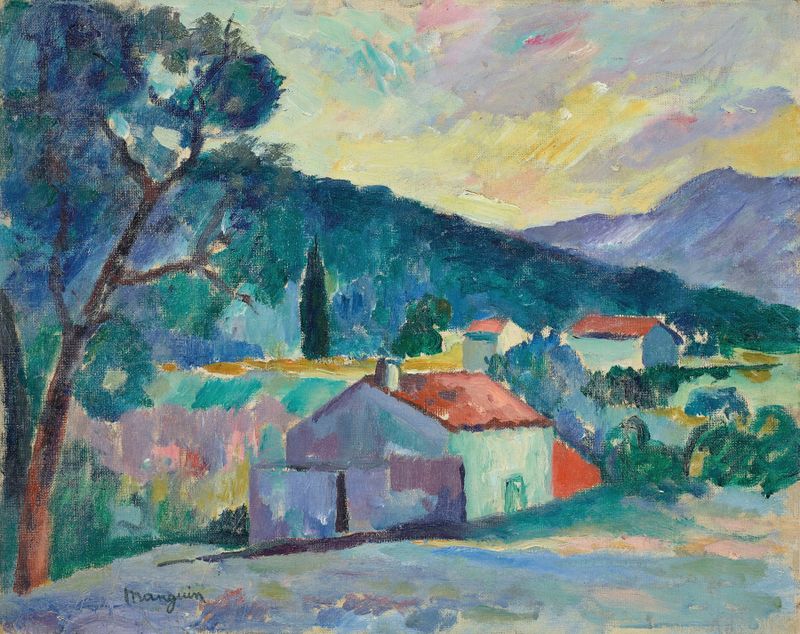
Le Mas à Saint-Tropez
Henri Manguin
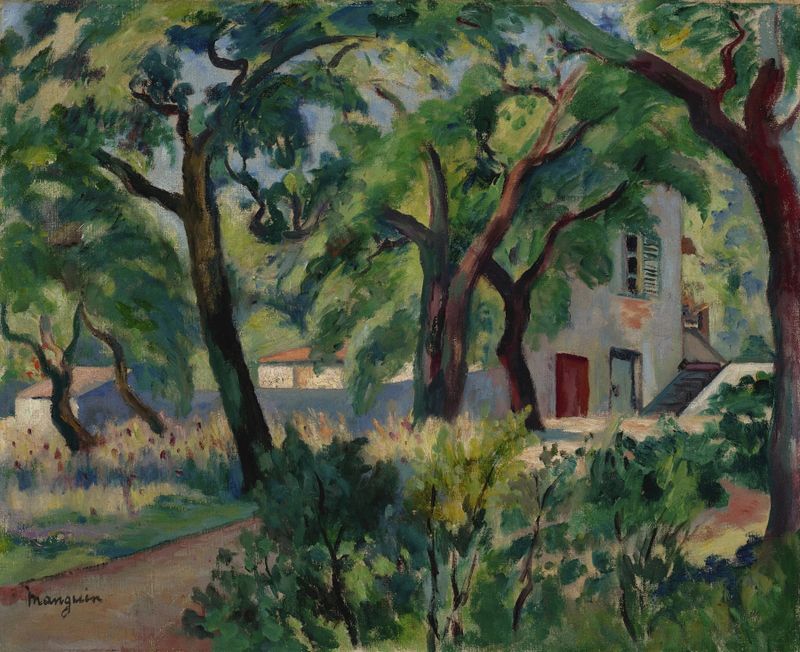
La Maison dans la forêt, Saint-Tropez
Henri Manguin
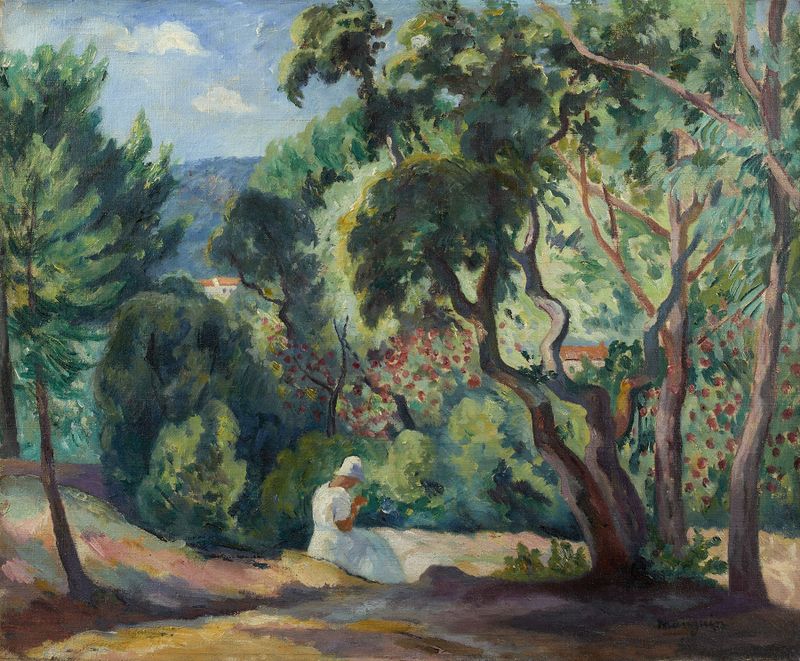
Sous-bois à la Moutte, Saint-Tropez
Henri Manguin
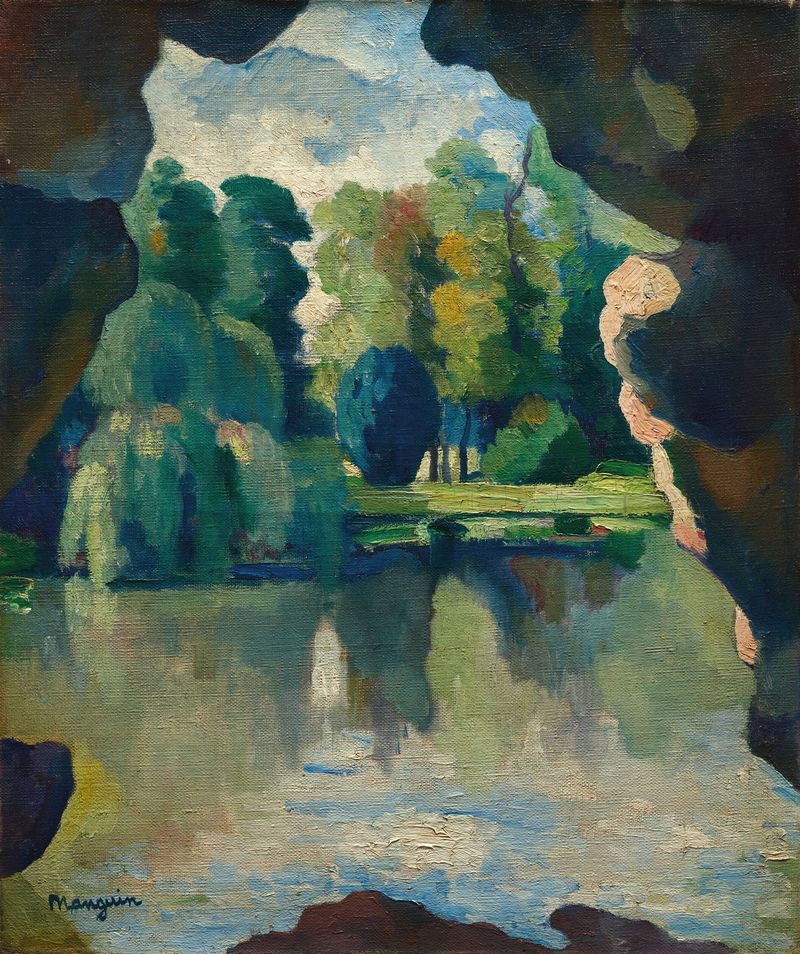
Le Lac de Bagatelle, Bois de Boulogne
Henri Manguin

Rade de Villefranche
Henri Manguin

Le Palais des Papes – Avignon
Henri Manguin

Paysage Beauce
Henri Manguin

Voiliers à marée basse
Henri Manguin





