
Paysage d’automne aux environs de Saint-Tropez — History & Facts
In Paysage d’automne aux environs de Saint-Tropez, the shadows whisper secrets of the past, weaving through the vibrant hues of autumn. This landscape invites us to linger, to reflect on moments suspended in sunlight and shadow. Look closely at the lower right corner where the sun casts dappled shadows across the rich, golden grasses. The brushwork is lively and thick, creating an almost tactile sensation that immerses the viewer in the scene.
Notice how the brilliant oranges and deep reds of the foliage contrast with the cooler blues of the distant sky, framing a place where warmth and serenity coexist. This vibrant palette, alongside the energetic strokes, evokes a sense of both tranquility and transience. Delve deeper, and you’ll find a dialogue between light and dark that captures the fleeting essence of autumn. The interplay of sunlight and shadow emphasizes the passage of time, hinting at change and the inevitability of decay.
Amidst the bright colors, the darker areas speak of moments faded, evoking nostalgia. The scattered trees, with their heavy shadows, suggest both shelter and isolation, reflecting the solitude that often accompanies beauty. In 1922, Henri Manguin painted this piece while living in the South of France, a region that significantly influenced his work. During this time, the artist was embracing the Fauvist style, characterized by vivid colors and bold brushwork, which sought to evoke emotion rather than depict reality.
Manguin’s world was one of post-war awakening, yet he remained firmly rooted in the beauty of nature, capturing its transitory moments amidst a rapidly changing society.
More Artworks by Henri Manguin
Browse all →
Vue Sur La Ponche, Saint-Tropez
Henri Manguin
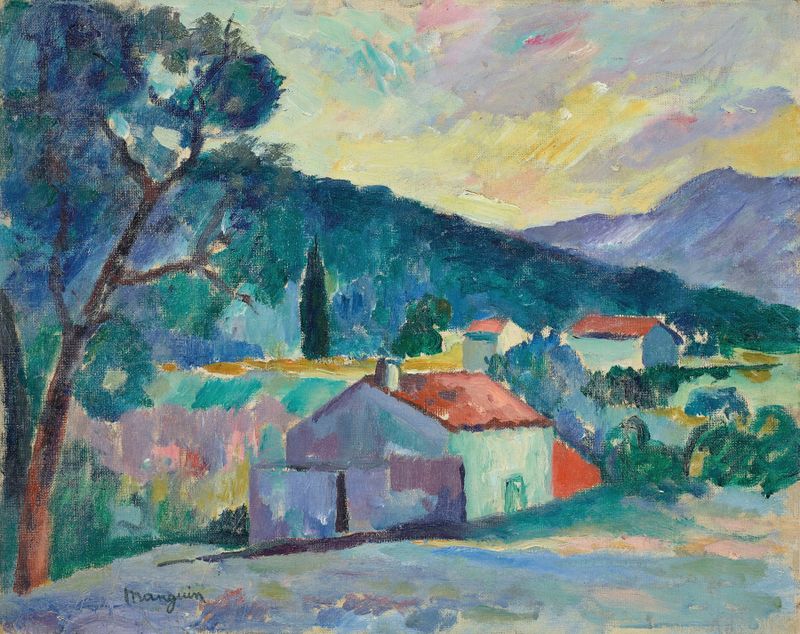
Le Mas à Saint-Tropez
Henri Manguin
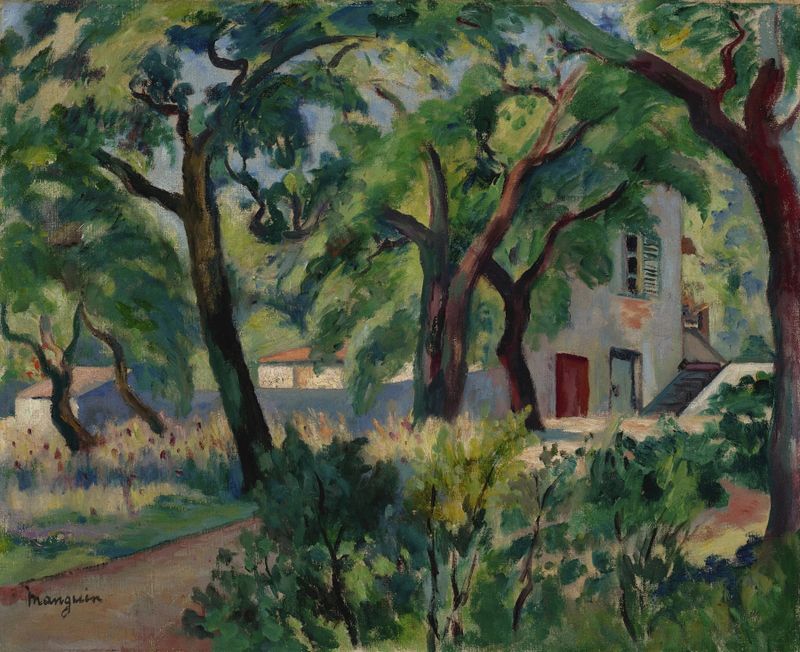
La Maison dans la forêt, Saint-Tropez
Henri Manguin

Le Chemin derrière l’Oustalet, Saint-Tropez
Henri Manguin
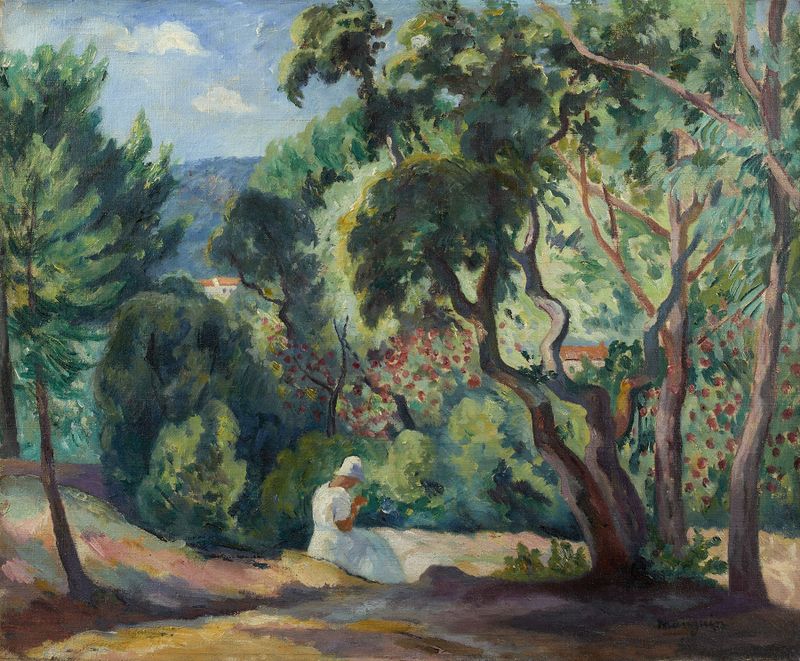
Sous-bois à la Moutte, Saint-Tropez
Henri Manguin
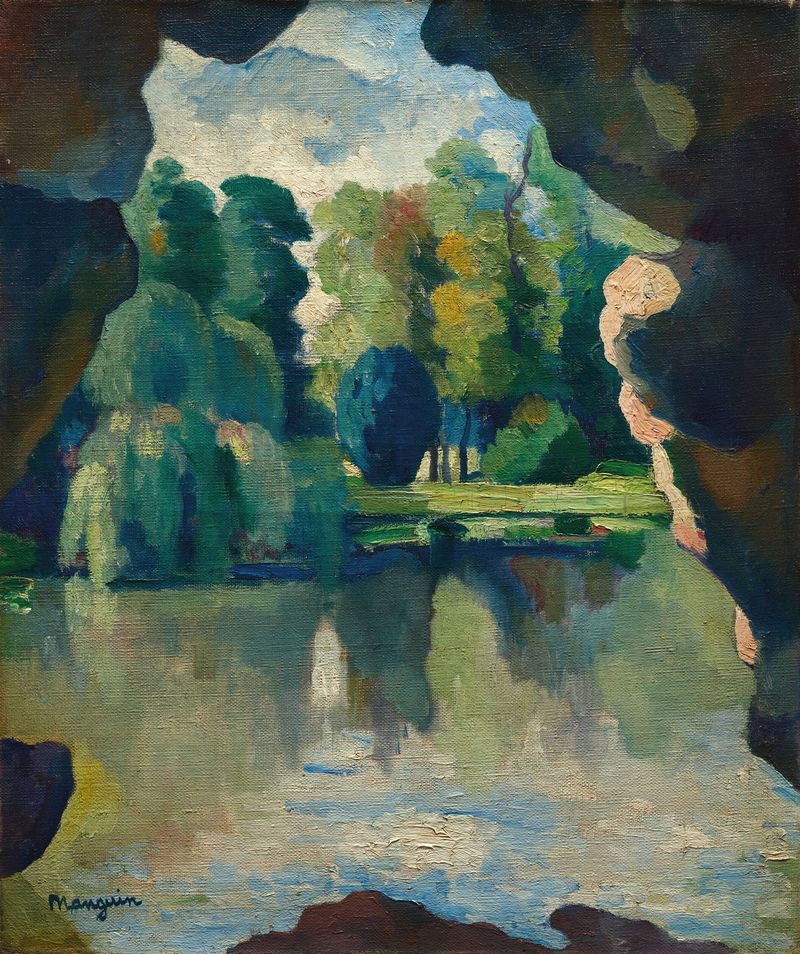
Le Lac de Bagatelle, Bois de Boulogne
Henri Manguin

Rade de Villefranche
Henri Manguin

Le Palais des Papes – Avignon
Henri Manguin

Paysage Beauce
Henri Manguin

Voiliers à marée basse
Henri Manguin





