
Le Louvre, le Pont-Neuf et le Collège des Quatre-Nations, actuel Institut de France, vus du pont Royal — History & Facts
Where does light end, and longing begin? This question lingers in the air as one gazes upon the delicate interplay of architecture and nature captured in this work from the mid-18th century. Look to the left, where the intricate façade of le Collège des Quatre-Nations rises majestically against the shimmering waters of the Seine. The soft brushstrokes evoke a sense of elegance, while the bright palette of blues and warm earth tones invites the viewer to wander along the banks of the river. Notice how the light dances upon the surface of the water, reflecting the buildings and transforming the scene into a tapestry of color and harmony.
The artist carefully positions the elements, guiding the eye across the bridge and into the heart of this vibrant Parisian landscape. In this painting, the juxtaposition of the solid structures and the fluid river speaks volumes. The grandeur of the architecture battles the ephemeral quality of the water, suggesting a tension between permanence and transience. Each element retains its place, yet is continually transformed by the light, hinting at the fleeting nature of time and experience in an ever-evolving city.
The presence of the bridge as a conduit between the two worlds adds a layer of connection, inviting us to step into the scene and explore the deeper layers of understanding. Created in 1755, this work emerged during a period when Paris was transforming into a cultural and intellectual epicenter of Europe. At this time, Raguenet was part of a burgeoning art scene that embraced the Rococo style, reflecting the opulence and optimism of the age. With the city bustling around him, Raguenet captured not only a view but a moment in history, where the light of a sunny day illuminated the heart of a city poised on the brink of modernity.
More Artworks by Nicolas Jean-Baptiste Raguenet
Browse all →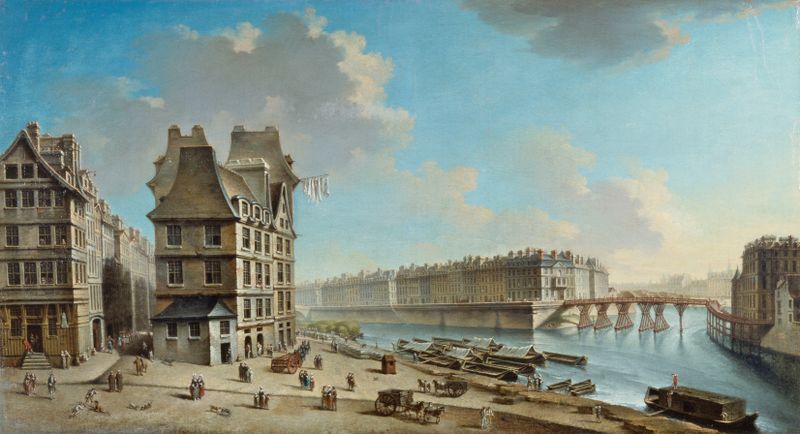
La Grève, l’Ile Saint-Louis et le Pont Rouge, vus de la place de la Grève
Nicolas Jean-Baptiste Raguenet
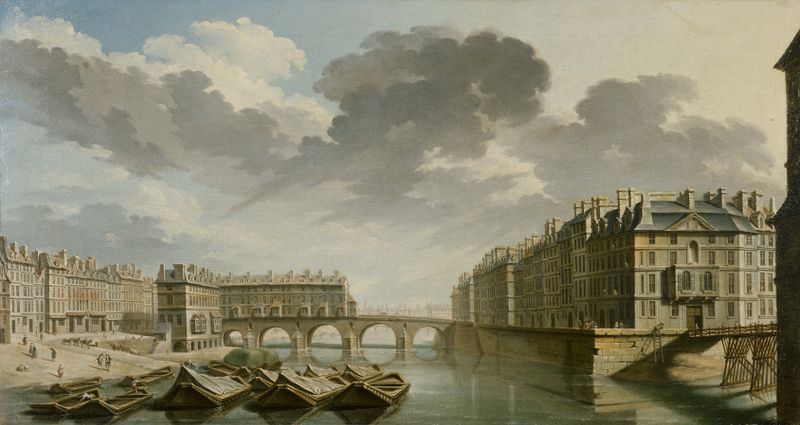
Le Quai des Ormes (actuel quai de l’Hôtel de Ville), le pont Marie et l’île Saint-Louis
Nicolas Jean-Baptiste Raguenet

Le Palais des Tuileries, vu du quai d’Orsay
Nicolas Jean-Baptiste Raguenet
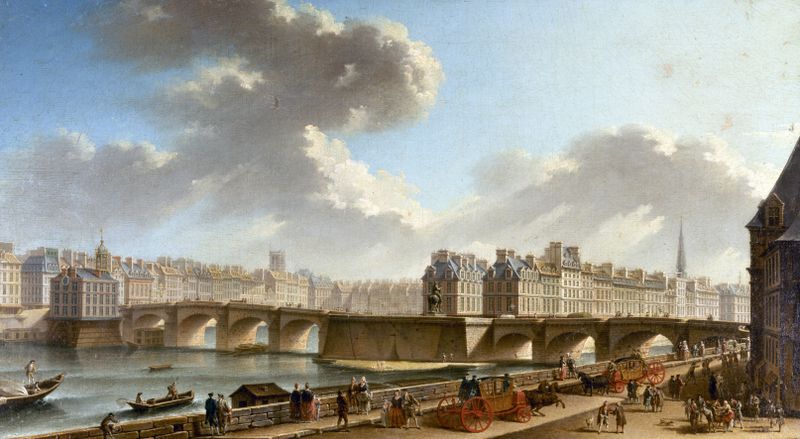
Le Pont-Neuf Et La Cité, Vus Du Quai De Conti
Nicolas Jean-Baptiste Raguenet
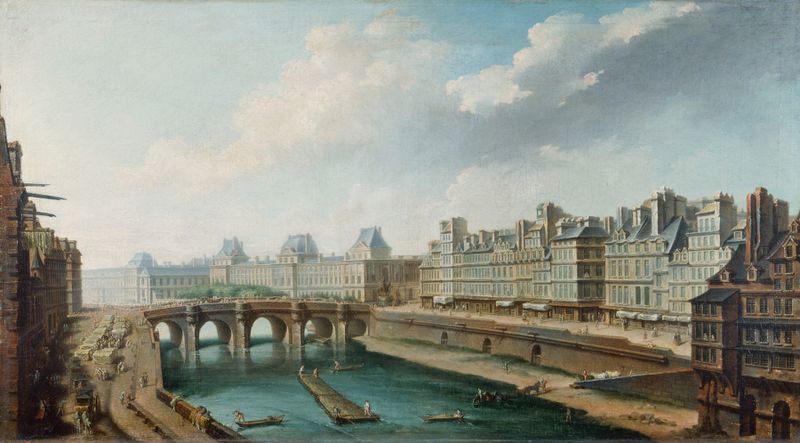
Le Louvre, le Pont-Neuf et le quai des Orfèvres, vus du quai des Grands-Augustins
Nicolas Jean-Baptiste Raguenet
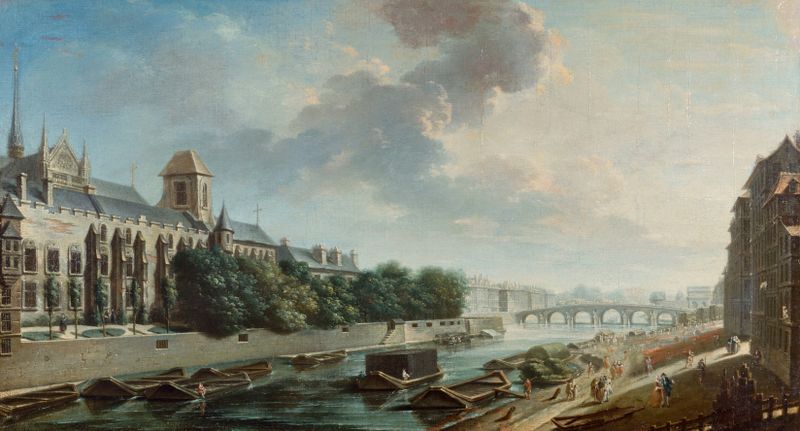
Le Palais de l’archevêché, vue de la rive gauche
Nicolas Jean-Baptiste Raguenet
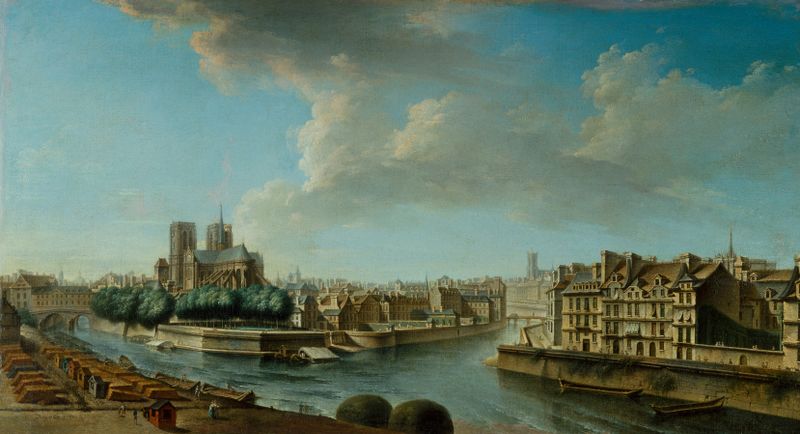
Le Chevet de Notre-Dame et la Pointe occidentale de l’Ile Saint-Louis
Nicolas Jean-Baptiste Raguenet
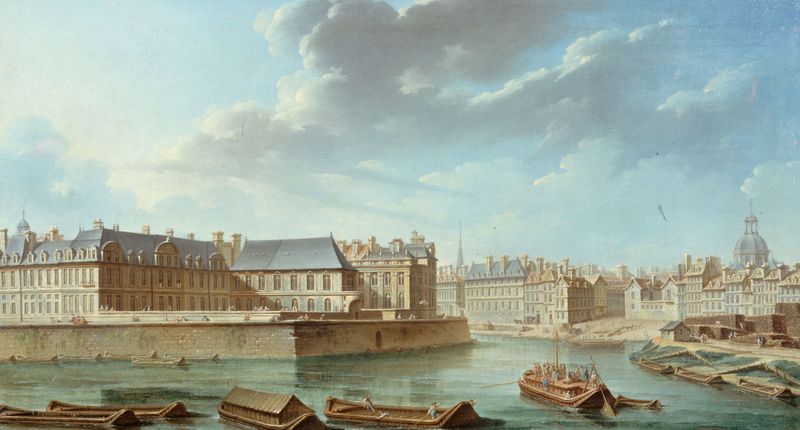
La Pointe orientale de l’île Saint-Louis, avec l’hôtel de Bretonvilliers et l’hôtel Lambert
Nicolas Jean-Baptiste Raguenet
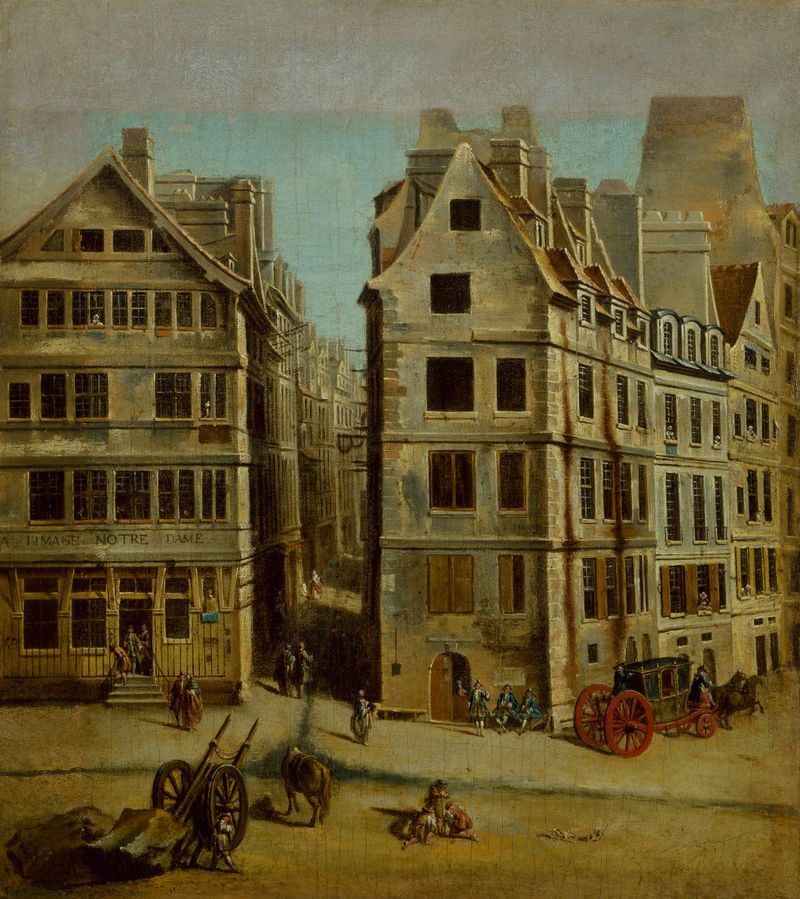
Le cabaret l’Image Notre-Dame, place de Grève, actuelle place de l’Hôtel de Ville
Nicolas Jean-Baptiste Raguenet

La joute des mariniers, entre le pont Notre-Dame et le pont au Change
Nicolas Jean-Baptiste Raguenet
More Architecture Art
Browse all →
The statue of Liberty
Frédéric Auguste Bartholdi

View of Houses in Delft, Known as ‘The Little Street’
Johannes Vermeer

View of Houses in Delft, Known as ‘The Little Street’
Johannes Vermeer

The Cathedral in Rouen. The portal, Grey Weather
Claude Monet

The yellow house
Vincent van Gogh

The Church in Auvers-sur-Oise, View from the Chevet
Vincent van Gogh