
Le Malefice — History & Facts
Did the painter know this moment would outlive them? Le Malefice speaks of a longing that transcends time, capturing a fleeting encounter with an enchanting world where nature and emotions intertwine. Focus on the delicate brushwork that builds a lush tapestry of greens and golds, inviting you to breathe in the tranquility woven into the scene. Notice how the soft light filters through the trees, casting intricate shadows that dance across a mysterious figure seated before a tranquil lake. The composition draws your eye first to the figure’s serene expression, suggesting both peace and a hint of melancholy, a poignant reflection on the ephemeral beauty of life. Hidden within the tranquil beauty lies an emotional tension, illustrated by the contrast between the vibrant surroundings and the figure's stillness.
The play of light and shadow creates a sense of depth, evoking a dreamlike quality that suggests the boundary between reality and fantasy. This moment of solitude speaks to the universal human experience of longing—a desire for connection, understanding, or perhaps, a return to innocence. In 1875, Narcisse Virgile Diaz de la Peña painted this work amid the transformation of the French art scene, where Impressionism was gaining momentum. Having settled into a quieter phase of his life, he drew inspiration from nature and romantic themes.
The artist's own experience of longing and introspection resonates through this piece, reflecting a personal and collective quest for meaning amid a rapidly changing world.
More Artworks by Narcisse Virgile Diaz de la Peña
Browse all →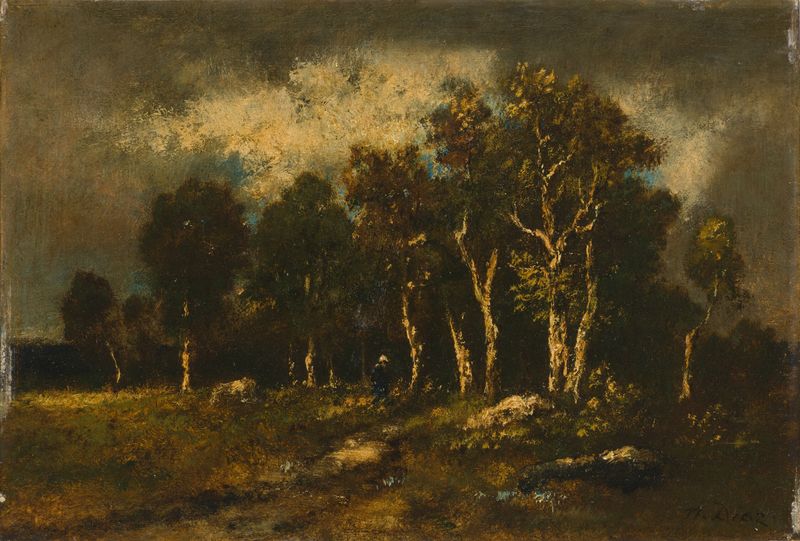
Landscape
Narcisse Virgile Diaz de la Peña

Pond in the Woods
Narcisse Virgile Diaz de la Peña

Landscape with Figures
Narcisse Virgile Diaz de la Peña

Nymph Tormented by Cupid
Narcisse Virgile Diaz de la Peña

Venus Disarming Cupid
Narcisse Virgile Diaz de la Peña

Education of Cupid
Narcisse Virgile Diaz de la Peña
Forest Landscape
Narcisse Virgile Diaz de la Peña
Landscape with Figures
Narcisse Virgile Diaz de la Peña

Three Girls in a Wood
Narcisse Virgile Diaz de la Peña

Three Little Girls
Narcisse Virgile Diaz de la Peña





