
Le petit Châtelet — History & Facts
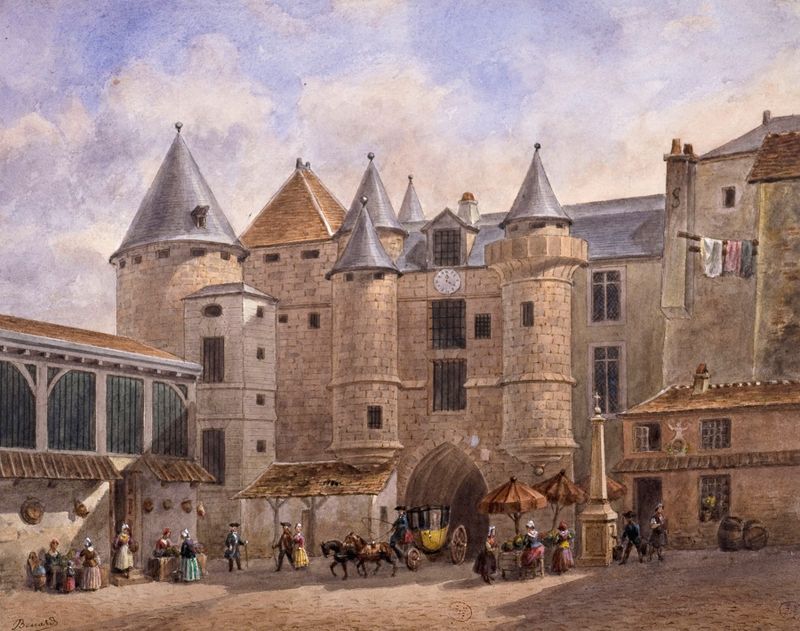
When did color learn to lie? The interplay of hues in this work invites us to question the very fabric of our perceptions and the destinies they weave. Look to the left at the delicate strokes that form the silhouette of a quaint structure, bathed in soft golden light. The artist employs a palette of warm and cool tones, creating a sense of resonance that enchants the eye. Notice how the brushwork shifts from finely detailed lines on the building to the looser, more abstract depictions of the surrounding landscape, suggesting a transformative passage from reality to imagination. As you delve deeper, consider the tension between the serene architecture and the swirling clouds above, hinting at the capriciousness of fate.
The contrast between the clarity of the châtelet and the ambiguity of the sky evokes a sense of longing and uncertainty, as if the building stands as a sentinel, caught between the solid ground of existence and the ethereal whims of destiny. Each element seems to embody a story—one of permanence clashing with the ephemeral. Created during a time when the art world was evolving rapidly, this piece emerged amid the backdrop of the burgeoning Romantic movement. Bénard, working in France, sought to capture not just the visual reality of the landscape but to infuse it with emotional depth and philosophical inquiry.
The painting reflects his engagement with the changing tides of artistic expression, revealing a moment in which he explored the complexities of existence through color and form.
More Artworks by Auguste-Sébastien Bénard
Browse all →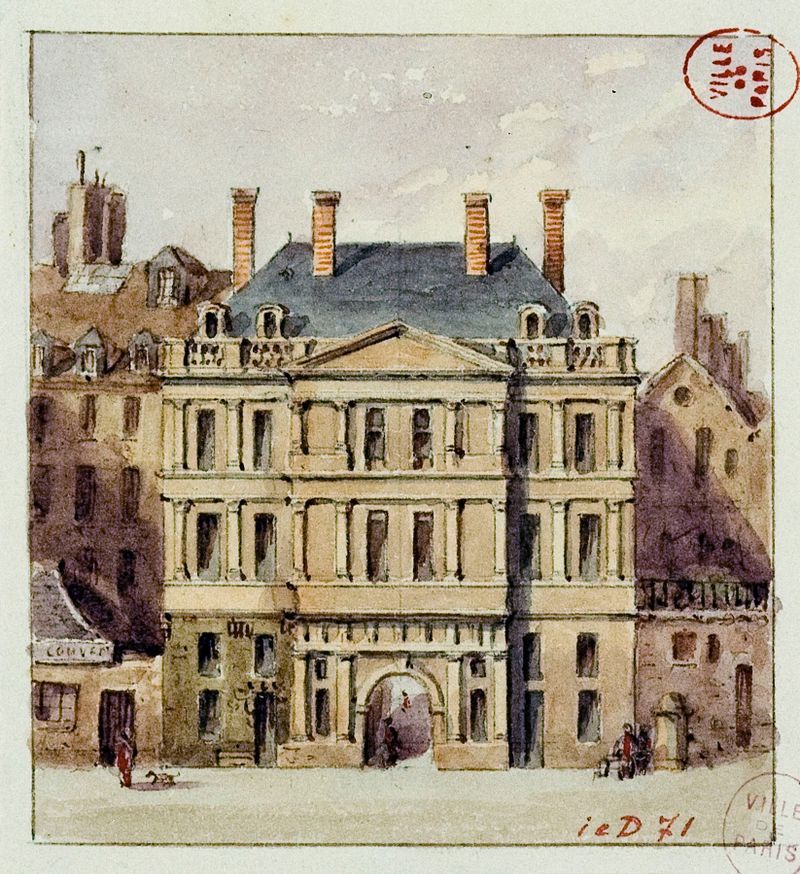
Cour de la Sainte Chapelle.
Auguste-Sébastien Bénard
Le Grand Châtelet du XVIIIème siècle.
Auguste-Sébastien Bénard

Place de l’Hôtel de Ville.
Auguste-Sébastien Bénard

Salle souterraine du Palais de Justice.
Auguste-Sébastien Bénard

Voûtes du quai de Gesvres
Auguste-Sébastien Bénard

Monument expiatoire élevé à la mémoire du duc de Berry, à l’emplacement de l’ancien Opéra
Auguste-Sébastien Bénard
Le parvis de Notre-Dame de Paris
Auguste-Sébastien Bénard

Rue des chantres (entre le quai aux fleurs et la rue Chanoinesse).
Auguste-Sébastien Bénard

L’entrée de l’ancienne forteresse du Grand Châtelet, un jour de Carnaval
Auguste-Sébastien Bénard
Les restes des bâtiments de l’hôtel du Petit Bourbon.
Auguste-Sébastien Bénard





