
Le pont au Double. — History & Facts
What if beauty was never meant to be finished? In the delicate balance of light and shadow, Le pont au Double tantalizes the viewer’s senses with an alluring sense of desire, inviting introspection on the nature of its fleeting elegance. First, let your gaze wander across the canvas, where the graceful arch of the bridge takes center stage. Notice how the gentle curves draw your eye to the vibrant reflections in the water below, shimmering with hues of blue and gold. The artist's deft brushwork captures the intricate play of light filtering through the trees, casting dappled patterns that breathe life into the scene.
The cool tones of the structure contrast beautifully against the warm glow of the sun, suggesting a harmony that feels almost ethereal. As you delve deeper, consider the emotional layers at play. The bridge, a symbol of connection, stands as a metaphor for unfulfilled desire — the yearning for what lies beyond. The figures scattered along the riverbank appear contemplative, lost in their thoughts, hinting at stories untold.
This juxtaposition of bustling life against the stillness of the water speaks to the tension between movement and stasis, a reminder that beauty often exists in moments of quiet reflection. In 1825, Bénard painted Le pont au Double during a period marked by a burgeoning Romantic movement in France, where artists sought to evoke emotion and individuality. He was influenced by the picturesque landscapes of his contemporaries, yet endeavored to capture a unique vision of Paris. It was a time when the city itself was transforming, mirroring the artist's desire to encapsulate both the profound beauty and the transient nature of life.
More Artworks by Auguste-Sébastien Bénard
Browse all →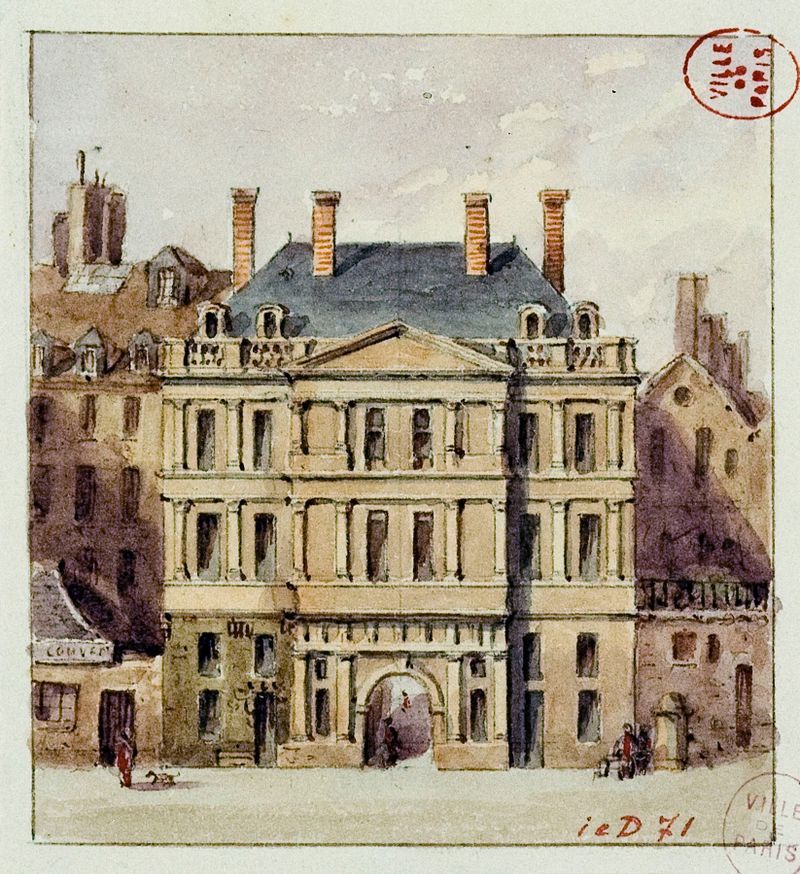
Cour de la Sainte Chapelle.
Auguste-Sébastien Bénard
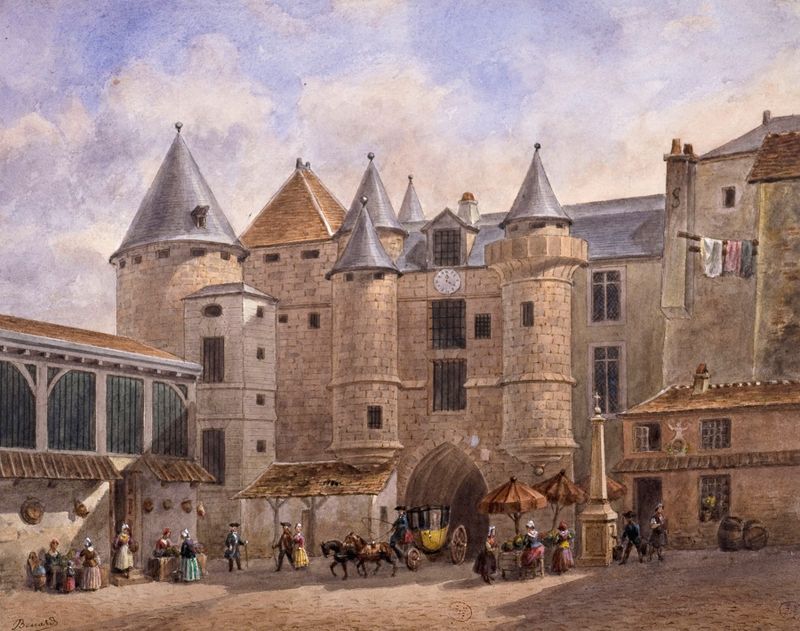
Le Grand Châtelet du XVIIIème siècle.
Auguste-Sébastien Bénard

Place de l’Hôtel de Ville.
Auguste-Sébastien Bénard

Salle souterraine du Palais de Justice.
Auguste-Sébastien Bénard

Voûtes du quai de Gesvres
Auguste-Sébastien Bénard

Monument expiatoire élevé à la mémoire du duc de Berry, à l’emplacement de l’ancien Opéra
Auguste-Sébastien Bénard
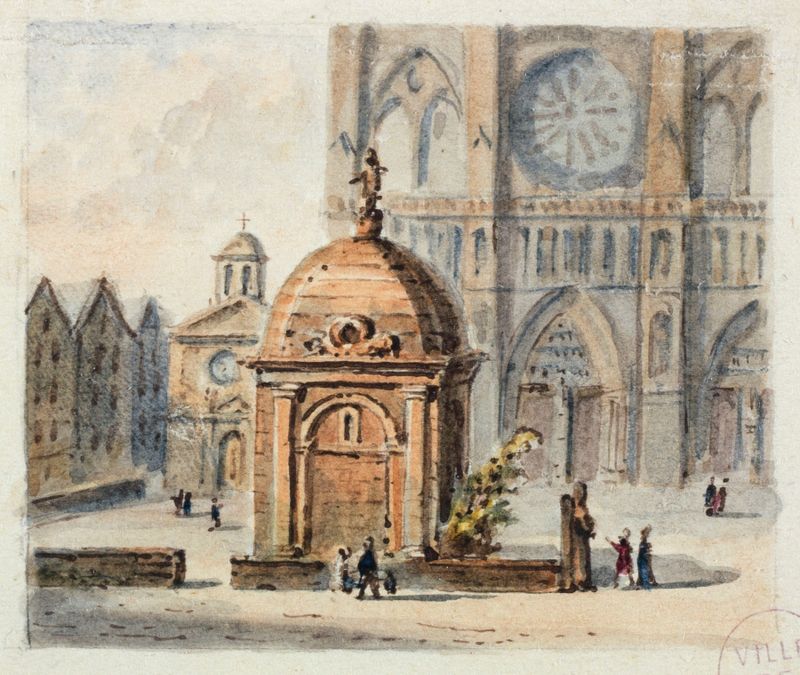
Le parvis de Notre-Dame de Paris
Auguste-Sébastien Bénard

Rue des chantres (entre le quai aux fleurs et la rue Chanoinesse).
Auguste-Sébastien Bénard

L’entrée de l’ancienne forteresse du Grand Châtelet, un jour de Carnaval
Auguste-Sébastien Bénard
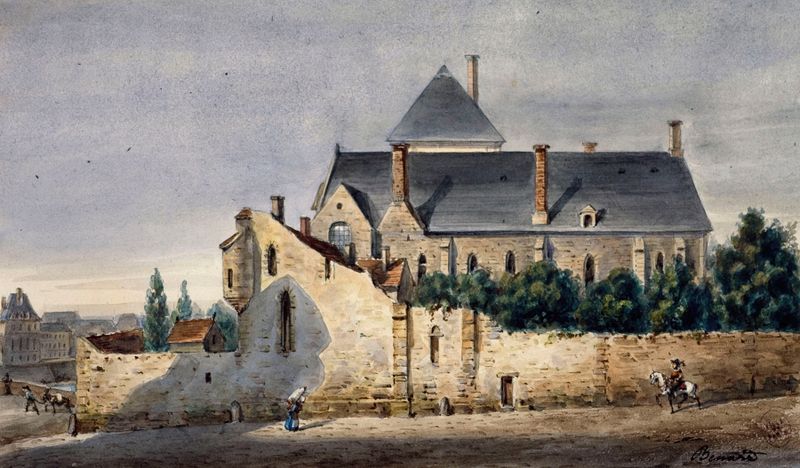
Les restes des bâtiments de l’hôtel du Petit Bourbon.
Auguste-Sébastien Bénard





